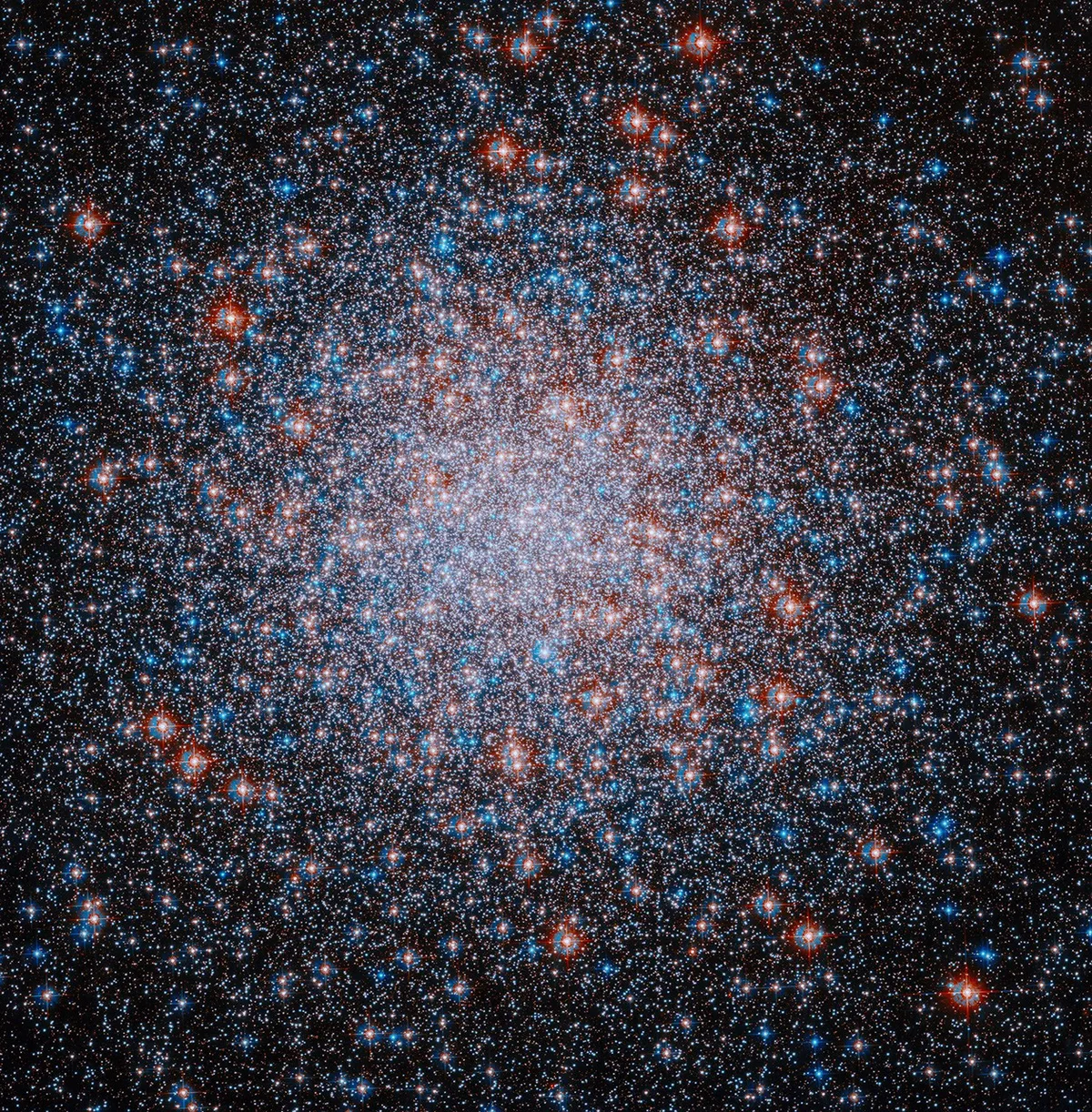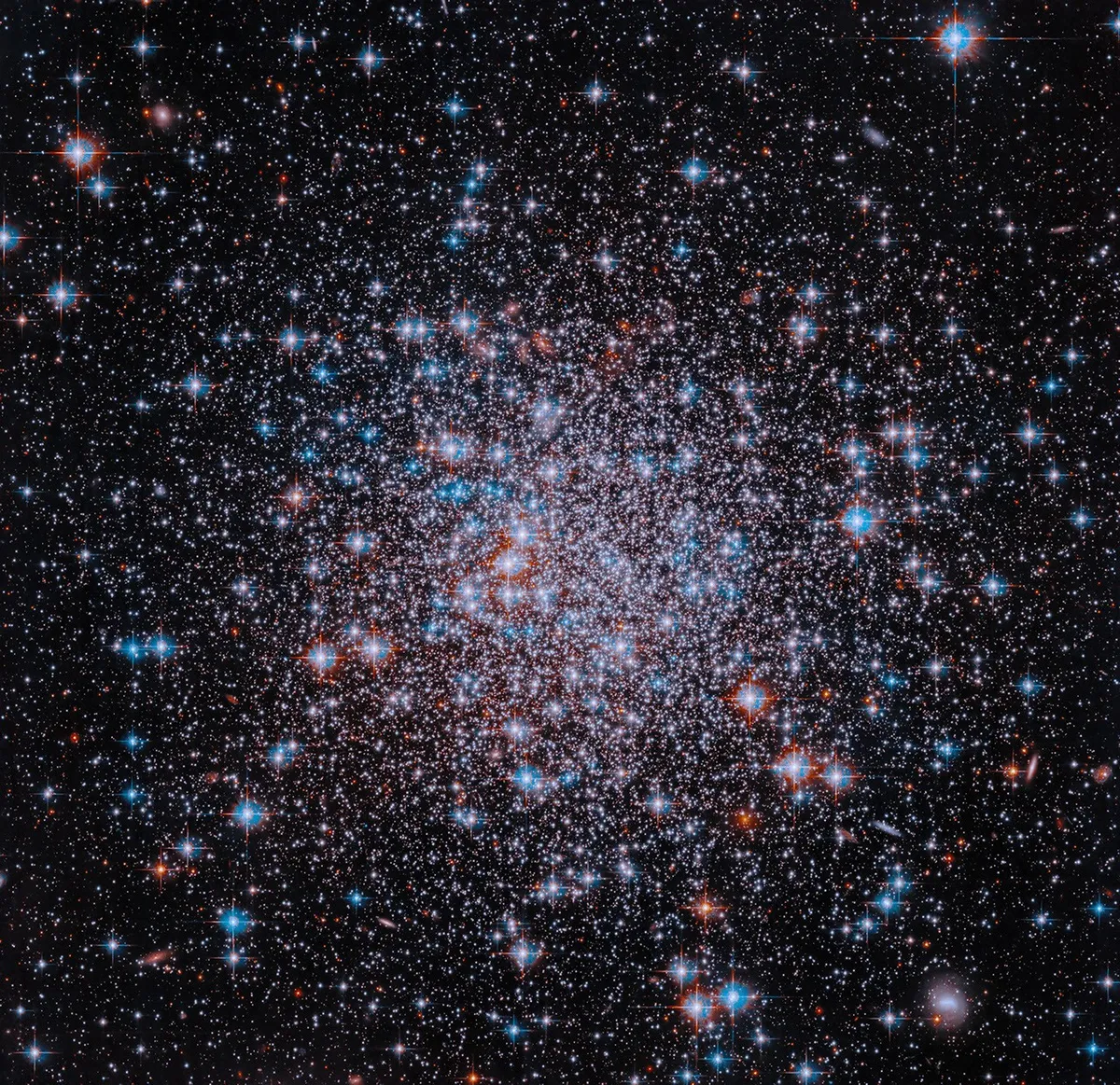
Just in time for a certain summer holiday, NASA's Hubble Space Telescope has delivered a celestial sparkler. We're talking about a brand-new image that looks like a cosmic explosion of red, white, and blue stars. Apparently, even the universe gets in on the party spirit.
This stellar confetti is actually a globular cluster called NGC 6426, chilling out in the outer halo of our Milky Way. Think of it as a giant, spherical retirement community for stars, all held together by gravity. Our galaxy boasts about 150 of these ancient gatherings, but this one is particularly special.
Older Than Dirt, Nearly As Old As Time
Most stars within a globular cluster are practically siblings, born from the same cloud of gas. And in NGC 6426's case, those siblings are ancient. We're talking 13 billion years old. To put that in perspective, the universe itself is 13.7 billion years old. So, this cluster has been twinkling since almost the very beginning, watching the cosmos evolve like a seasoned elder.
We're a new kind of news feed.
Regular news is designed to drain you. We're a non-profit built to restore you. Every story we publish is scored for impact, progress, and hope.
Start Your News DetoxIn Hubble's colorful snapshot, blue stars are the hotshots, emitting shorter wavelengths of light. The red ones are a bit more chill, giving off longer wavelengths and some near-infrared. It's like a cosmic temperature gauge, where color tells you everything.
What's even wilder is that these stars have low metallicity. That's science-speak for 'not a lot of heavy stuff.' Back when the universe was a toddler, it was mostly just hydrogen and helium. Heavier elements — the building blocks of planets and even us — were just starting to cook inside massive stars. So, these stars are a direct link to the universe's primordial soup.
Cosmic Clues in a Stellar Sparkler
Researchers have even spotted two distinct star groups within NGC 6426. This suggests that some slightly younger, 'more metallic' stars (meaning they have more of those heavier elements) formed from the explosive remnants of earlier stars. When big stars go supernova, they basically reseed the universe with new material, ready for the next generation of cosmic creations.
Hubble captured this image as part of a mission to date globular clusters in our galaxy's halo. Because if you want to understand how our entire galaxy came to be, you start by figuring out the ages of its oldest residents. And Hubble, after three decades of cosmic detective work, continues to deliver those insights. Which, if you think about it, is a pretty fantastic legacy for a telescope.