The International Space Station just got a serious glow-up, scientifically speaking. NASA's Cold Atom Lab (CAL) — already a pretty cool customer — received an upgrade that lets it chill atoms to temperatures just a hair above absolute zero. Why? To study the weirdest stuff in the universe, naturally.
Astronauts on the ISS recently flipped the switch on this improved mini-fridge-sized marvel. It's not just exploring the fundamental nature of matter; it's also pushing the boundaries of quantum tech. And it's all happening in microgravity, which, if you think about it, is both impressive and slightly terrifying.
The Absurdity of Atoms
Quantum science dives into the deepest rabbit hole of reality: atoms, electrons, and light particles. We tend to think of atoms as solid little marbles, but under the right (read: incredibly cold) conditions, they can act like waves, exist in multiple places at once, or even phase through each other. Just try explaining that to your high school physics teacher.
We're a new kind of news feed.
Regular news is designed to drain you. We're a non-profit built to restore you. Every story we publish is scored for impact, progress, and hope.
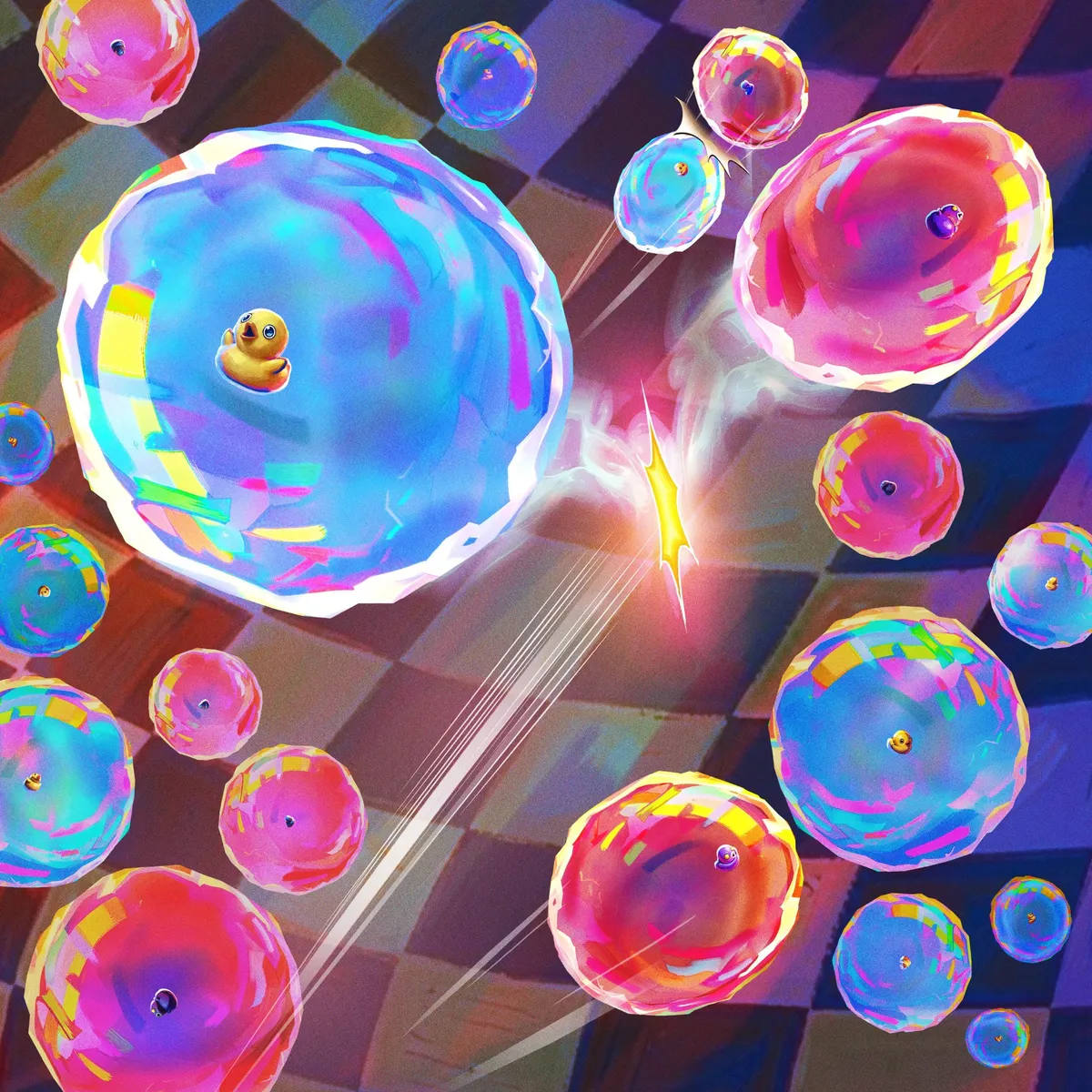
Start Your News DetoxCAL brings atoms to temperatures below minus 459 degrees Fahrenheit. That's colder than the vacuum of space itself. At this extreme chill, atoms form something called a Bose-Einstein condensate (BEC) — sometimes called the fifth state of matter. Because apparently, solid, liquid, gas, and plasma just weren't enough to describe the universe's bizarre tendencies.
Even though a BEC is a cloud of atoms, it still obeys quantum mechanics. And in the weightlessness of low Earth orbit, these quantum matter waves can grow much larger than they ever could on Earth. Imagine trying to observe something that behaves like a wave but is also a bunch of atoms, and it's getting bigger because there's no gravity to mess it up. It's the kind of experiment that makes you wonder if scientists are just showing off now.
Jason Williams, a project scientist for CAL at NASA’s Jet Propulsion Laboratory (JPL), put it simply: matter gets weird when it's super cold. Its wave-like nature takes over, allowing for incredibly precise measurements of time, gravity, and motion. Which, let's be honest, sounds like something out of a sci-fi novel.
The Inner Workings of Cold
At the heart of CAL is its science module, a complex jumble of instruments. The latest, souped-up version hitched a ride to the ISS on April 11th. This upgrade means scientists can now do even more mind-bending experiments.
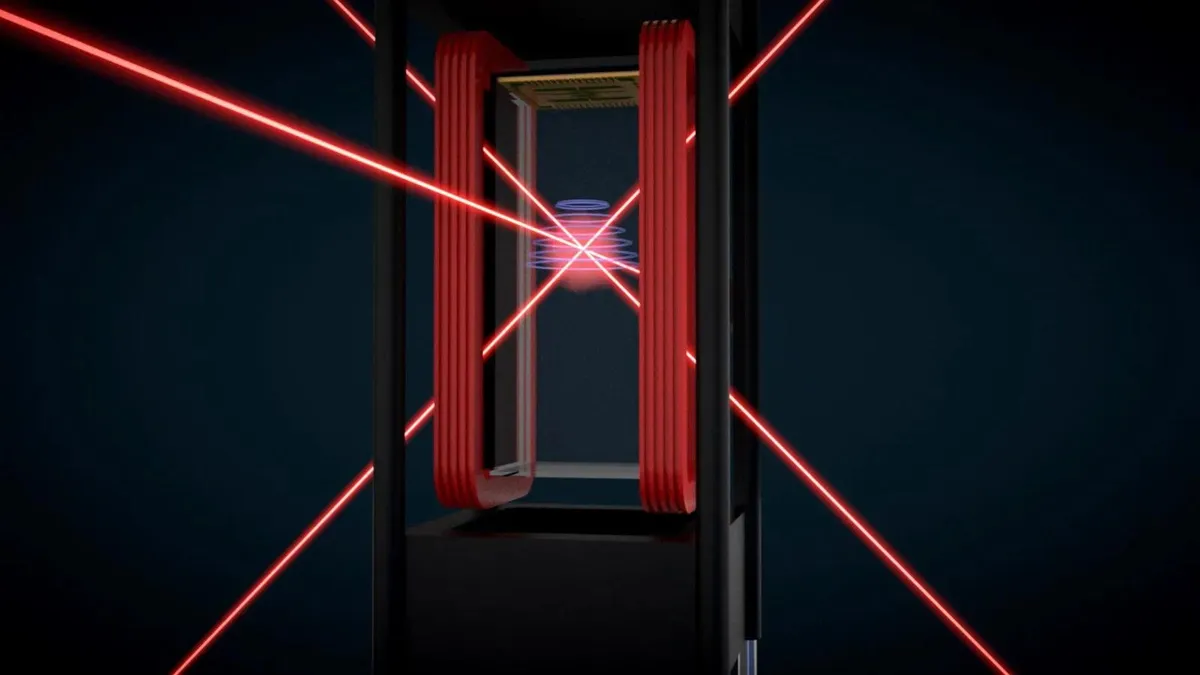
Here’s the CliffsNotes version of how it works: they heat a strip of rubidium or potassium metal to a scorching 750°F (400°C) to create a gas in a vacuum. Then, lasers — yes, lasers — are fired at the gas to slow the atoms down, sucking out their energy and making them incredibly cold. After the laser light show, a magnetic trap snags the atoms, and even more cooling techniques make them almost completely motionless. This allows researchers to study them for longer in microgravity, where they aren't constantly trying to fall.
Earth labs can make ultracold gases too, but the ISS offers a distinct advantage. In orbit, scientists can observe these quantum gases for longer periods and reach even lower temperatures. The low-gravity environment also allows for larger matter waves to form and interact with gravity for extended times. To make all this possible, NASA essentially crammed an entire atom physics lab into a single rack on the space station. Because apparently, that's where we are now.
Ethan Elliott, deputy project scientist for CAL at JPL, noted that CAL was the first project to create Bose-Einstein condensates in orbit, proving that quantum tech can reliably work in space. He calls this "quantum 2.0," directly controlling large quantum states. Which sounds like the prelude to a very interesting future.
Pushing the Boundaries of Weird
This is the fourth upgrade since CAL launched in 2018. One key addition is a new magnetic trap that lets scientists sculpt the shape of quantum gas clouds, opening doors to studying entirely new atomic properties. They also added new metal strips, because even quantum mechanics needs better raw materials.
Kamal Oudrhiri, project manager of CAL at JPL, put it rather poetically: these ultra-low temperatures are the closest we get to controlling the boundary of the quantum world. And this new upgrade, he says, pushes that boundary even further. Which sounds like a challenge to the universe itself.
These improvements aren't just for bragging rights. They demonstrate NASA's prowess in space-based quantum technologies and pave the way for future quantum instruments. Think matter-wave interferometers for fundamental physics missions, or incredibly precise tools for navigation, timing, and gravity sensing on Earth, the Moon, and beyond. Because if you're going to get weird, you might as well get useful weird.