Neptune, that big blue gas giant out past Uranus (insert snicker here), has a moon system that's a bit…lopsided. It's got one behemoth moon, Triton, and then a whole bunch of tiny ones. Triton alone accounts for over 99% of all the moon-mass orbiting Neptune. Oh, and it orbits backward. Because why not?
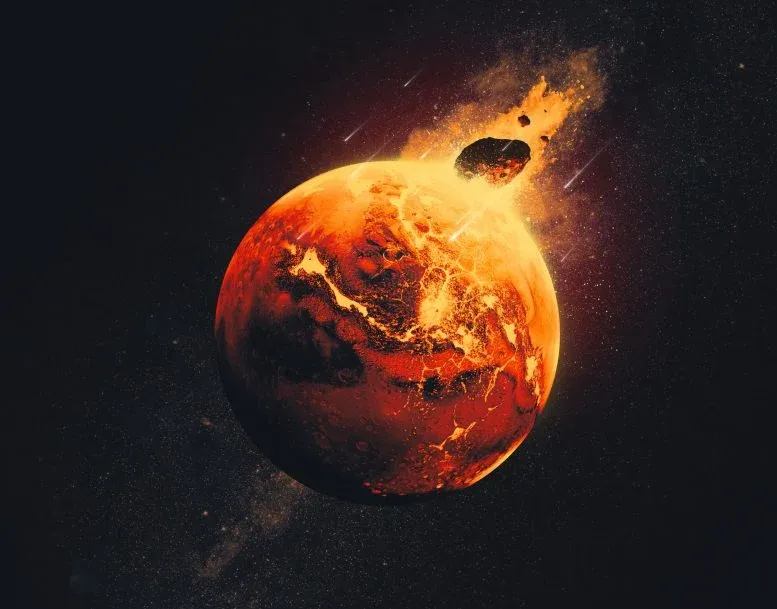
Scientists have long suspected Triton is a cosmic interloper, a captured rogue from the Kuiper Belt. And that capture? It was probably less a gentle hug and more a violent, system-reshaping brawl. Now, a new study in Science Advances just gave us some pretty compelling evidence to back up that chaotic theory.
Webb Telescope Spills the Tea
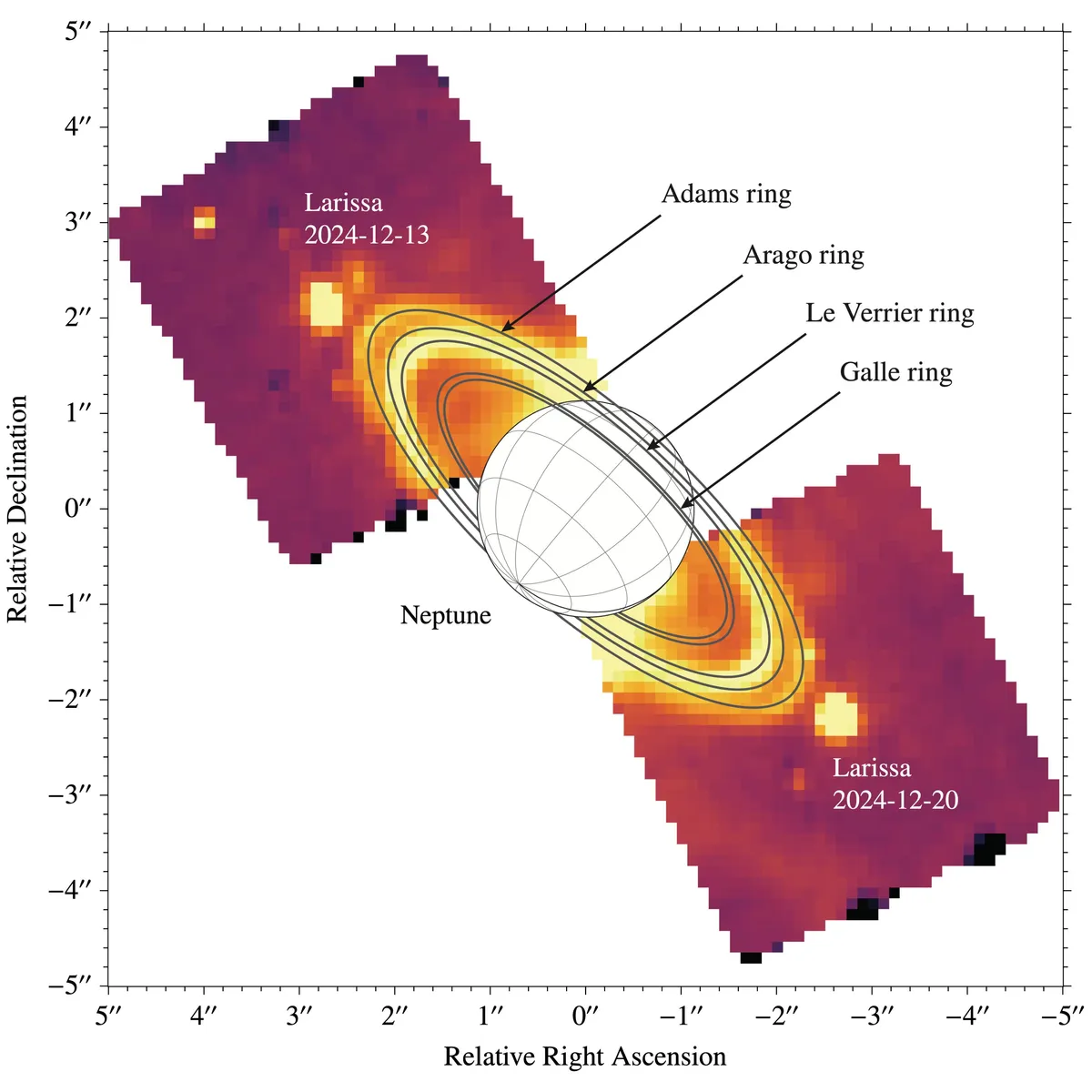
Researchers were sifting through data from the James Webb Space Telescope's near-infrared spectrograph (NIRSpec) when they stumbled upon something completely unexpected. On two of Neptune's small moons (Larissa and Galatea) and its rings, they found signs of clay-like minerals. Specifically, magnesium-rich phyllosilicates. If that sounds like something you'd find in a fancy spa mud mask, you're not far off. The real kicker? We've never seen these on any outer solar system bodies beyond Jupiter.
We're a new kind of news feed.
Regular news is designed to drain you. We're a non-profit built to restore you. Every story we publish is scored for impact, progress, and hope.
Start Your News DetoxThis is weird because these minerals scream "liquid water changed me!" But Larissa, Galatea, and the rings are colder than a tax auditor's heart – way too frigid for liquid water to exist on their surfaces. Plus, there's no water ice there now. So, these minerals must have formed somewhere else, likely in the toasty interior of a much larger body.
The study authors reckon this means the small moons we see today are actually the shattered remnants of bigger, ancient moons. Moons that got utterly obliterated when Triton came crashing into Neptune's orbit, tearing apart the original system. Imagine a cosmic demolition derby, but with moons.
A Violent Past, Written in Clay
So, Neptune's original moon setup might have been like other planets — a balanced, orderly system. Then Triton, a Kuiper Belt object the size of a dwarf planet, showed up, got gravitationally snared, and proceeded to wreck the place. The presence of these phyllosilicates suggests that at least one of Neptune's primordial moons was big enough to have a warm, differentiated core where these minerals could form.
Basically, these tiny moons and rings are like exposed guts of ancient, icy worlds. They're telling a story of a violent past, where a massive capture event turned an orderly system into the eccentric, lopsided one we observe today. Which, if you think about it, is both impressive and slightly terrifying.
While the team considered other ideas — like another large Kuiper Belt object just happening to explode near Neptune and scatter its phyllosilicate guts everywhere — evidence from Neptune's third-largest moon, Nereid, points back to the original demolition theory. Nereid's composition doesn't match other Kuiper Belt objects, suggesting it was part of Neptune's original, regular satellite system before the big disruption.
Future missions to Neptune could give us a direct look at this ancient interior material, offering a natural laboratory to understand how water and rock interact inside icy worlds. Because apparently, even the coldest corners of our solar system have a dramatic backstory, written in clay.