A new quantum sensor can find hidden signals even through a lot of noise. This breakthrough could help scientists search for dark matter and ancient gravitational waves.
This new sensor is a major step toward building large-scale quantum detectors.
How the Sensor Works
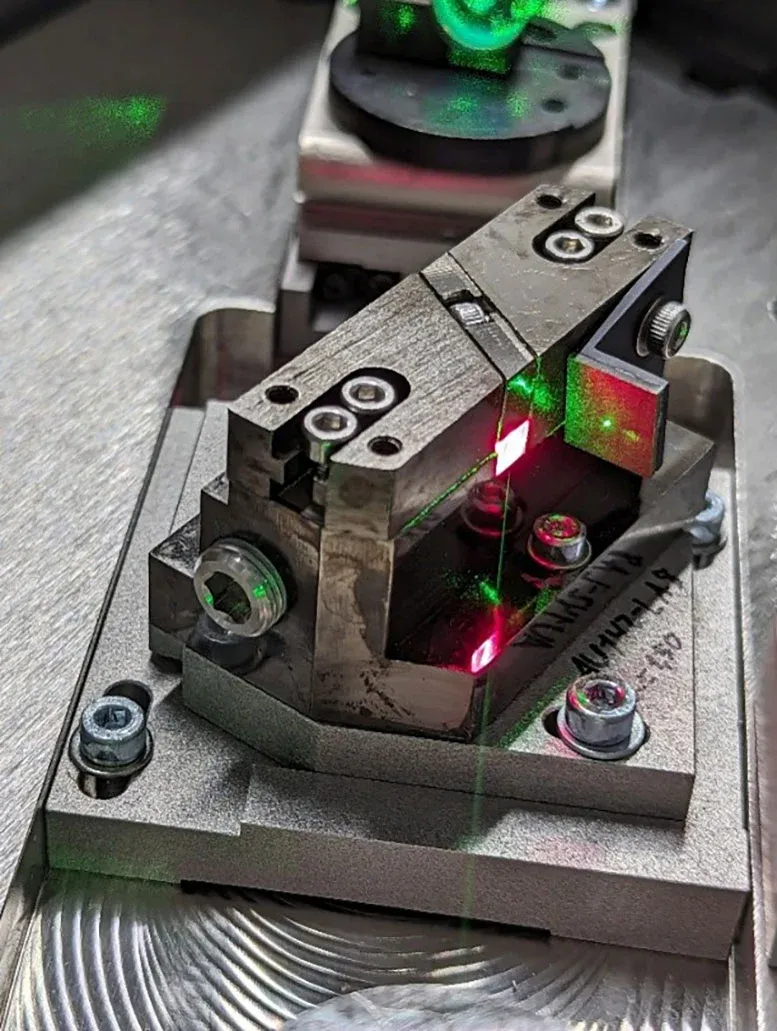
Researchers at Imperial College London built a prototype quantum sensor. It uses a method called atom interferometry. This involves using lasers to precisely measure how atoms behave.
The key idea is to compare two of these atom interferometers. By doing this, they can cancel out experimental noise. This allows them to find faint signals that would otherwise be hidden.
We're a new kind of news feed.
Regular news is designed to drain you. We're a non-profit built to restore you. Every story we publish is scored for impact, progress, and hope.
Start Your News DetoxThe work is part of the Atom Interferometer Observatory and Network (AION) collaboration. This group, led by Imperial, is developing advanced quantum sensing technologies. The research was published in Nature in June 2026.
Finding Signals in a Noisy Universe
Scientists want to understand what the Universe is made of and find new sources of gravitational waves. Both tasks require detecting extremely weak signals often buried in background noise.
Long baseline atom interferometers are a promising tool for this. They use lasers to split and then recombine clouds of atoms. This allows them to measure tiny changes in atomic motion with incredible accuracy.
The method relies on comparing two atom clouds in different places using the same laser. Any difference between them could point to hidden signals, like a dark matter field.
However, the laser used in these experiments creates a lot of noise. This noise is much stronger than the signals scientists hope to find. It could completely hide what they are looking for.
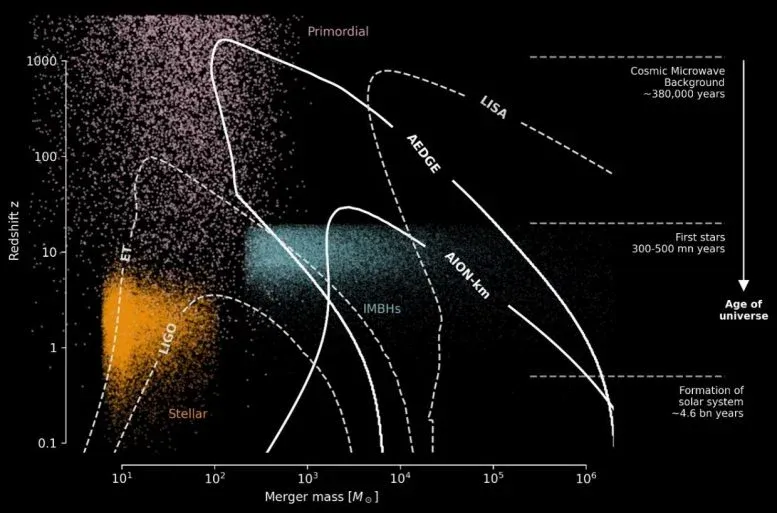
To solve this, scientists proposed a "differential method." This involves comparing two interferometers so that the shared noise cancels out. This idea is crucial for future detectors, but it had not been proven to work in real-world conditions until now.
Dr. Charles Baynham, co-lead of the Ultracold Strontium Laboratory at Imperial, noted that quantum sensors can help us understand the universe. He added that it's only recently that we've been able to build them with the necessary precision.
Testing the New Approach
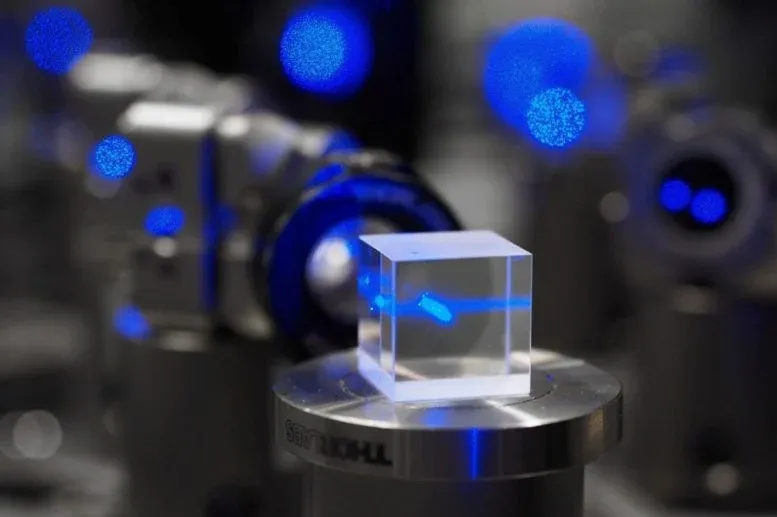
The Imperial team tested this principle in their lab. They built a prototype using two separate clouds of ultracold strontium 87 atoms. Both clouds were measured with a single, very stable clock laser.
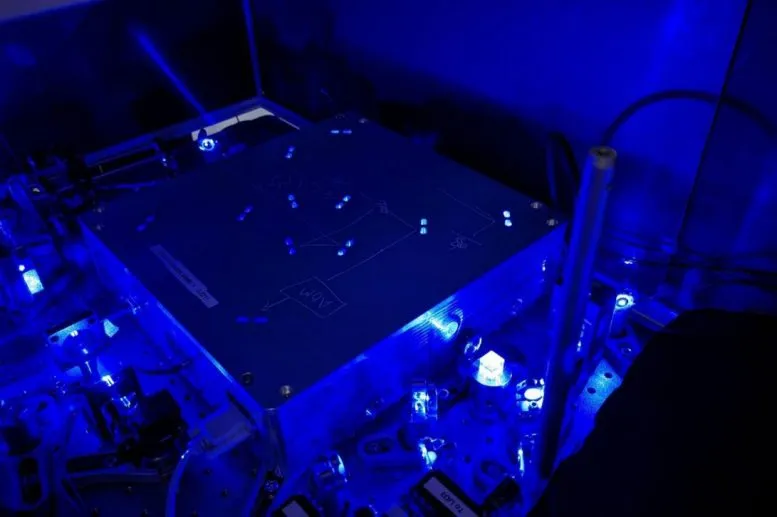
They intentionally added a lot of extra noise to the system. This was done to mimic the difficult conditions expected in much larger future experiments.
Individually, both interferometers became useless because the noise was too strong. But when the two interferometers were compared, the signal reappeared. The combined measurement reached the best possible limit set by quantum physics, showing that laser noise cancellation works.
The scientists then added an extra oscillating signal, like one from a passing gravitational wave or a dark matter field. This signal was clearly detected, even though neither interferometer alone could find it.
Future Quantum Detectors
These findings are the first experimental proof of a key principle for long baseline atom interferometers. They help solve a major challenge in designing these devices.
The AION program is developing the technology to scale these systems into experiments that can explore new parts of the Universe. AION is also working with international partners, including the MAGIS project at Fermilab.
One idea is the Atom Interferometry CERN Experiment (AICE). This project would use similar techniques over much longer distances. If built, AICE could apply quantum sensing to fundamental physics on a large scale. These facilities could become some of the biggest quantum experiments ever.
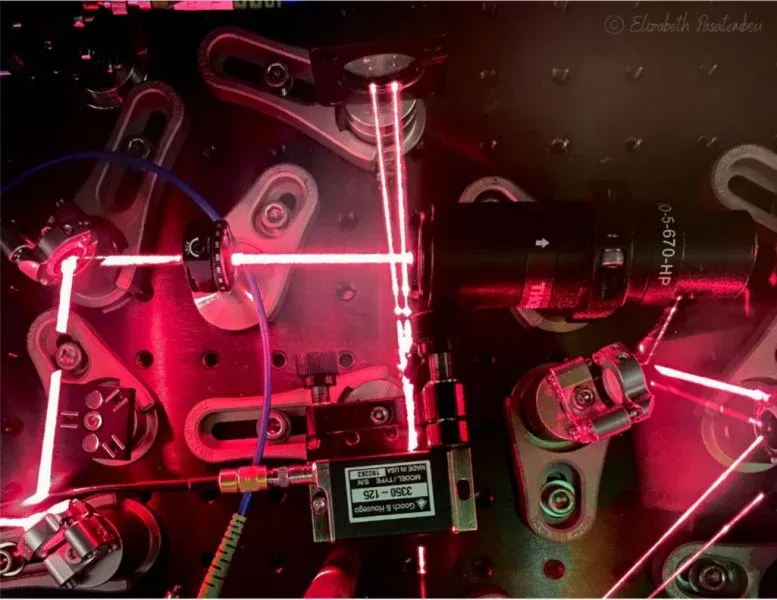
Dr. Richard Hobson, co-lead of the Ultracold Strontium Laboratory at Imperial, said they have shown that precise instruments like atomic clocks and atom interferometers can open new windows into the invisible parts of our Universe. He believes scaling this prototype to facilities like CERN or Fermilab could help solve deep mysteries, including the nature of dark matter.
Imperial researchers are now planning these systems as part of a global effort to create new quantum sensors. These future detectors could study gravitational waves in frequencies currently unreachable and search for new forms of matter. This would open a previously unexplored view of the Universe.
Professor Oliver Buchmueller, Principal Investigator of the AION collaboration at Imperial, noted that this work is an important step for future large-scale quantum sensors. It proves a key technique for next-generation atom interferometer facilities like MAGIS at Fermilab and the proposed AICE facility at CERN.
Deep Dive & References
A prototype differential atom interferometer for fundamental physics - Nature, 2026