An international team, including researchers from the University of Tokyo, has developed a new sensor. This device can measure the pulse of lab-grown 3D heart tissue, called cardiac organoids. The sensor was inspired by the lateral line, a "sixth sense" organ found in fish.
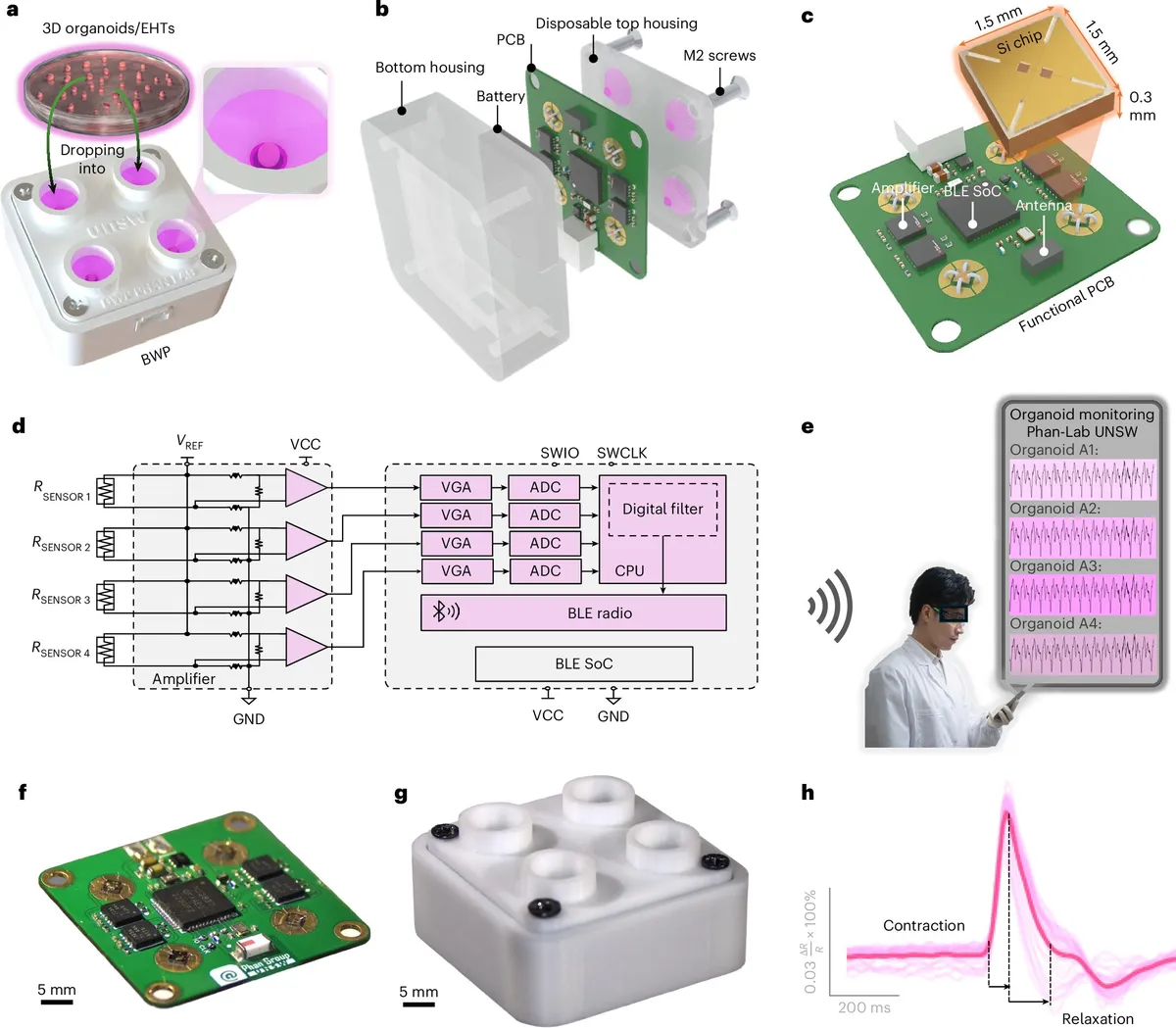
The device is a small white box with four liquid-filled wells. When a cardiac organoid beats in a well, it pushes the liquid into an air cavity below. This changes the air pressure, which then bends a sensor. The sensor sends live data wirelessly to an app. This new method is precise, reusable, and less work than older techniques. It could allow hundreds of tests to run at once, helping with drug screening and personalized medicine.
From Cells to Organoids
Over the last decade, cardiovascular research has changed greatly thanks to 3D cardiac organoids. These are small bundles of cells grown in a lab, usually no bigger than 3 millimeters. They are detailed enough for scientists to study heart development, diseases, and how new treatments work.
We're a new kind of news feed.
Regular news is designed to drain you. We're a non-profit built to restore you. Every story we publish is scored for impact, progress, and hope.
Start Your News DetoxBefore organoids, studies used flat 2D cell cultures or animal testing. Both had limits in how well they could show how a human heart behaves.
Studying these small, complex cardiac organoids can be hard. Sometimes, organoids are grown directly onto sensors, which means they can't be reused. Other times, they are looked at one by one under a microscope, which takes a lot of time and makes it hard to test many at once. Now, a team from Australia, the U.S., and Japan has created a device to measure hundreds of organoids at the same time. This speeds up testing significantly.
A Contactless Pressure Sensor
Associate Professor Timothée Mouterde from the University of Tokyo explained that their device measures the pulse strength and rhythm of cardiac organoids. It uses a biomechanical multi-well plate. This design allows many measurements to happen at once. Researchers can test different treatments and see how organoids react in real time through wireless data.
Each well plate has four liquid-filled wells with small holes at the bottom. Below these are air cavities and a delicate sensor system. Mouterde, an engineer specializing in fluid dynamics, worked on making the interface between the liquid, air cavity, and sensor function correctly.
The main challenge was that the liquid holding the organoids does not directly touch the sensor. Instead, a water interface traps an air cavity below. Surface tension, carefully managed through computer models, prevents the cavity from flooding.
Mouterde noted that it's a delicate balance. The liquid needs to move into the air pocket without flooding it. When the organoid beats, it pushes water into the cavity, which then bounces back. This causes pressure changes that compress the air, activating the sensor and allowing the heartbeat to be detected.
Inspired by a Fish's Lateral Line
The device's design was inspired by the lateral line in fish. This organ runs along a fish's body. Water enters through tiny pores and pushes against small gelatinous caps called cupula. These cupula cover sensory hair cells, which turn movement changes into signals. These signals tell the fish about nearby prey, predators, and its environment.
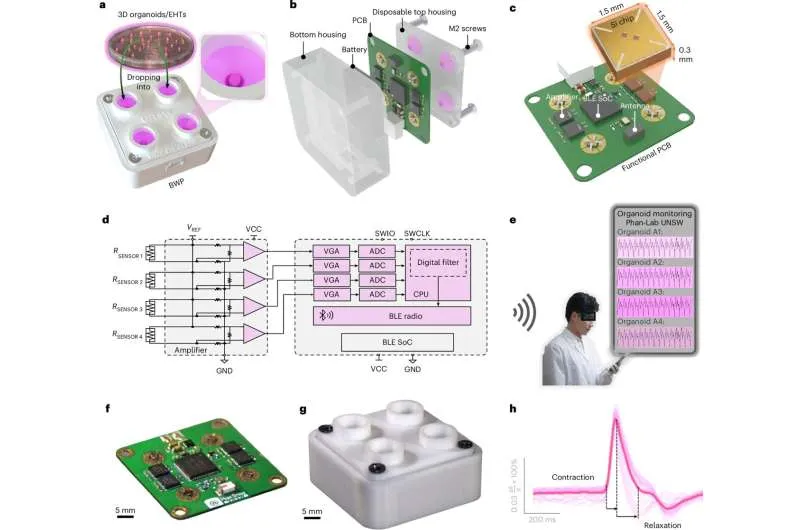 Real-time monitoring of cardiac spherical EHT contractions. Credit: Nature Sensors (2026). DOI: 10.1038/s44460-026-00087-3
Testing Drugs on Human Heart Tissue
Mouterde explained that because the device detects pressure changes, it's very good at measuring heartbeat fluctuations. It can show if a heartbeat becomes faster, slower, or more irregular when exposed to drugs.
This method also has a key benefit over animal testing. It allows direct testing of drugs on human tissue. This could lead to more personalized drug therapies in the future, considering a person's unique genetics. Mouterde highlighted that this research shows the benefits of working across different scientific fields.
Deep Dive & References
Wireless and contactless biomechanic well plate for monitoring cardiac organoid and 3D-tissue contraction - Nature Sensors, 2026