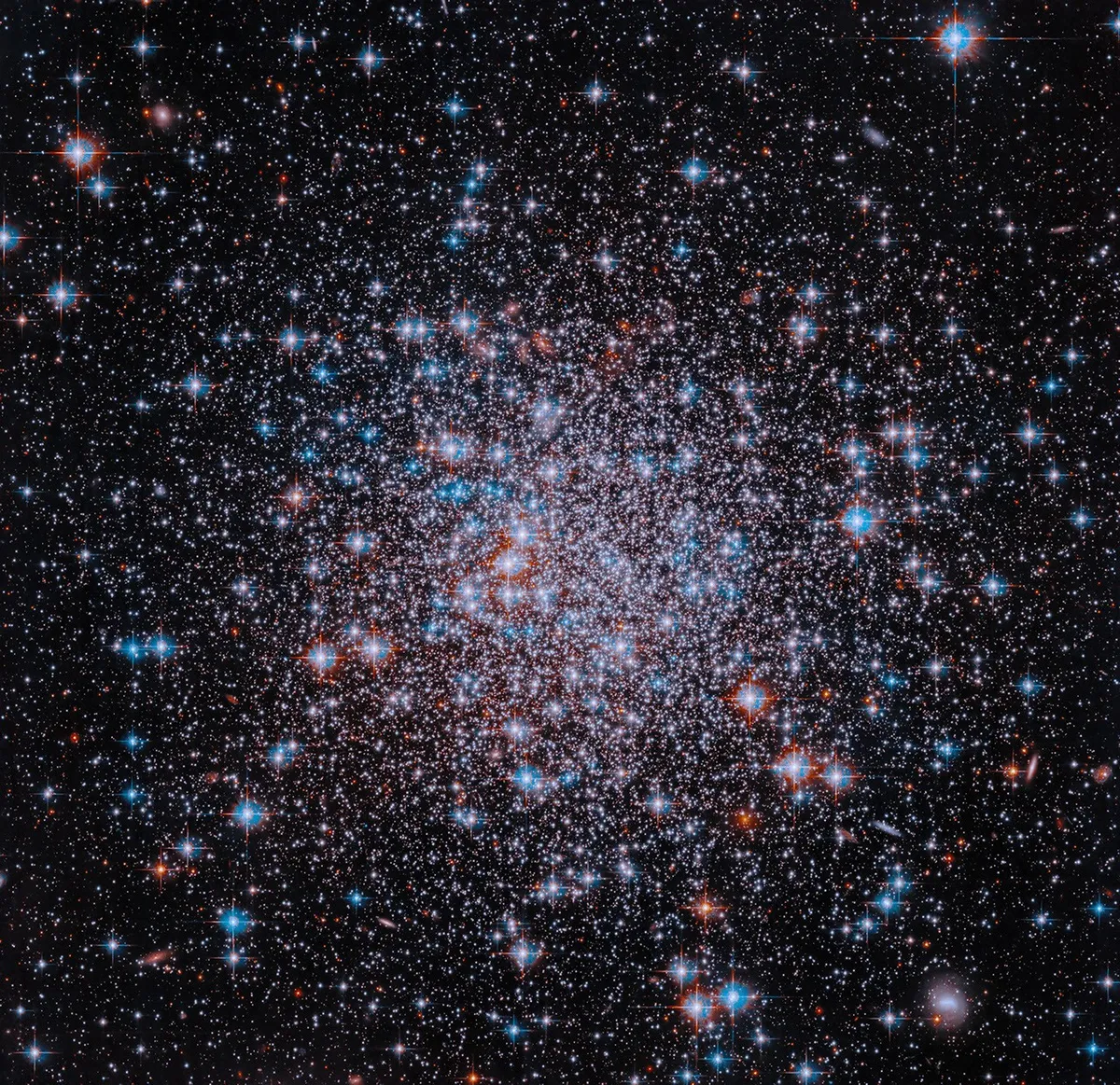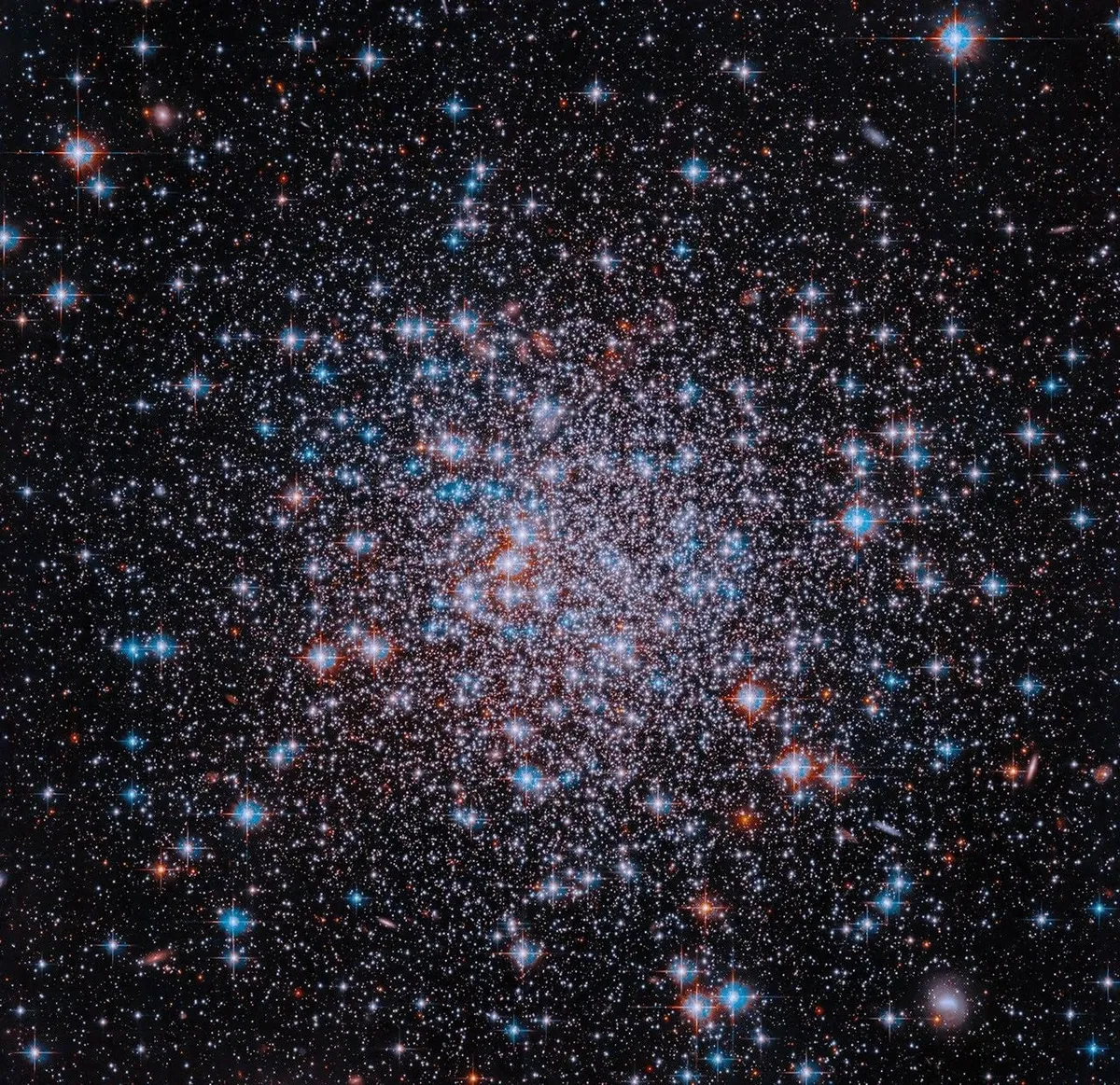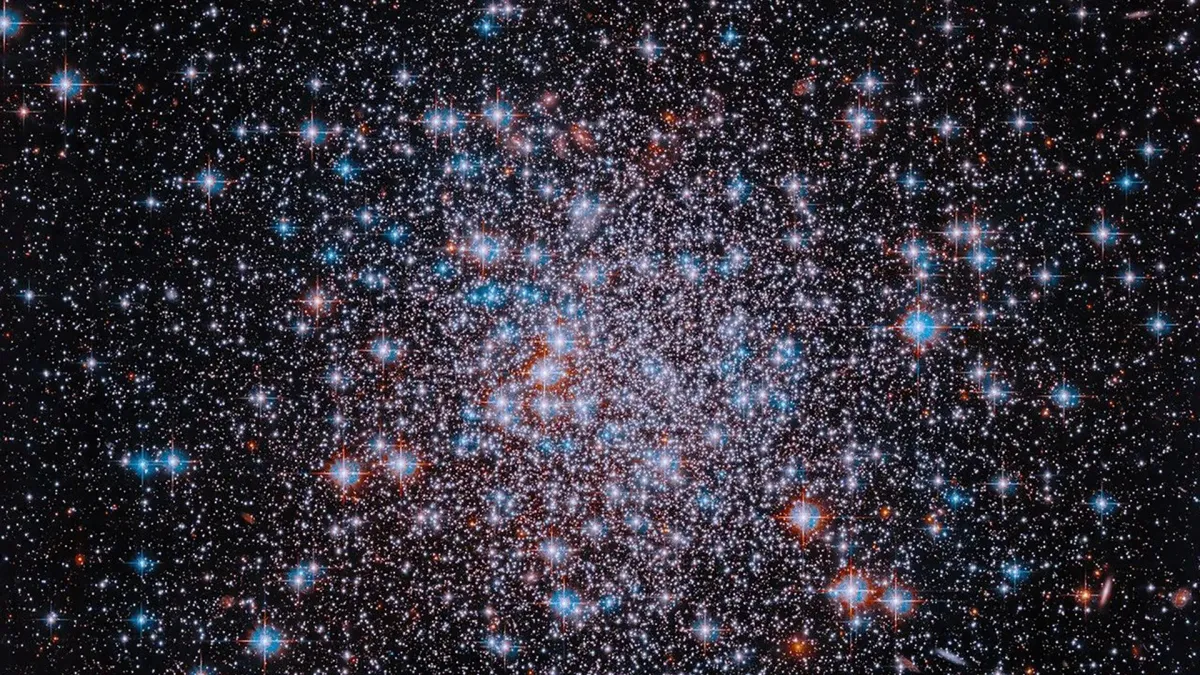
NASA's Hubble Space Telescope, ever the showman, recently unveiled an image that looks suspiciously like a cosmic sparkler. Red, white, and blue stars burst across the night sky, a fittingly patriotic nod from NASA as the U.S. gears up for its 250th anniversary. But this isn't just a pretty picture for the Fourth of July.
It's a rare glimpse into a star system that's been doing its thing for almost the entire age of the universe. Forget fireworks; this is an ancient cosmic explosion frozen in time.
The OG Star Cluster
The object in question is NGC 6426, a globular cluster chilling in the outer halo of the Milky Way. Think of a globular cluster as a super-dense, spherical city of stars, all bound together by gravity. Our galaxy alone boasts about 150 of these ancient cosmic neighborhoods.
We're a new kind of news feed.
Regular news is designed to drain you. We're a non-profit built to restore you. Every story we publish is scored for impact, progress, and hope.
Start Your News DetoxMost stars within these clusters are born from the same cloud of gas, meaning they're usually all roughly the same age. And NGC 6426? It's clocked in at a mind-boggling 13 billion years old. Considering the universe itself is only about 13.7 billion years old, this cluster was essentially formed when the cosmos was still figuring out its first steps. Which, if you think about it, is both impressive and slightly terrifying.
This extreme age makes NGC 6426 a pristine time capsule, offering clues about what the early universe was like before things got complicated.
Reading the Rainbow (and the Heat)
The vibrant red, white, and blue aren't just for aesthetic appeal (though they certainly deliver). These colors represent different wavelengths of light that Hubble's filters picked up. Blue indicates shorter visible light, while red points to longer visible wavelengths and some near-infrared.
In star-speak, color equals temperature: blue stars are the hotheads, and red ones are the cool, collected types.
Low-Metal Stars, High-Impact Discoveries
One of the most fascinating things about the stars in NGC 6426 is their "low metallicity." This isn't about some intergalactic economic downturn; it means they have very few elements heavier than hydrogen and helium. This chemical signature is a dead ringer for the young universe, back when pretty much everything was just hydrogen and helium.
Heavier elements, the stuff that makes up planets and, well, us, only started forming inside massive stars through nuclear fusion. These stars then exploded as supernovas, scattering their newly forged elements across the cosmos, enriching the gas for the next generation of stars.
And NGC 6426 even shows evidence of two distinct star groups with different chemical compositions, suggesting that earlier, massive stars went supernova, seeding the cluster with heavier elements before the slightly younger stars formed. It's the ultimate cosmic recycling program, slowly filling the universe with the ingredients for everything we see today.
Hubble continues to pull back the curtain on our galaxy's epic saga. Its observations, now complemented by the James Webb Space Telescope and soon, the Nancy Grace Roman Space Telescope, are giving us an unprecedented look at how our corner of the universe came to be. Not bad for a telescope that's been around for over 30 years.