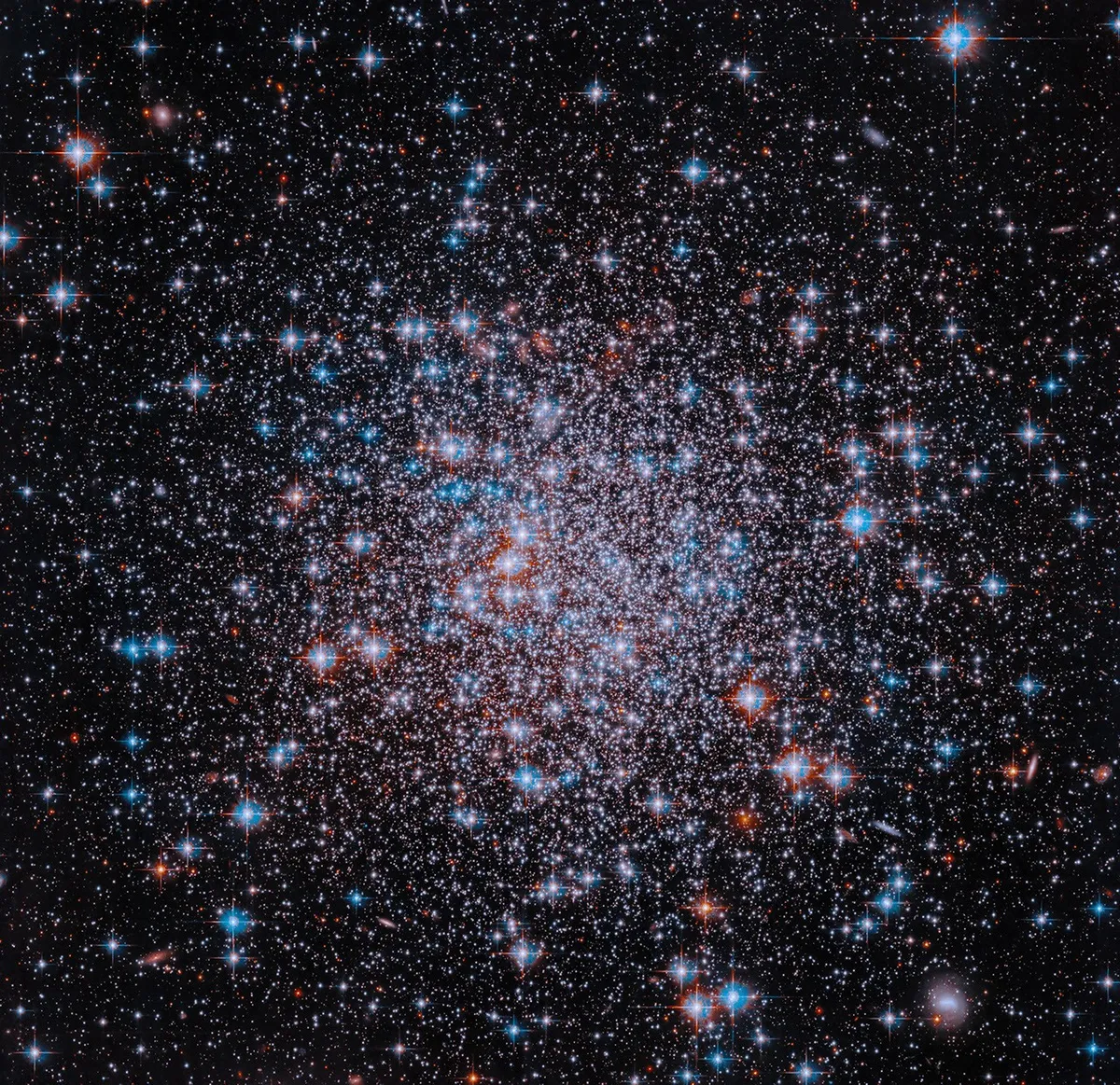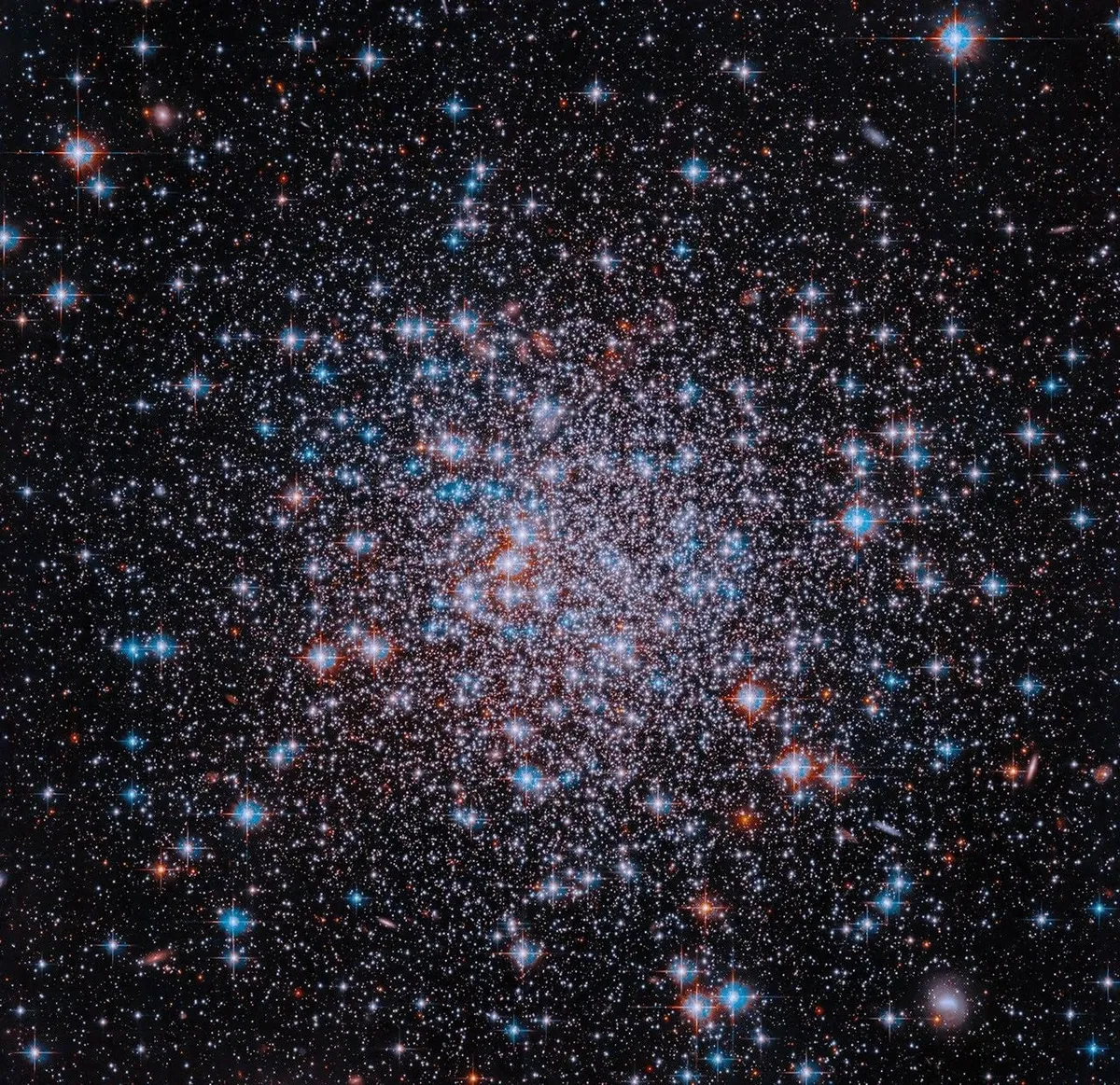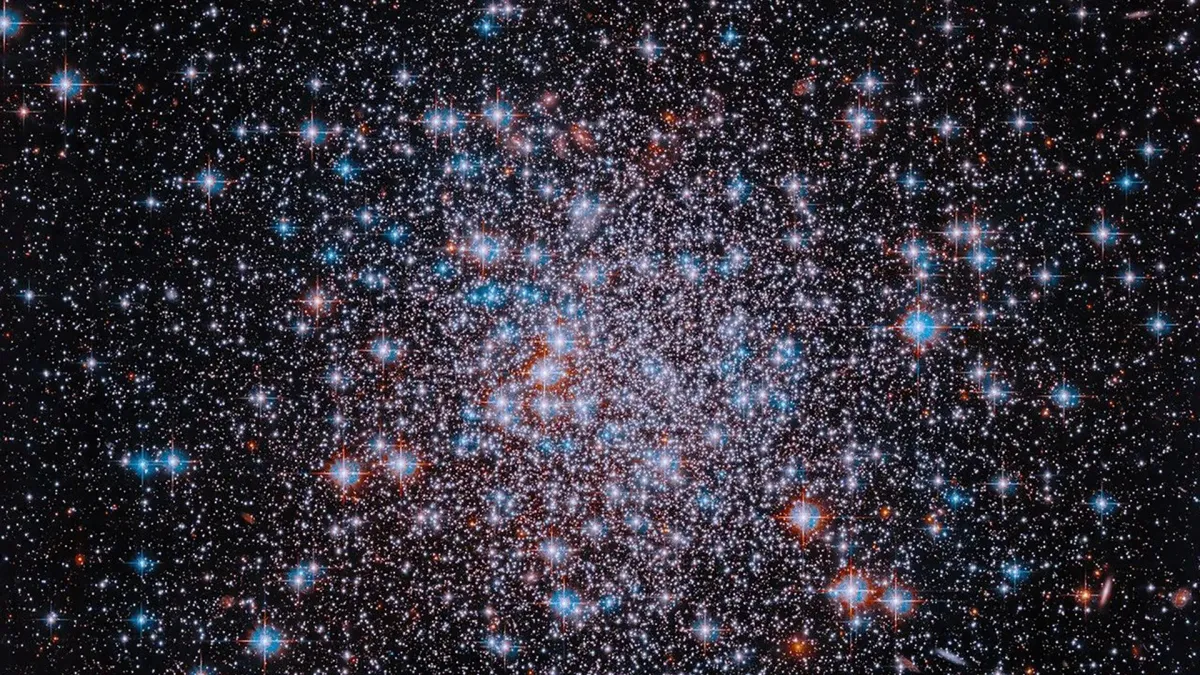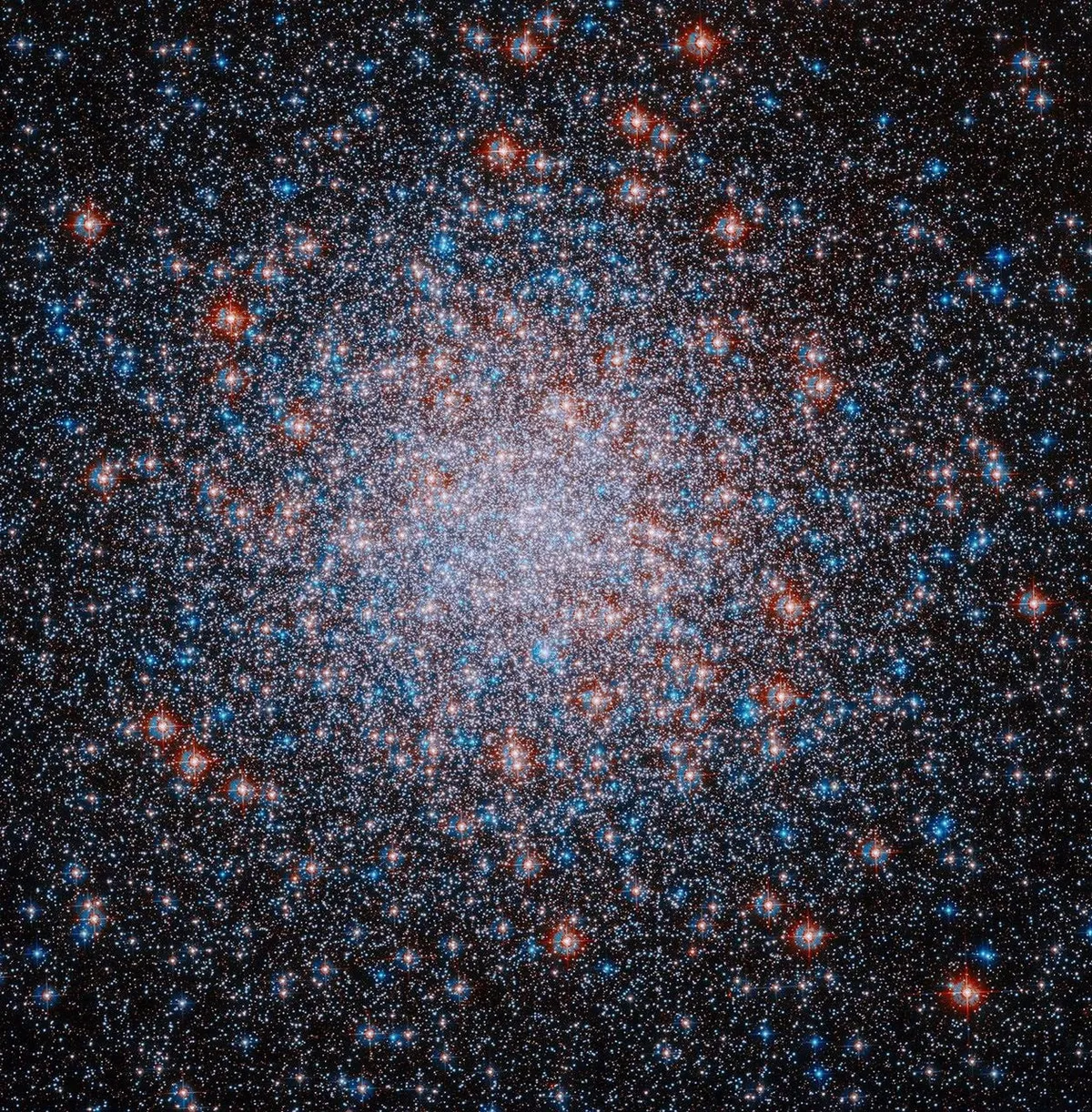
NASA's Hubble Space Telescope just dropped a new image that looks less like space and more like a cosmic fireworks display for the United States' 250th anniversary. We're talking over 500,000 stars, all shining in patriotic red, white, and blue.
The celestial guest of honor? Messier 3 (M3), one of the Milky Way's biggest and oldest star clusters. Think of it as a super-dense, spherical neighborhood where gravity keeps everyone packed tightly together. All the stars in M3 formed from the same gas cloud at roughly the same time, making them some of the most ancient residents in our galaxy.
M3: Not Your Average Star Cluster
While the Milky Way has about 150 of these globular clusters orbiting its outer edges, M3 is a bit of an overachiever. It's not just huge; it also boasts more than 240 RR Lyrae variable stars. That's more than any other known globular cluster in our galaxy, which is quite the flex.
We're a new kind of news feed.
Regular news is designed to drain you. We're a non-profit built to restore you. Every story we publish is scored for impact, progress, and hope.
Start Your News DetoxThese particular variable stars are astronomy's trusty distance markers. They pulsate with a predictable rhythm, changing their brightness in a way scientists can measure. By comparing how bright they actually are to how bright they appear from Earth, astronomers can pinpoint their exact distance. It's like knowing the wattage of a streetlamp and then judging its distance by how dim it looks.
But M3 isn't just about old, reliable stars. It also has about 70 "blue stragglers." These bright, blue stars look surprisingly young compared to their ancient, redder neighbors. Scientists suspect these cosmic rebels got their youthful glow by gravitationally siphoning material from nearby companion stars. More mass means hotter, bluer, and seemingly younger.
A Galactic Merger Mystery
So, how did M3 get all these unique features? Scientists have a theory: an ancient cosmic merger. The cluster seems to be made up of two distinct groups of stars, which suggests it might have formed when two smaller globular clusters collided and combined. The thinking is that these two clusters were once part of a smaller dwarf galaxy that the Milky Way later absorbed. Because apparently that's how galaxies grow.
Hubble has kept a close eye on M3 (also known as NGC 5272) over the years, helping astronomers untangle its complex structure and peculiar star population. In this latest image, the colors aren't just for show: blue indicates hotter stars emitting shorter wavelengths of visible light, while red signifies cooler stars giving off longer visible wavelengths and some near-infrared light.
This star-studded portrait is part of a larger Hubble initiative to observe roughly half of the Milky Way's known globular clusters. By studying these incredibly old systems, astronomers hope to piece together a detailed timeline of how our own galaxy came to be and evolved over billions of years. After more than three decades, Hubble is still out there, giving us a clearer, more colorful picture of the universe.