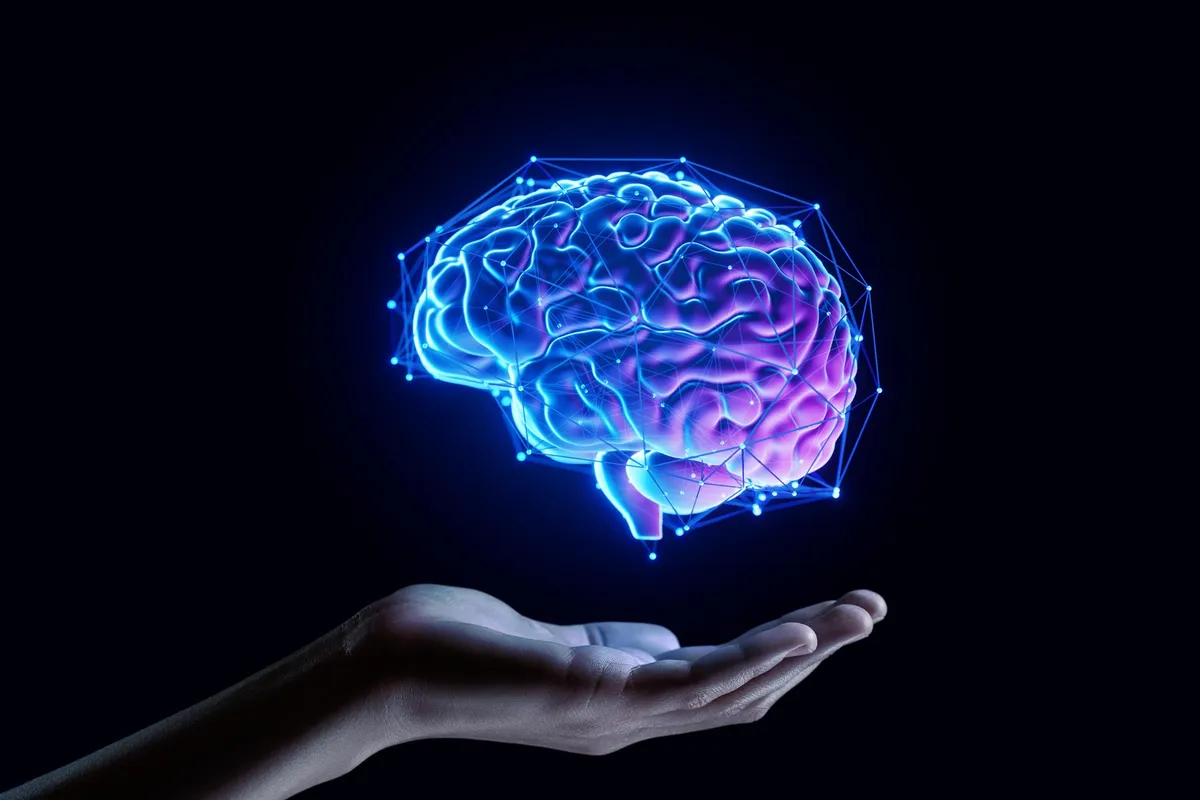
For decades, scientists imagined your brain like a well-organized office: sensory info comes in, gets processed by the junior staff, then moves up to the big bosses in the front for the actual decision-making. Simple, linear, and frankly, a bit boring.
Turns out, your brain's more like a chaotic but brilliant improv troupe, making decisions on the fly, with everyone shouting ideas at once. New research from the University of Illinois Urbana-Champaign is flipping that long-held belief on its head, suggesting that even the brain's earliest regions are in on the decision-making action.
This isn't just a fun fact for your next dinner party. It could fundamentally change how we build artificial intelligence, which, let's be honest, could use a few pointers from billions of years of evolution.
We're a new kind of news feed.
Regular news is designed to drain you. We're a non-profit built to restore you. Every story we publish is scored for impact, progress, and hope.
Start Your News DetoxThe Brain's Back-and-Forth Brilliance
Many of today's AI systems, like the convolutional neural networks powering everything from your phone camera to self-driving cars, are built on that old, step-by-step brain model. Information flows one way, from input to decision. But as Professor Yurii Vlasov and his team discovered, natural intelligence is a lot messier – and a lot more efficient.
Instead of a neat assembly line, your brain is a tangled web of feedback loops, constantly sending signals back and forth between different regions. It's why you can react to something almost instantly, without waiting for a full executive meeting in your prefrontal cortex. And it does all this with a fraction of the energy current AI systems guzzle.
To figure out this biological magic, Vlasov's team watched mice navigating a virtual reality world, making decisions based on what they saw. And that's when things got interesting.
Decision-making signals, which were supposed to be the exclusive domain of higher-level brain areas, popped up in the primary somatosensory cortex (S1). This region was previously thought to be just a basic sensory intake valve, handling raw data. Nope. Turns out, it's also got an opinion.
This means decisions aren't just bubbling up from the top; they're percolating through multiple levels of the brain simultaneously, in a constant back-and-forth conversation. Which, if you think about it, is both impressive and slightly terrifying.
A Blueprint for Better Bots
Now, before you try to rewrite the code for ChatGPT yourself, the researchers admit this isn't a direct how-to guide for building the next Skynet. But it offers a crucial shift in perspective. If we can understand the brain's full, interconnected, feedback-loop-filled architecture, we might be able to create AI that's not just smarter, but also vastly more power-efficient. Because, apparently, even our earliest brain regions are multitasking like pros.
Vlasov's team is now diving deeper into the rapid changes in neural activity, hoping to uncover more of these hidden mechanisms. The ultimate goal? To give AI a much-needed evolutionary upgrade, making it less of a rigid flowchart and more of a dynamic, quick-thinking organism.