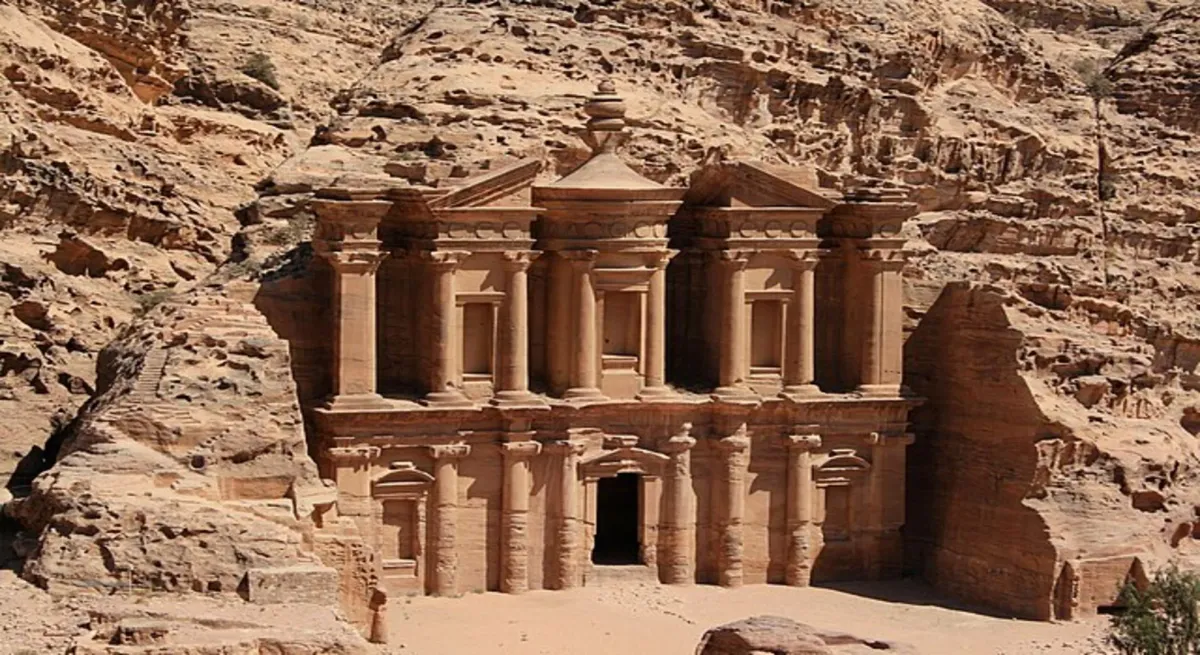
Petra thrived in one of the world's harshest deserts for a reason: its builders figured out how to make water flow uphill.
Archaeologists studying the Ain Barq aqueduct—the city's ancient water supply line—have uncovered nine metal pipes, including a remarkable 380-foot stretch of lead tubing. The discovery, detailed in the journal Levant, reveals an engineering sophistication that transformed a rocky, arid landscape into what researchers describe as a "fertile city."
The find matters because it shows how Petra solved a problem that would have seemed impossible: getting water to rise and fall across steep, uneven terrain. The lead pipe carried pressurized water—a technique that allowed engineers to push water upward against gravity, something open channels couldn't do. It was a calculated material choice. Lead could handle the pressure where clay or stone would fail.
We're a new kind of news feed.
Regular news is designed to drain you. We're a non-profit built to restore you. Every story we publish is scored for impact, progress, and hope.
Start Your News DetoxWater, Adapted to the Land
The aqueduct wasn't static. Researchers found that after the initial pressurized section, the system shifted to terracotta pipes and open channels for distribution throughout the city. This wasn't a downgrade—it was practical adaptation. Terracotta was easier to maintain and repair, a significant advantage when you're managing infrastructure across a desert city of thousands.
What emerges from this research is a portrait of ancient engineers who didn't force one solution onto a difficult landscape. They read the terrain, understood its constraints, and adjusted their methods accordingly. The 380-foot lead pipe was the innovation that made the rest possible—a high-tech solution to a high-stakes problem.
Archaeologists are now mapping the full course of the aqueduct and beyond, working to understand the complete picture of how Petra's builders planned and executed this system. Each discovery adds detail to a story that's already clear: in a city where water meant survival, ancient Petra's engineers built one of the ancient world's most impressive hydraulic networks.