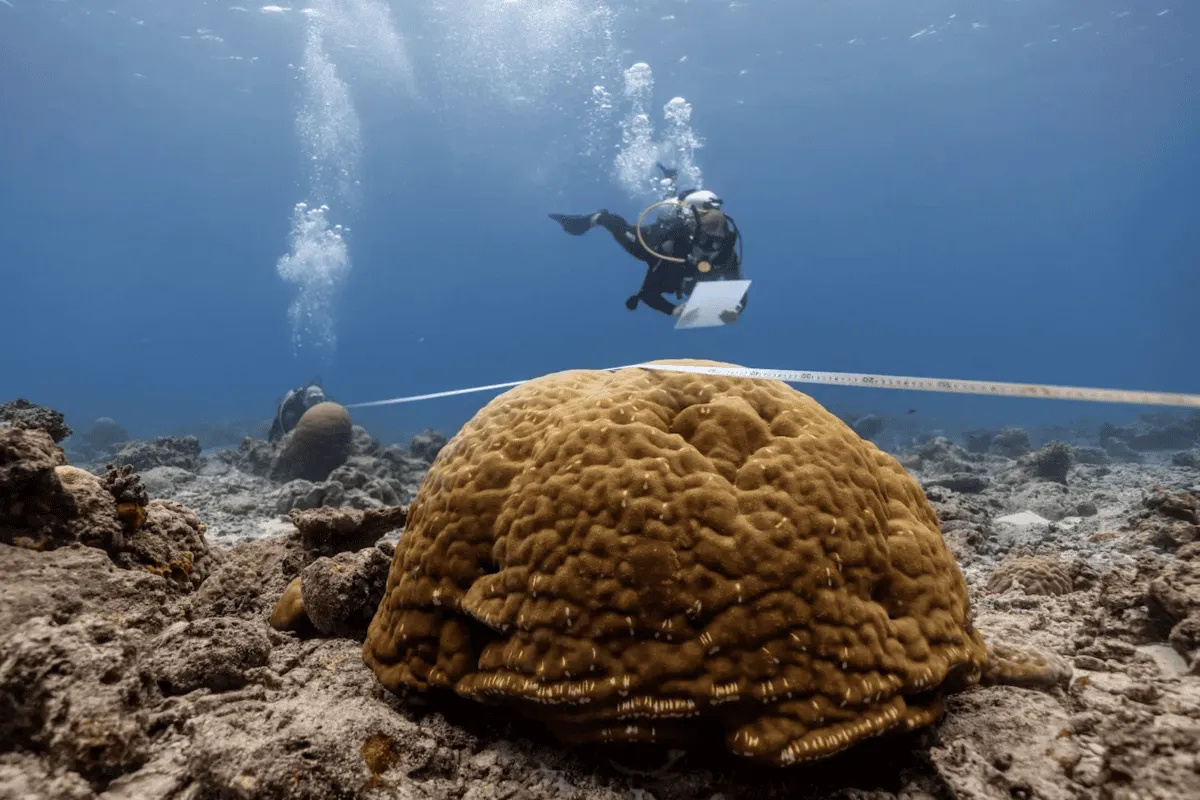
For anyone who's felt a creeping dread about the future of coral reefs, here's a splash of good news: a new study suggests roughly one-third of the world's coral reefs might actually make it to 2050. Even if we collectively decide to keep our greenhouse gas emissions on the high side. Because apparently that's where we are now.
This nugget of optimism comes courtesy of the Wildlife Conservation Society and Macquarie University in Australia. They unveiled their findings at the Our Ocean Conference in Kenya, with professor Joseph Maina stating, rather succinctly, "This study proves that there is hope."

The AI's Crystal Ball
So, how did they arrive at this surprisingly cheerful prognosis? Researchers didn't just cross their fingers and hope for the best. They wrangled over 45,000 observations of coral reefs, stretching all the way back to 1960 and looking forward to 2025. Then they threw in 42 environmental and human factors — everything from rising temperatures and heat stress to cyclones and, naturally, fishing pressure. Because humans.
We're a new kind of news feed.
Regular news is designed to drain you. We're a non-profit built to restore you. Every story we publish is scored for impact, progress, and hope.
Start Your News DetoxAll this data was fed into an artificial intelligence model, which then did what AI does best: predict the future. In this case, the future of coral reefs by 2050.
The model mapped out a staggering 550,000 square kilometers (about 213,500 square miles) of coral reefs. And of that vast underwater real estate, a respectable 165,922 square kilometers (64,063 square miles) showed potential for climate resilience. Which means these particular reefs might just be tough enough to shrug off the worst of climate change.
These resilient reefs are scattered across 71 countries, with more than half of them concentrated in just five nations: The Bahamas, Cuba, Australia, Indonesia, and the Philippines. A few African countries, like Kenya, Mozambique, and Tanzania, also made the cut. So, while the outlook for some remains grim, it appears not all our vibrant underwater cities are destined for the history books. Which, if you think about it, is both impressive and slightly terrifying.