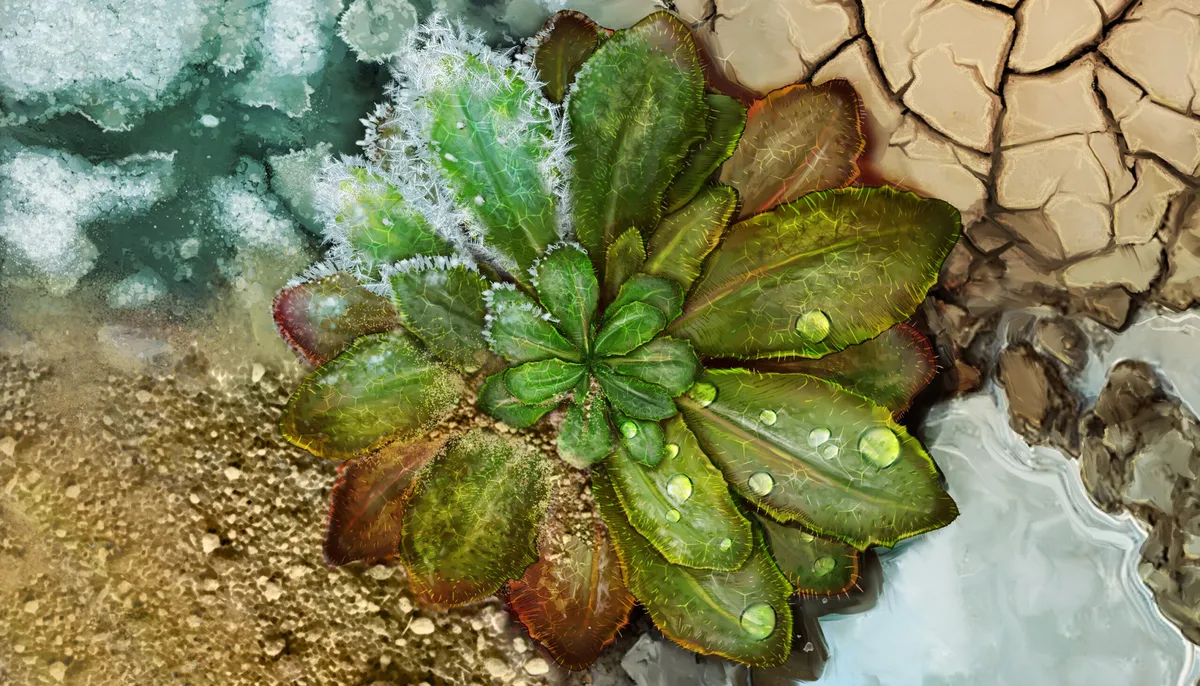
For decades, biologists have worried that plants might not evolve fast enough to adapt to a warming planet. Research on how species respond has been slow, often relying on single experiments.
Moisés (Moi) Expósito-Alonso, a UC Berkeley assistant professor, found this approach frustrating. He and his team created a network of scientists to conduct simultaneous experiments. They planted Arabidopsis thaliana in 30 different climate zones across Western Europe, the Mediterranean, the Middle East, and North America. The plants were left to evolve for five years.
The goal was to see how quickly these plants, a genetically diverse mix, would evolve under various climate stresses. These stresses ranged from the snowy Alps to the heat of the Negev Desert.
We're a new kind of news feed.
Regular news is designed to drain you. We're a non-profit built to restore you. Every story we publish is scored for impact, progress, and hope.
Start Your News DetoxUnderstanding the speed of evolution and the genetic changes involved is crucial. This information can help create models to identify plants and animals at risk as their environments change.
Expósito-Alonso hopes this data will help understand rapid adaptation. It could also help predict risks and identify "tipping points" where intervention might be needed. He believes this fundamental understanding is necessary to save species.
Evolution and Extinction
The first three years of data showed that in most cases, the plants evolved genetically to adapt. However, some populations, especially in the most extreme warm climates, did not show early signs of evolution. Instead, they displayed random changes before going extinct.
Expósito-Alonso noted that evolution can happen quickly, within three to five years, if there is enough genetic diversity. Researchers could see how specific DNA variants, called adaptive variants, became dominant in certain populations as evolution occurred.
 Plots of Arabidopsis thaliana partially covered by snow in Brixen im Thale, a town in the Kitzbühel Alps of western Austria. This was one of 30 research sites around Europe, the Middle East and the U.S. in which biologists planted 12 separate plots to study genetic evolution under the influence of climate change. Image: Genomics of rapid Evolution to Novel Environment (GrENE) network consortium
However, not all populations adapted effectively enough to survive, especially in the hottest environments. In these warm places, populations with predictable evolutionary changes survived. Those with chaotic genetic changes went extinct. This suggests that while rapid adaptation is possible, extreme heat can push populations past an evolutionary breaking point.
The findings were published in Science by Expósito-Alonso and the Genomics of rapid Evolution to Novel Environment (GrENE) network consortium. The experiment ran from 2017 to 2022.
Adapting to Change
Expósito-Alonso aimed to measure evolutionary adaptation speed and identify gene variants that allow adaptation. Each plot had a genetically diverse population of several hundred plants. This diversity was expected to ensure some plants had genes needed to adapt to new conditions.
If these rare gene variants (alleles) are present, adaptation should involve changes in genetic composition. This includes increases or decreases in allele frequency, new mutations, or recombining multiple mutations.
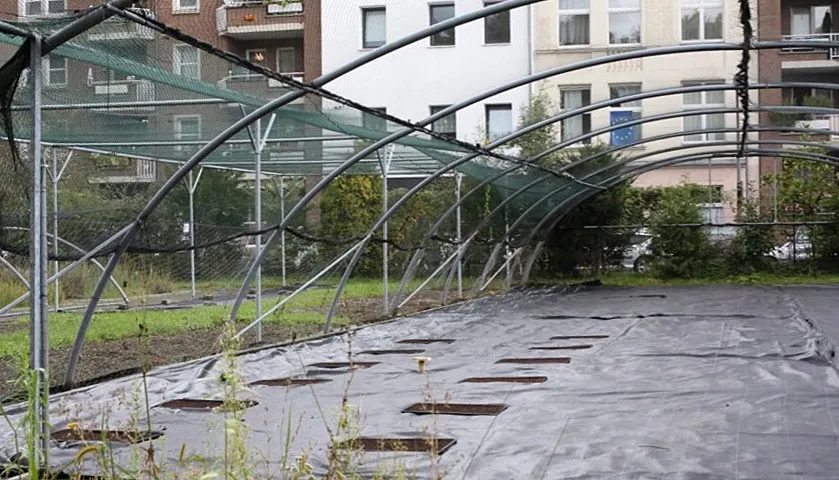 Some plots were planted in cities, such as this group of 12 near apartment buildings in Cologne, Germany. Image: GrENE network consortium
Scientists collected flower clippings annually and sequenced the plants' genomes. They found millions of alterations in expressed genes. These changes showed the plant population's efforts to adapt and survive. The gene alterations differed across climates but were similar in similar climates, showing repeatable adaptations.
Xing Wu, a postdoctoral fellow in the Expósito-Alonso lab and first author, noted that adaptation likely happened through existing genetic variation. If a variant was adaptive in one environment, its frequency increased.
Evidence of natural selection came from similar gene frequency changes across several plots at each location. Similar changes were also seen in plots in similar environments, like Spanish and Greek dry shrublands. This was observed in 24 of the 30 locations. Genes related to heat stress and flowering time were most affected.
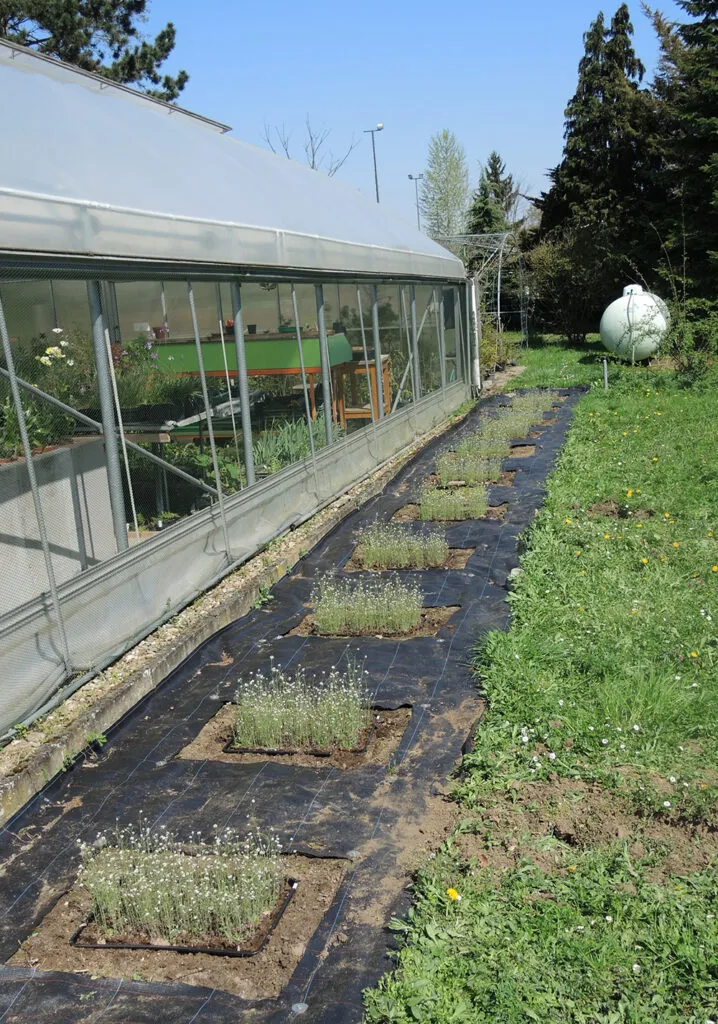 Healthy, flowering plots of Arabidopsis growing in Würzburg, Germany. Image: GrENE network consortium
Expósito-Alonso was surprised by how quickly allele frequencies changed. Not all plots showed evolutionary adaptation; some went extinct. Tatiana Bellagio, a Ph.D. candidate and co-first author, explained that some climates showed no genetic shifts or non-repeatable shifts. This indicated evolution by random genetic drift, not natural selection.
Plots with random or no genetic shifts in the early years eventually died out. Expósito-Alonso believes that for a population to survive long-term under climate change, it must undergo natural selection. If there's no "evolutionary rescue" where beneficial genotypes increase, the population may not sustain itself, especially in warm environments.
Future Outlook
Expósito-Alonso believes this research can help predict which species might survive in different locations. While each species may need its own long-term experiment, this modeling, calibrated with a model species, can aid many others.
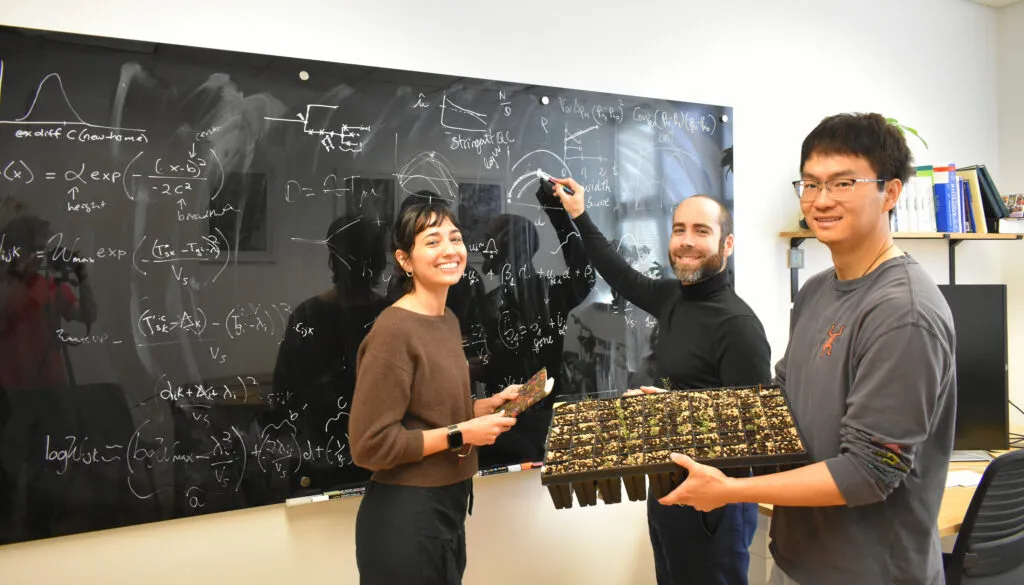 Moisés Expósito-Alonso with the two lead authors of the new study, Tatiana Bellagio and Xing Wu (holding a tray of Arabidopsis seedlings). Image: Moisés Expósito-Alonso/UC Berkeley
The team continues to analyze later generations of plants and is planting collected seeds for ongoing experiments. Expósito-Alonso has also started experiments at Berkeley with other plants.
His long-term goal is to observe rapid evolution in natural populations. He wants to track year-to-year genetic variation in wild plants experiencing climate changes. This would reveal the constant evolution hidden within seemingly stable ecosystems and sudden changes caused by events like drought or wildfire.
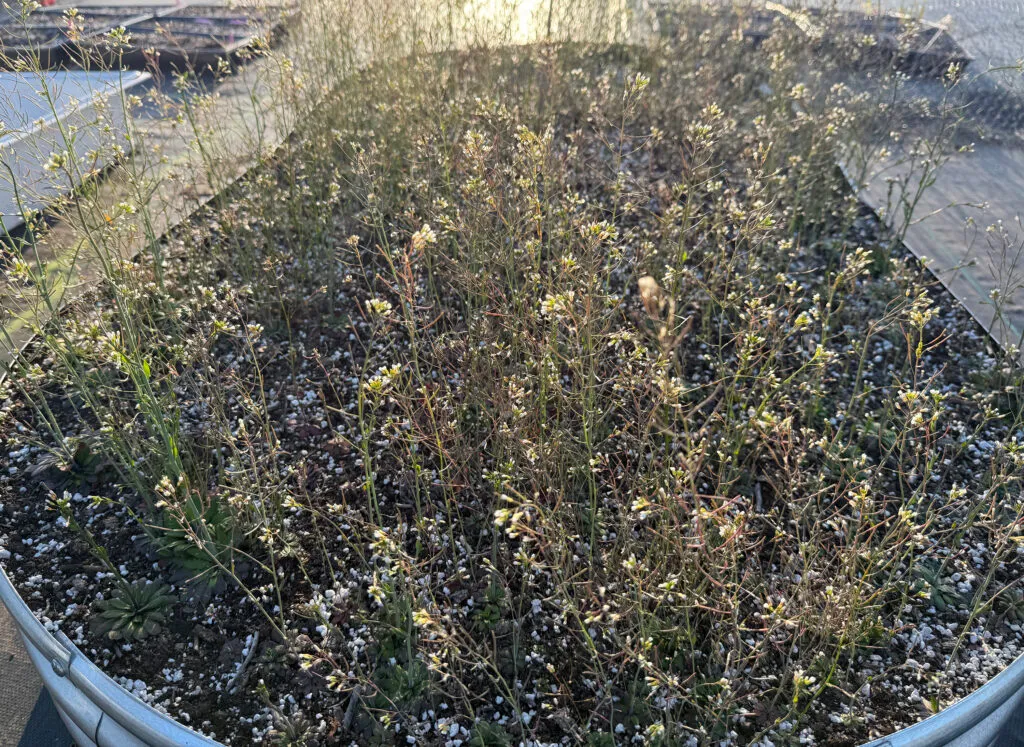 Arabidopsis growing at high density in new experiments at UC Berkeley’s Gill Tract in Albany. Image: Moisés Expósito-Alonso/UC Berkeley
Expósito-Alonso dreams of seeing the constant genetic changes happening in nature, even when ecosystems appear stable.
Deep Dive & References: Rapid adaptation and extinction in synchronized outdoor evolution experiments of Arabidopsis - Science, 2026