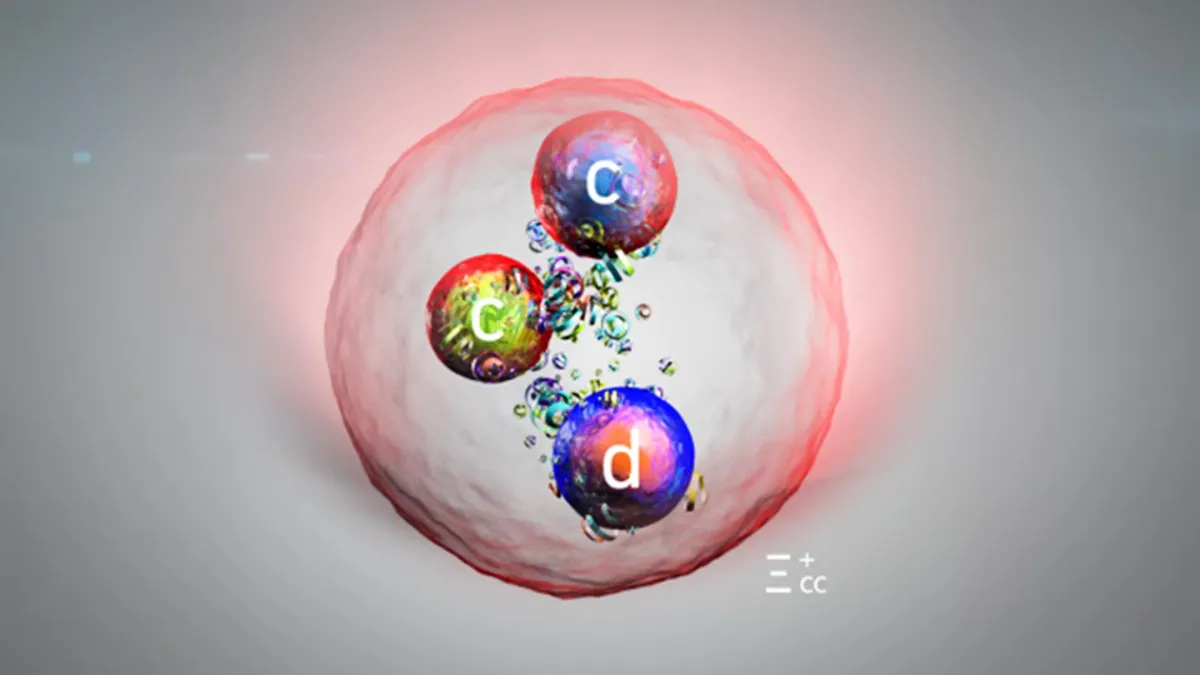
Get this: scientists at CERN’s Large Hadron Collider just discovered a brand-new particle. It’s called the Ξcc⁺ (that’s “Xi-cc-plus”), and it’s like a bulkier relative to the proton we all know. Even cooler? This find finally cracked a mystery that physicists have been scratching their heads over for two decades.
The University of Manchester played a massive role in making this happen. They used the upgraded LHCb detector, a huge project involving over 1,000 researchers from 20 countries. The UK brought the most to the table, with Manchester leading a lot of the work.
Meet the Ξcc⁺
So, what is it? Think of it this way: a proton, first spotted in Manchester back in the 1910s, is made of two “up” quarks and one “down” quark. The Ξcc⁺ is similar, but it swaps those light “up” quarks for two much heavier “charm” quarks, plus that one “down” quark.
We're a new kind of news feed.
Regular news is designed to drain you. We're a non-profit built to restore you. Every story we publish is scored for impact, progress, and hope.
Start Your News DetoxThis isn't Manchester's first rodeo with these particles. Back in the 1950s, their scientists were the first to identify another member of the Ξ (Xi) particle family. That work set the stage for today's big discovery.
Professor Chris Parkes, who heads Physics and Astronomy at Manchester, led the international team that installed and got the upgraded LHCb detector running. He also guided the UK’s involvement for over ten years. His team even designed and built key parts of the new tracking system, including silicon pixel detector modules right there in the university’s Schuster Building. These bits are super important for tracking tiny particle decays and spotting signals like the Ξcc⁺.
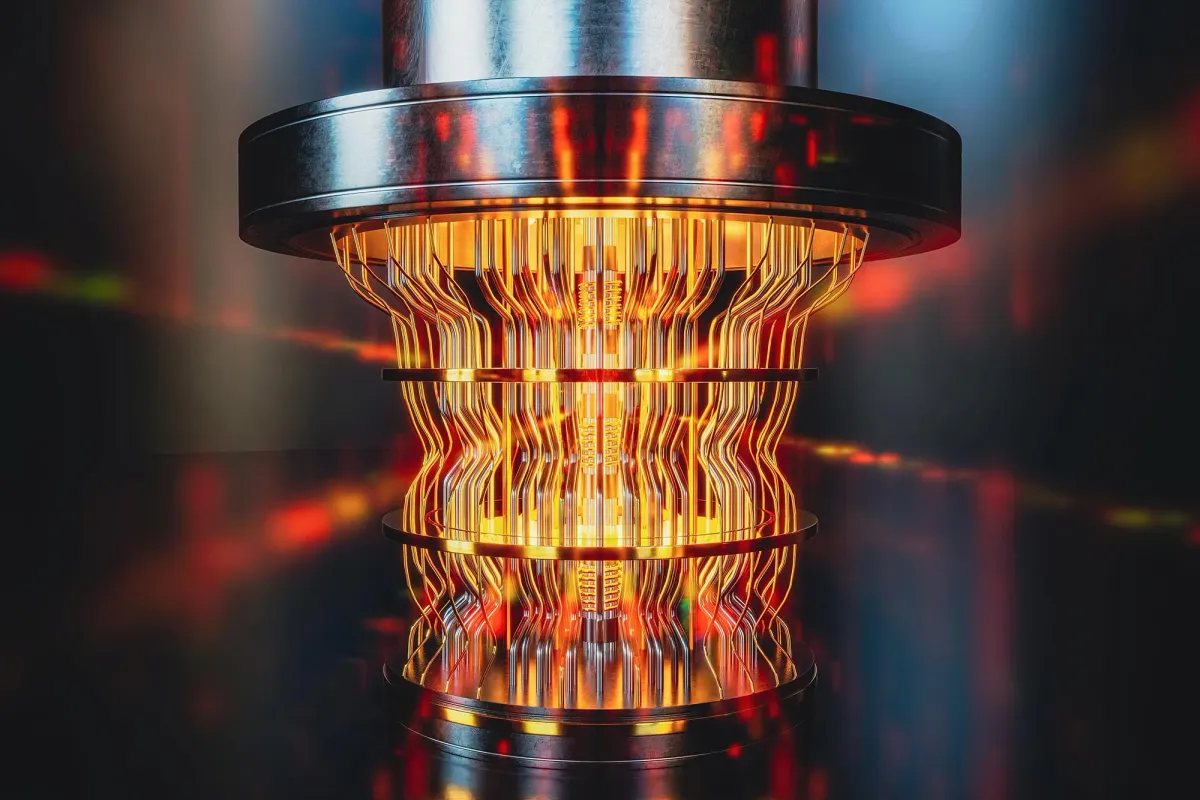
Dr. Stefano De Capua, also from Manchester, led the creation of those clever silicon detector modules. He put it perfectly: the detector works like an incredibly fast camera. It snaps pictures of particles from the LHC 40 million times a second! It uses a special silicon chip, which actually has a version that’s also used in medical imaging.
They found the Ξcc⁺ by watching it break down into three lighter particles during proton-proton collisions at the LHC. This happened in 2024, the first year the upgraded LHCb experiment was running at full power. They measured about 915 of these events, at a specific mass. This number lines up exactly with what theories predicted based on a related particle, the Ξcc⁺⁺, which they'd found earlier.
For 20 years, there were whispers and unconfirmed claims about this particle. But now, this new measurement from LHCb is solid. It doesn't match those old, unconfirmed claims, but it perfectly matches what the math said it should be. Talk about a mic drop!
Manchester isn't stopping here. They'll be key players in the next phase, LHCb Upgrade 2. That means even more data and even deeper dives into the universe's rarest particles. Pretty nuts, right?