New artificial neurons can fire so realistically they activate living brain cells in mouse tissue. This breakthrough could help make AI more energy-efficient.
Mimicking the Brain's Efficiency
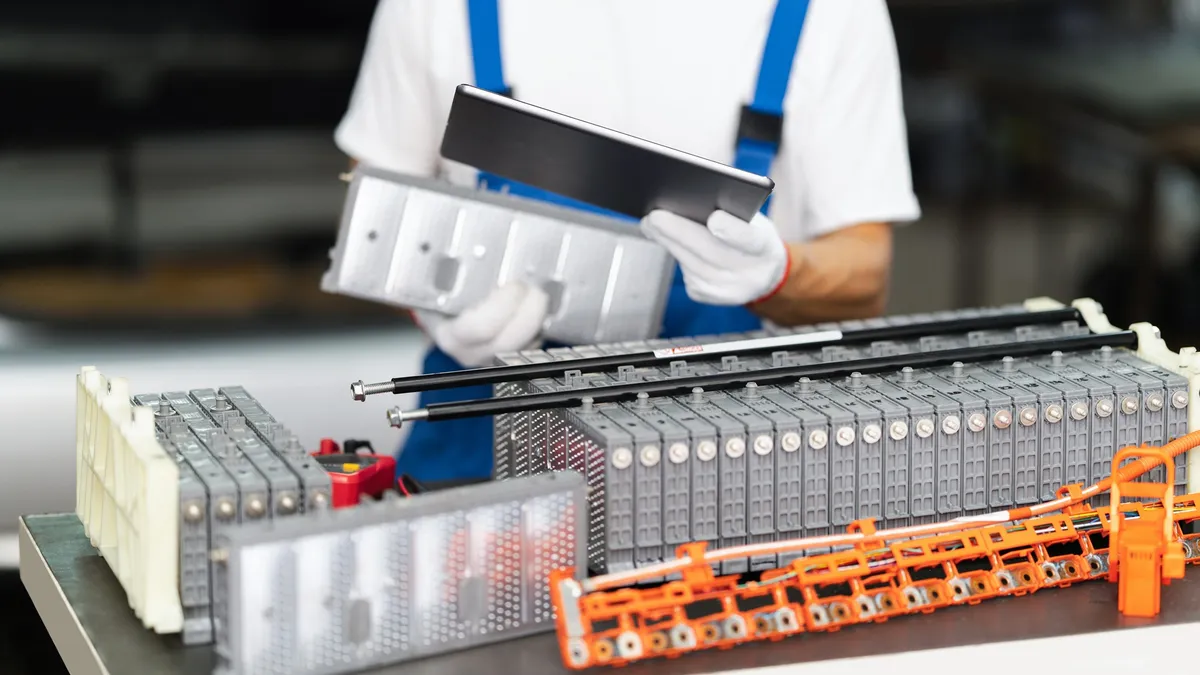
AI needs more and more power. This has led researchers to look at the brain for better ways to process information. The brain is incredibly efficient. A new method uses soft, flexible electronics to create artificial neurons. These neurons can copy biological signals and even connect directly with living brain tissue.
Scientists have tried to make "neuromorphic" chips for a long time. These chips use artificial neurons that act like real brain cells. However, there are still big differences in how these devices and actual brains work.
We're a new kind of news feed.
Regular news is designed to drain you. We're a non-profit built to restore you. Every story we publish is scored for impact, progress, and hope.
Start Your News DetoxReal neurons in the brain show many different activity patterns. This helps them process information very efficiently. Most artificial neurons, though, are identical. They all spike in the same way. This means neuromorphic chips need millions of these neurons to do even simple tasks.
A New Way to Print Neurons
A team from Northwestern University has found a new way to make artificial neurons. These neurons can copy the complex signals found in the brain. Their output was so real that they stimulated neurons in mouse brain tissue. This method could lead to much more energy-efficient AI.

Mark Hersam, who co-led the research, explained that silicon chips get complex by having billions of identical parts. These parts are rigid and fixed. The brain is the opposite. It is diverse, dynamic, and three-dimensional. To move towards brain-like computing, new materials and ways to build electronics are needed.
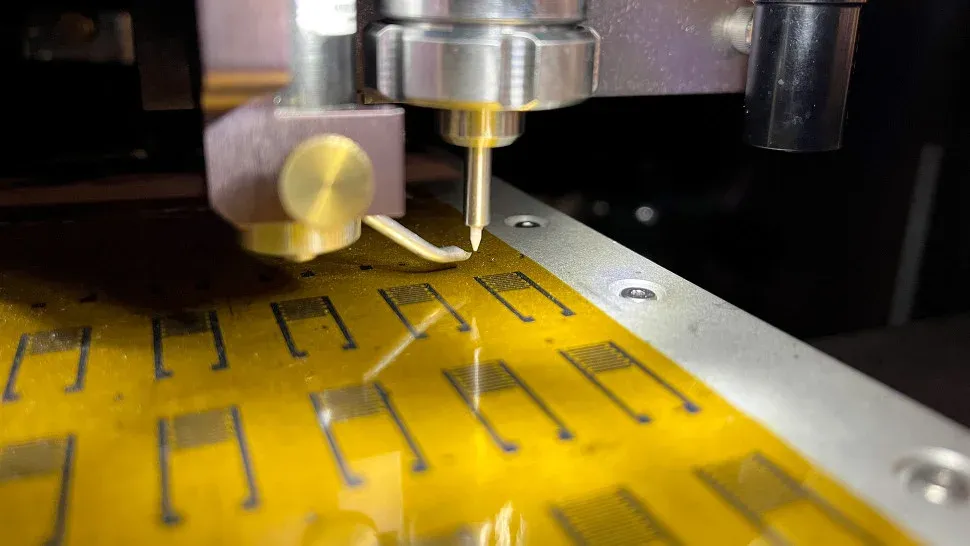
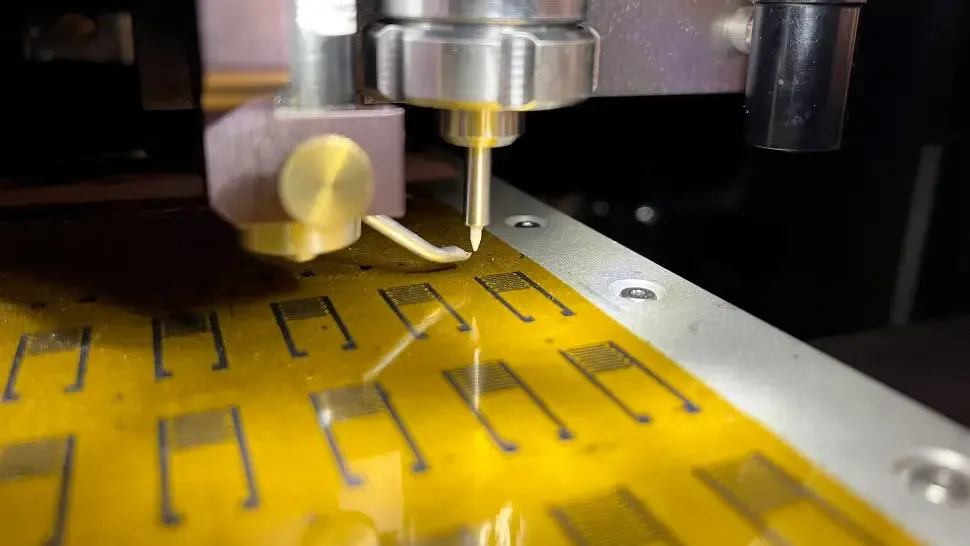
The team created their artificial neurons by jet printing a special electronic ink onto a flexible polymer. The ink contains tiny flakes of molybdenum disulfide, which is a semiconductor. It also has graphene, which conducts electricity.
The ink also includes a stabilizing polymer. Researchers usually burn this off after printing so it doesn't stop current from flowing. But the team found that leaving some of it behind created imperfections. These imperfections led to much more complex signaling.
Instead of burning the polymer completely, they partially broke it down. When current passed through the printed neurons, the polymer broke down further. This happened unevenly, creating a conductive path where current was squeezed into a tight channel.
This narrow path switches on and off quickly. It fires sharp voltage spikes that look like real neuron spikes. The device doesn't just make simple on-off pulses. It produces everything from single spikes to continuous firing and rhythmic bursts, just like a real neuron.
With only two of these printable neurons and some basic circuit parts, the researchers made complex spiking patterns. They could also adjust the length and frequency of these spikes. This allowed them to match the timing of biological signals. This could be useful for things like bioelectronic medicine or brain-computer interfaces.
Activating Living Brain Cells
To see if their artificial neurons could do more than just match numbers, the team worked with neurobiology professor Indira Raman. They connected their artificial neurons to slices of mouse cerebellum. Then, they fired spikes into the tissue. The biological neurons responded, showing that the synthetic signals were strong enough to activate real neural circuits.
Hersam noted that the living neurons responded to their artificial neuron. He said they showed signals that were the right timing and shape to interact directly with living neurons.
These abilities could lead to interesting applications. However, the researchers mainly hope this technology can lower AI's energy use. They want to do this by copying the brain's more efficient processing.
Hersam pointed out that tech companies are building huge data centers powered by nuclear plants to meet AI's energy needs. He said this approach has limits for power and cooling. He believes new, more energy-efficient hardware for AI is essential.
It will take a long time for this technology to go from the lab to factories. So, it's unlikely to cut the industry's power bill soon. But it could create the foundation for a smarter way to compute in the future.
Deep Dive & References: Complex spiking dynamics in solution-processed neuromorphic transistors - Nature Nanotechnology, 2024