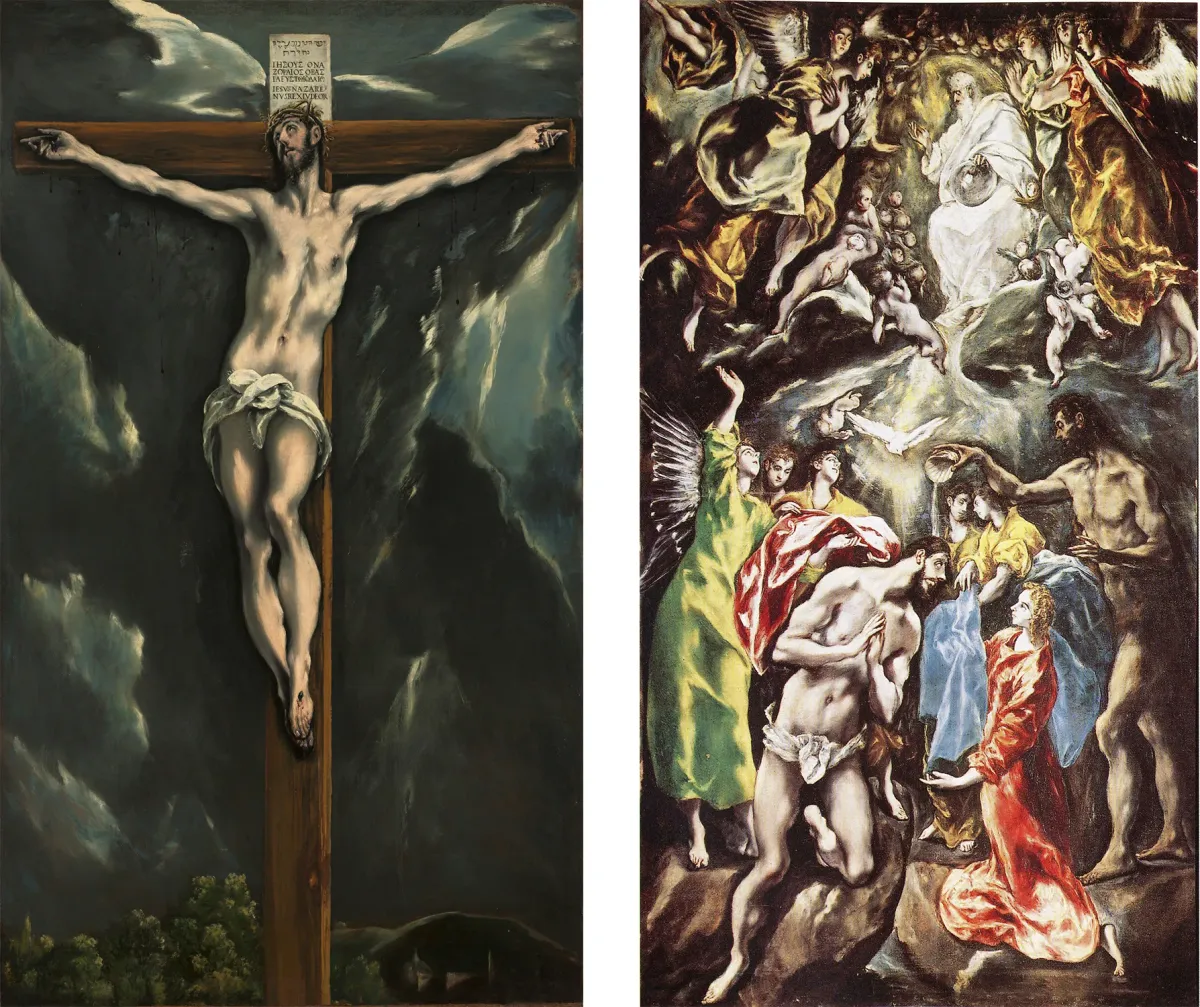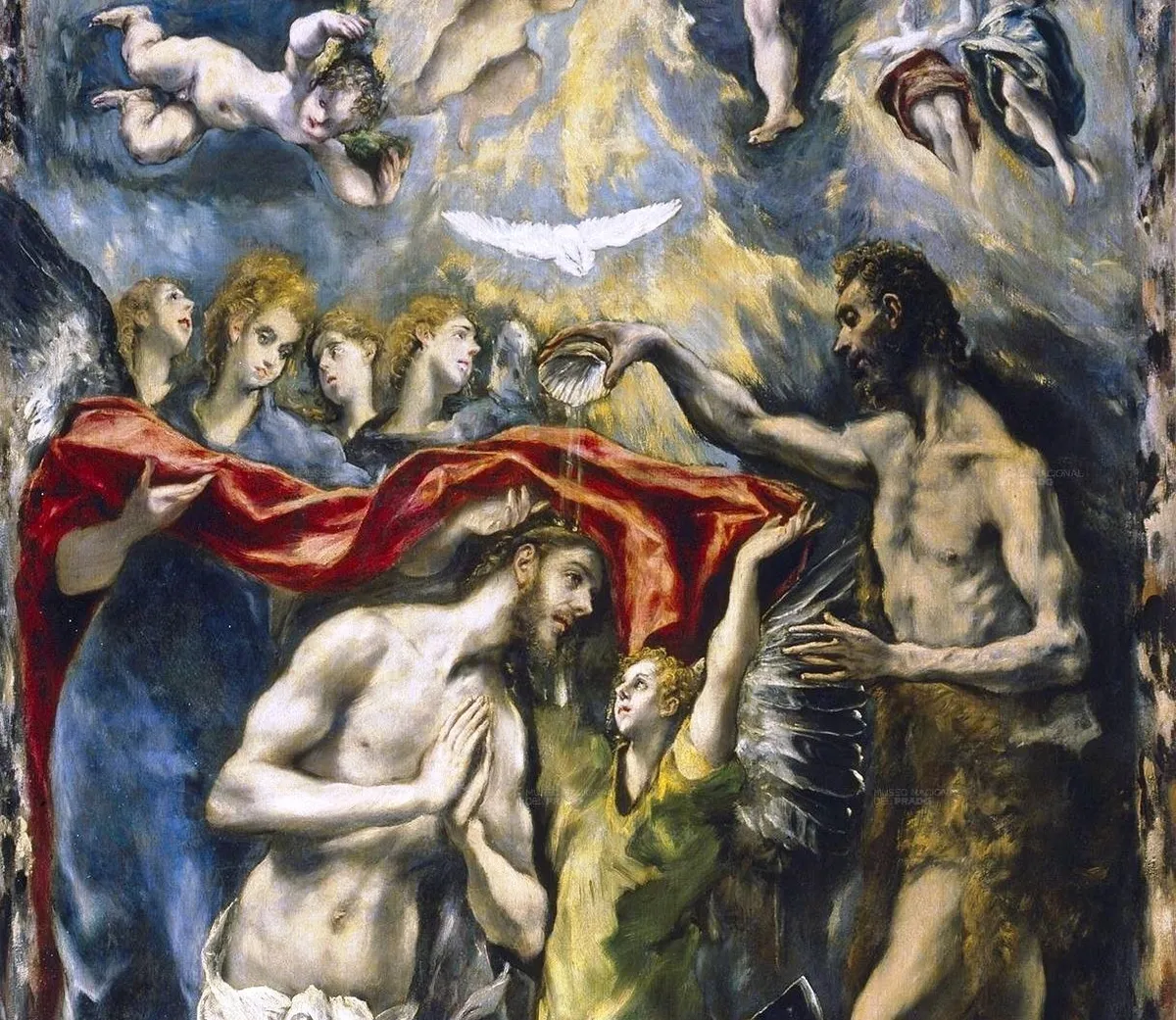
El Greco's The Baptism of Christ is a famous painting with a long-standing mystery. For years, experts thought the 17th-century oil painting was a team effort. They believed El Greco and his son, Jorge Manuel, worked on it together.
The painting shows Saint John the Baptist baptizing Jesus, with God and angels watching. Now, more than 400 years later, new A.I. analysis suggests El Greco deserves most of the credit alone.
A.I. Solves an Art Mystery
Many Renaissance artworks were made by several people. Master artists like El Greco had workshops with apprentices. These apprentices helped with various tasks, including adding finishing touches to paintings.
We're a new kind of news feed.
Regular news is designed to drain you. We're a non-profit built to restore you. Every story we publish is scored for impact, progress, and hope.
Start Your News DetoxArt historians thought apprentices played a big part in El Greco's later works. For The Baptism of Christ, the common idea was that El Greco died in 1614 before finishing it. His pupils and son were thought to have painted much of the artwork.
Until recently, art experts used their own eyes to analyze tiny brushstroke details. This helped them figure out who painted different parts of a work. However, this method often led to mistakes.
A new study, led by anthropologist Andrew Van Horn, used artificial intelligence for a more accurate look. The researchers trained their PATCH (pairwise assignment training for classifying heterogeneity) system with 25 paintings by nine student artists.
Then, the A.I. analyzed two of El Greco's works: Christ on the Cross, which is known to be solely by him, and The Baptism of Christ. PATCH found differences in brushstroke textures that humans cannot see. It concluded that a single artist painted Christ on the Cross.
For The Baptism of Christ, the A.I. credited El Greco with parts that scholars had previously thought were painted by others. Researchers suggest these brushstroke differences might be due to El Greco losing some motor skills late in his life. Some experts believe he had a stroke in 1608.
José María Riello, an art historian, noted that this technology is promising. It can help historians by revealing details the human eye misses. This can lead to new questions about art.
El Greco's Legacy
Born in Crete in 1541, Doménikos Theotokópoulos, known as El Greco, became a major Renaissance artist. He started by painting religious icons and was considered a master by 1566.
He moved to Venice, where he was influenced by artists like Titian. Then he went to Rome, and by 1577, he settled in Spain. There, he created some of his most famous works. Many scholars believe his expressive style, with its bold colors, was ahead of its time.
El Greco's unique style also inspired Pablo Picasso centuries later. Keith Christiansen, a curator, explained that El Greco rejected naturalism. He didn't aim for art that was easy for everyone to understand. Instead, he used elongated, twisting forms, radical angles, and unreal colors as the core of his art.
Deep Dive & References
- New A.I. analysis published in Science Advances - Science Advances
- Jackie Flynn Mogensen reports for Scientific American - Scientific American
- José María Riello tells Laura Reyes of El Mundo America - El Mundo America