Python blood contains a compound that could help people lose weight without common side effects. Researchers at the University of Colorado Boulder found this compound, which allows pythons to eat huge meals and then go months without food while staying healthy.
This discovery could lead to new treatments that make people feel full. These new therapies would avoid issues like nausea or muscle loss, which are often seen with current weight loss medications. The findings were published in the journal Natural Metabolism.
Python's Extreme Metabolism
Pythons are amazing animals. They can grow very large and eat prey the size of an antelope. After a big meal, they can survive for months or even years without eating again. During this time, their hearts stay healthy, and they don't lose muscle.
We're a new kind of news feed.
Regular news is designed to drain you. We're a non-profit built to restore you. Every story we publish is scored for impact, progress, and hope.
Start Your News DetoxWhen a python eats, its body changes dramatically. Within hours, its heart grows by about 25%, and its metabolism speeds up by as much as 4,000 times to digest the food.
Leslie Leinwand, a professor who has studied pythons for two decades, worked with Jonathan Long from Stanford University to understand these changes. Long studies metabolites, which are chemicals in the blood that show how the body uses energy.
Long's team also studied racehorses to learn about their intense speed and energy use. He believes looking at animals with extreme metabolisms helps us truly understand how metabolism works.
Discovering pTOS
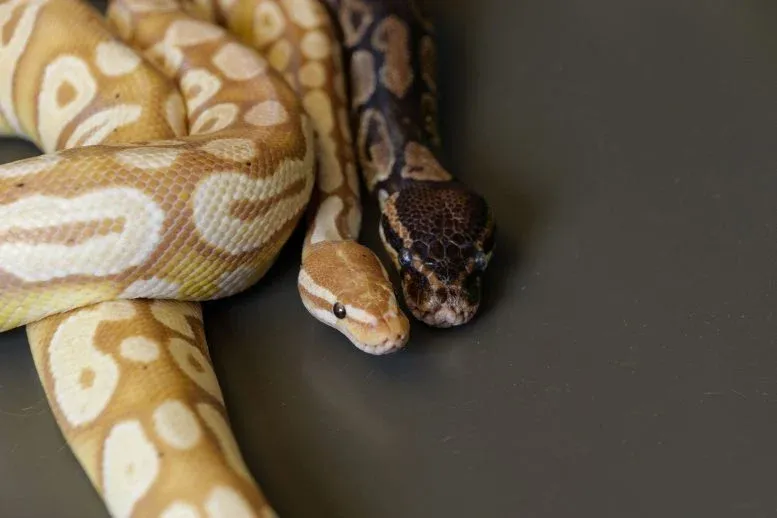
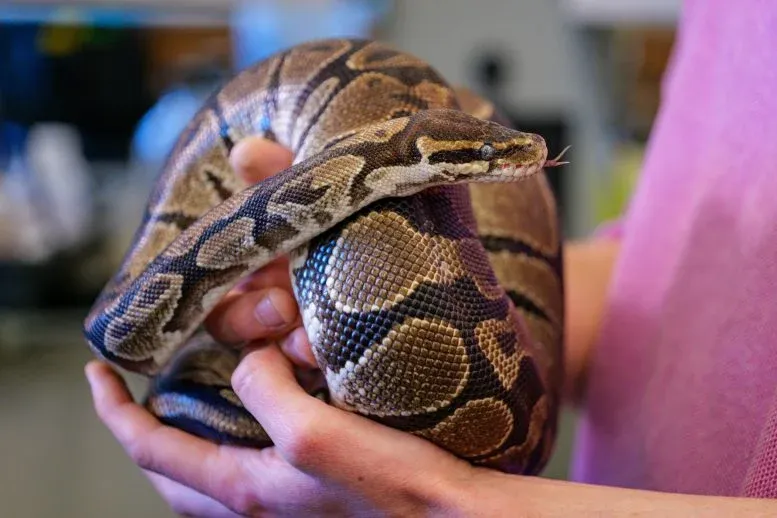
The research team studied blood from ball pythons and Burmese pythons. They fed the snakes once every 28 days and took blood samples right after feeding. They found 208 metabolites that increased sharply. One of these, para-tyramine-O-sulfate (pTOS), went up by about 1,000 times.
Further tests with Baylor University showed that giving high doses of pTOS to mice helped them lose weight. It affected the hypothalamus, the part of the brain that controls appetite. The mice lost weight without getting stomach problems, losing muscle, or feeling tired.
Hope for Human Health
The researchers learned that bacteria in the python's gut make pTOS. This compound isn't naturally found in mice. In humans, small amounts are in urine and increase slightly after eating.
Since most metabolism research uses mice and rats, pTOS has been overlooked until now. Leinwand noted that pTOS acts as an appetite suppressant in mice without the side effects of current GLP-1 drugs like Ozempic.
Current GLP-1 drugs were inspired by the Gila monster's venom. While these drugs are popular, many patients stop taking them within a year. Leinwand believes there's still a need for new and better treatments.
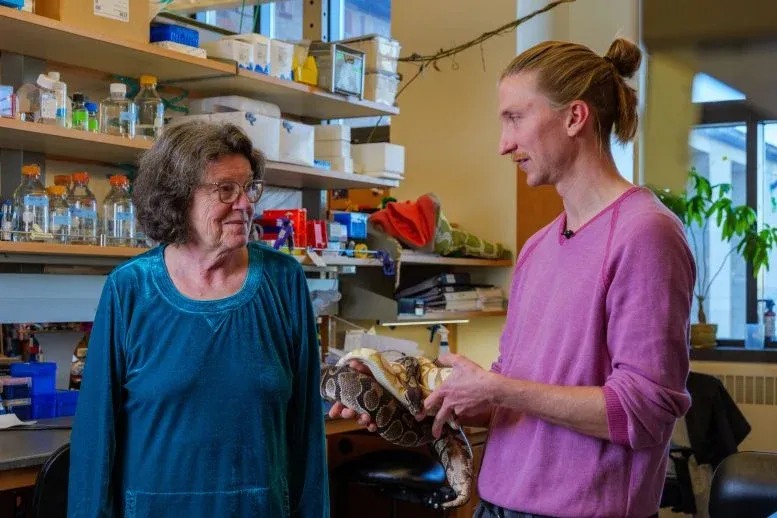
Leinwand, Long, and their colleagues have started a company called Arkana Therapeutics. They plan to create synthetic versions of python metabolites for new therapies. Their goals go beyond just weight loss.
They also hope to address sarcopenia, which is age-related muscle loss. This condition affects most people as they get older, especially those who can't exercise. Currently, there are no approved treatments for sarcopenia. Studying pythons might offer clues to help with muscle loss too.
Future studies will explore how pTOS works in humans and investigate other metabolites that increase after pythons eat. Some of these compounds rise by 500% to 800%. The team believes there is much more to discover.
Deep Dive & References
Python metabolomics uncovers a conserved postprandial metabolite and gut–brain feeding pathway - Nature Metabolism, 2026