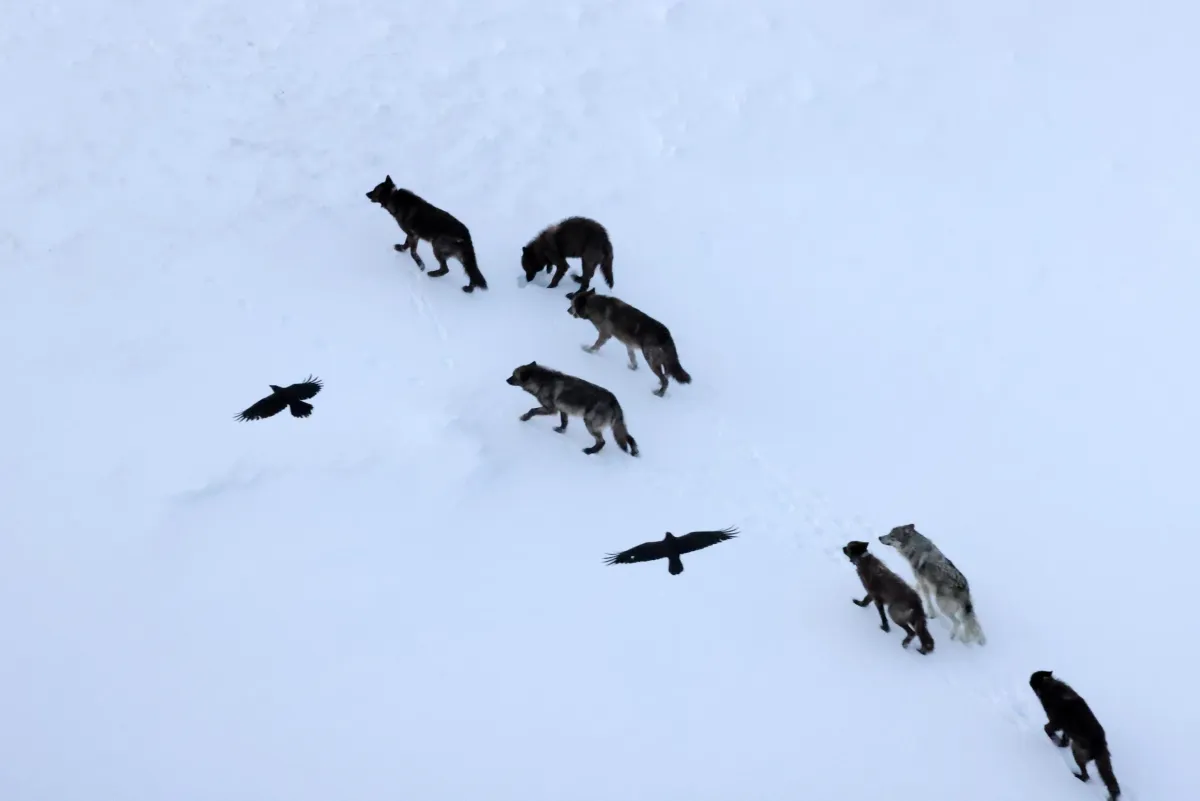
When wolves hunt in Yellowstone National Park, ravens often show up quickly to eat scraps. For years, people thought ravens simply followed wolves to find food.
Ravens Use Memory to Find Food
A new study shows ravens are much smarter than that. Researchers tracked ravens and wolves in Yellowstone for over two years. They found that ravens use their memory to find places where wolves often make kills. They don't just follow wolves around.
Dr. Matthias Loretto, the lead author, said ravens can fly non-stop for six hours straight to a kill site. This means they use their memory and navigation skills to search for food over large areas. Ravens don't need to stay close to wolves all the time because they remember where food is likely to appear.
We're a new kind of news feed.
Regular news is designed to drain you. We're a non-profit built to restore you. Every story we publish is scored for impact, progress, and hope.
Start Your News DetoxThe study was a team effort. It included the Research Institute of Wildlife Ecology, the Max Planck Institute of Animal Behavior, the Senckenberg Biodiversity and Climate Research Centre, the University of Washington, and Yellowstone National Park.
Tracking Ravens and Wolves
The study took place in Yellowstone, where wolves were brought back in the mid-1990s. About one-quarter of the park's wolves wear tracking collars. This helps scientists monitor their movements.
Dr. Dan Stahler, a Yellowstone biologist, noted that ravens often seem connected to wolves. He said they fly above wolf packs or hop behind them during a hunt. Because wolves leave food behind, scientists used to think ravens just stayed near them.
Stahler explained that no one had truly tested this idea before. They hadn't looked at it from the raven's point of view.
To understand ravens better, the team put tiny GPS trackers on 69 ravens. This was a large number for this type of research. Capturing the birds was hard because ravens are very smart and careful.
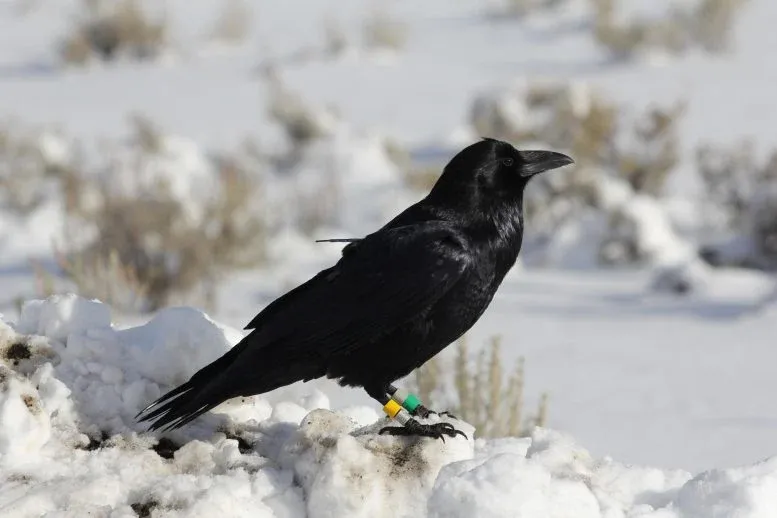
Loretto said ravens are so observant they don't easily fall into traps. Researchers disguised traps to blend in. They even used trash and fast food as bait near campsites. This made the ravens less suspicious.
Scientists also looked at movement data from 20 collared wolves. In winter, when ravens and wolves interact most, GPS locations were recorded every 30 minutes for ravens and every hour for wolves. They also tracked where and when wolves killed prey like elk, bison, and deer.
Ravens Remember Hunting Hotspots
Over two and a half years, researchers found only one clear case of a raven following a wolf for more than one kilometer or an hour.
Loretto was puzzled at first. If ravens weren't following wolves, why did they arrive at kill sites so quickly?
Further analysis showed the answer. Ravens repeatedly went back to areas where wolf kills often happened. They didn't just trail the predators. Some ravens flew up to 155 kilometers in a single day. They often took direct routes to places where carcasses were likely to appear. They did this even though they couldn't predict the exact time of a kill.
Researchers found that wolf kills often happened in specific areas, like flat valley bottoms. Wolves hunt more successfully there. Ravens visited these areas much more often than places where kills were rare. This suggests ravens learn and remember long-term feeding patterns.
Loretto said they knew ravens remember stable food sources, like landfills. What surprised them was that ravens also learn which areas have more wolf kills. A single kill is unpredictable, but some parts of the landscape are more productive over time. Ravens seem to use this pattern to their advantage.
What This Means for Animal Intelligence
The researchers think ravens might still follow wolves over short distances. Local clues, like wolf behavior or howling, could help birds find kills once they are already nearby.
Still, the main finding points to memory-based navigation. Ravens decide where to search using past experiences. They sometimes travel tens or even hundreds of kilometers.
Professor John M. Marzluff, a senior author, said the study shows how flexible ravens are. They don't stick to one wolf pack. With their sharp senses and memory of past feeding spots, they can choose from many foraging options far and wide. This changes how we think about how scavengers find food. It suggests we may have underestimated some species for a long time.
Deep Dive & References
Ravens anticipate wolf kill sites across broad scales - Science, 2026