An international team of researchers has confirmed the lost city of Alexandria on the Tigris in Iraq. Alexander the Great founded the city. It was a key trading hub until the 3rd century CE.
The University of Konstanz in Germany announced the discovery in January. Professor Stefan Hauser, who leads the archaeological project, shared the news.
The Lost City's History
Alexandria on the Tigris was later called Charax Spasinou. It was one of several major cities Alexander the Great founded. The most famous is Alexandria in Egypt.
We're a new kind of news feed.
Regular news is designed to drain you. We're a non-profit built to restore you. Every story we publish is scored for impact, progress, and hope.
Start Your News DetoxUnlike its Egyptian counterpart, the city on the Tigris was lost. By the 3rd century CE, the Tigris River shifted west. This river connected the city to sea trade. The settlement was mostly abandoned.
In the mid-20th century, John Hansman looked at aerial photos. He linked structures in Jebel Khayyaber to a description by Pliny the Elder. Pliny wrote about Alexandria on the Tigris in the 1st century CE. However, wars and instability, like the Iran-Iraq war, stopped further research for decades.
Rediscovery and Research
In 2014, a British team got permission to visit the site. They traveled in armored vehicles with tight security. By 2016, Professor Hauser joined them. This became the Charax Spasinou Project.
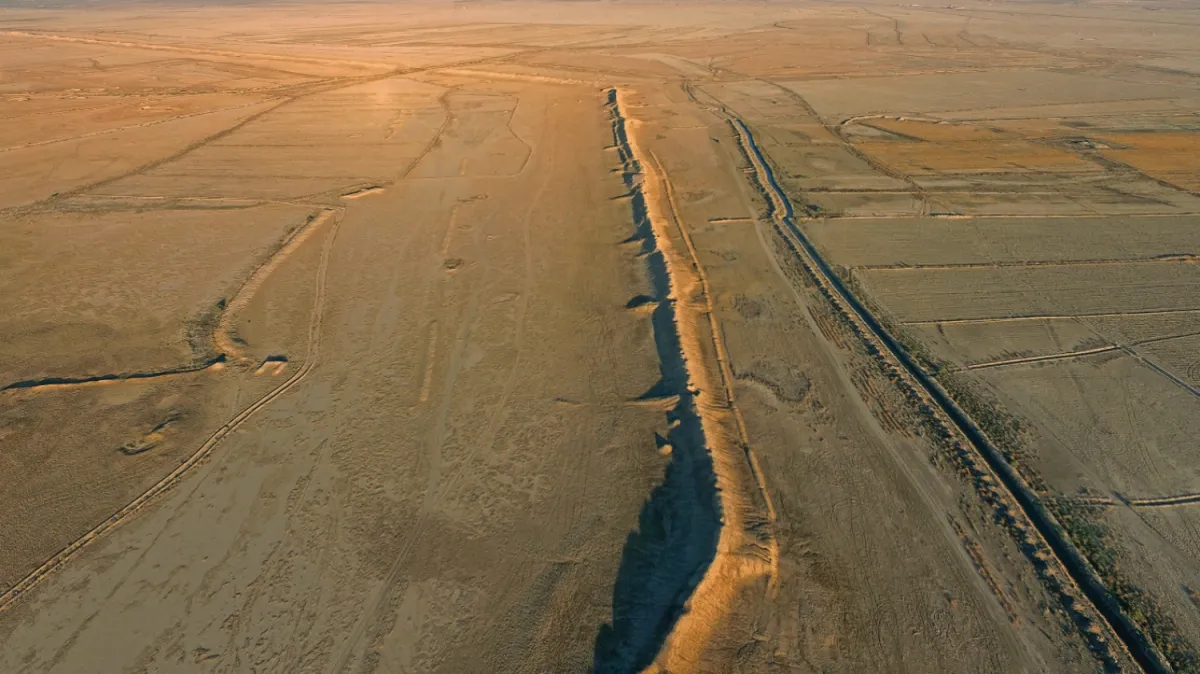
Working conditions were dangerous. The team first did non-invasive research. This included surface surveys under armed guard and drone photography. These methods showed the outlines of a large, planned city.
Later, a magnetometric analysis helped identify four main parts of the city. These were a large residential area, a river port with workshops, a grand palace, and an irrigation system for farming on the city's edge.
Hauser noted, "We then realized that what we had before us was the equivalent of Alexandria on the Nile." Future excavations are now planned.