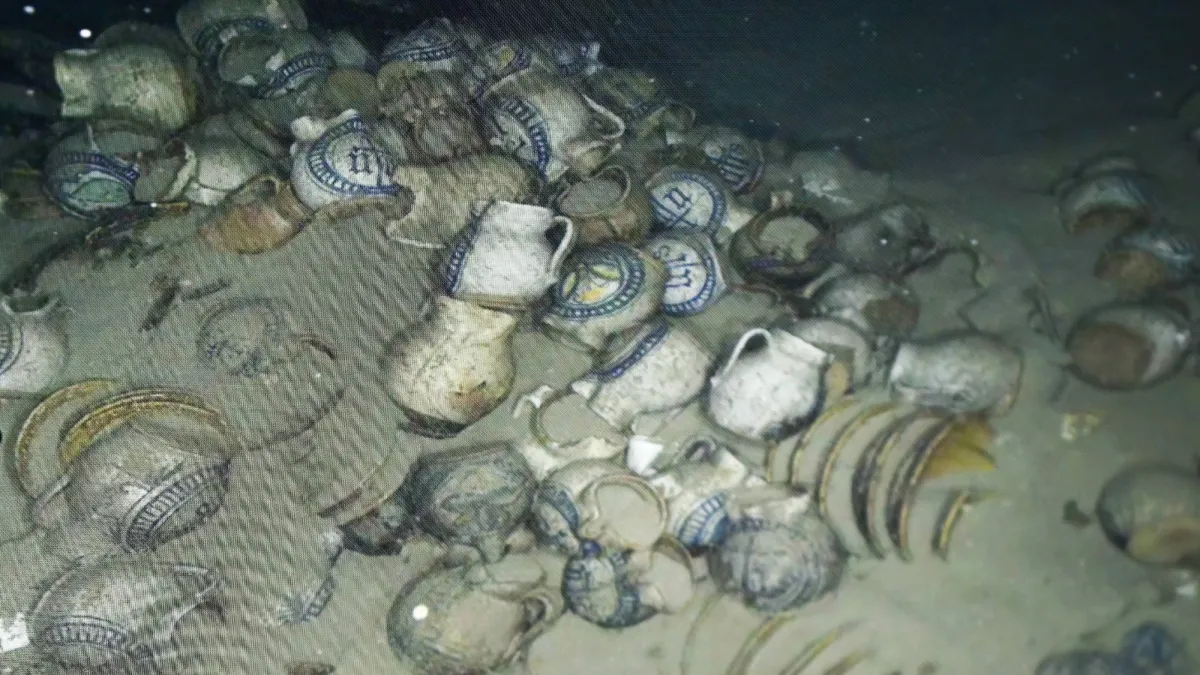
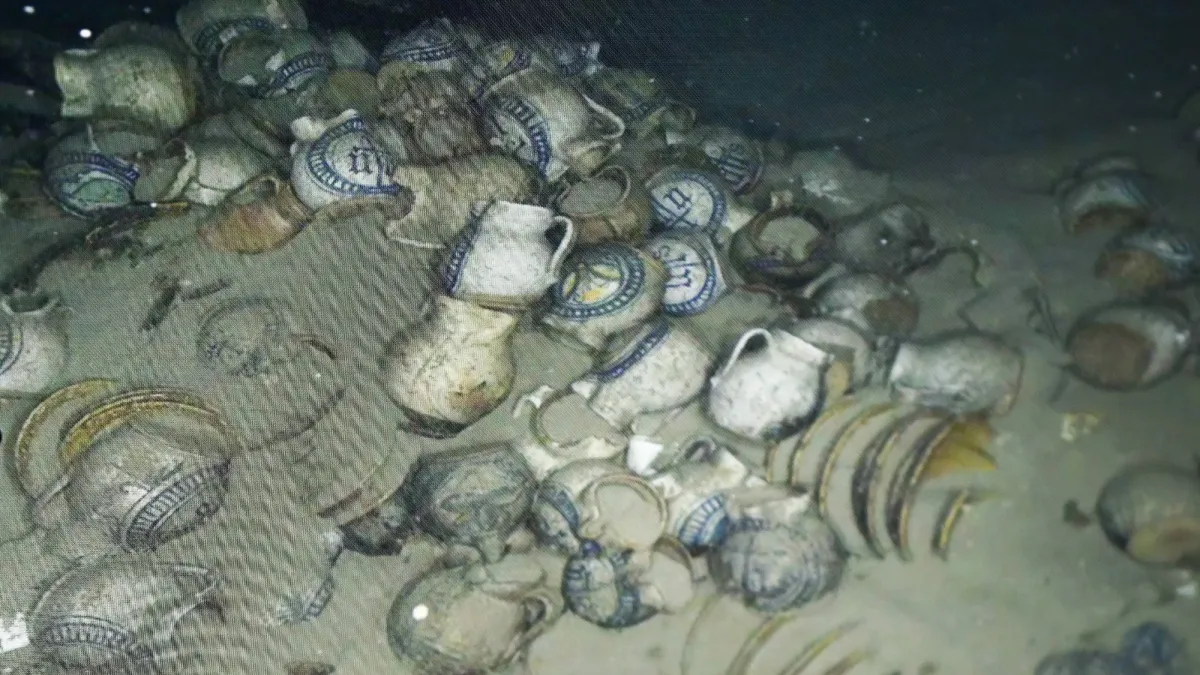
A robot recently explored a 16th-century merchant ship wreck almost 1.5 miles deep in the Mediterranean Sea. The remotely operated vehicle (ROV) found hundreds of decorated ceramics, jars, and jugs. These items were scattered across the seafloor off the coast of southern France.
A French navy sailor controlled the robot from a boat. The robot gently picked up artifacts with its pincers. Despite centuries underwater, the items still had their bold blue and yellow designs. The ship's discovery was lucky, and its exploration is possible thanks to modern robotics.
Discovering Camarat 4
Archaeologists named the site Camarat 4. It is about 30 miles off Ramatuelle, France. French authorities are keeping its exact location secret to prevent unauthorized visits. The French navy found Camarat 4 during a routine survey last year. It is now the deepest shipwreck in French territorial waters. The deepest shipwreck ever found is the USS Samuel B. Roberts, about four miles deep off the Philippines.
We're a new kind of news feed.
Regular news is designed to drain you. We're a non-profit built to restore you. Every story we publish is scored for impact, progress, and hope.
Start Your News DetoxReaching 1.5 miles deep is challenging. Archaeologists worked with the navy and used their largest robot. This robot can dive over 8,200 feet. It has several cameras and pincers for grabbing objects. It took a full hour for the robot to reach the seafloor.
Once there, the cameras showed the shipwreck in great detail. The robot took 66,974 images, snapping eight photos per second. These images showed the ship's six cannons, an anchor, and 12 cauldrons. Many ceramics were nearby, including one with the first three Greek letters of Jesus Christ's name.

Uncovering History and Challenges
Archaeologists believe the cannons and cargo confirm it was a merchant ship. They traced its origins to northern Italy. However, its final destination and what caused it to sink are still unknown.
The robot's photos will help create a 3D model of the wreckage for further research. The robot also recovered three pitchers and a plate. Using a robot's pincers to grab nearly 500-year-old, decaying items is not a perfect recovery method.
Exploring this sunken Italian ship is important for more than just curiosity. Detailed historical records about Mediterranean merchant ships from this period are rare. Learning about this ship could reveal more about trade routes of that time.
The ship's depth and remoteness mean it has been untouched by looters or previous explorers. This makes it a valuable site. However, modern human trash, like beer cans, plastic containers, and old fishing nets, was found near the cannons and ceramics.
Arnaud Schaumasse, director of DRASSM, noted the sadness of finding trash after the awe of discovery.
The Camarat 4 expedition shows the potential of future deep-sea exploration. This is possible due to increasingly capable robots, some designed to operate autonomously. Deeper dives will allow archaeologists to explore mysteries that would otherwise remain hidden in the ocean.