When an oil rig ruptures, emergency crews face a brutal tradeoff: let the slick spread toward shore, or set it ablaze and accept the toxic smoke that follows. Now researchers have found a third option — one that burns faster, cleaner, and leaves far less poison behind.
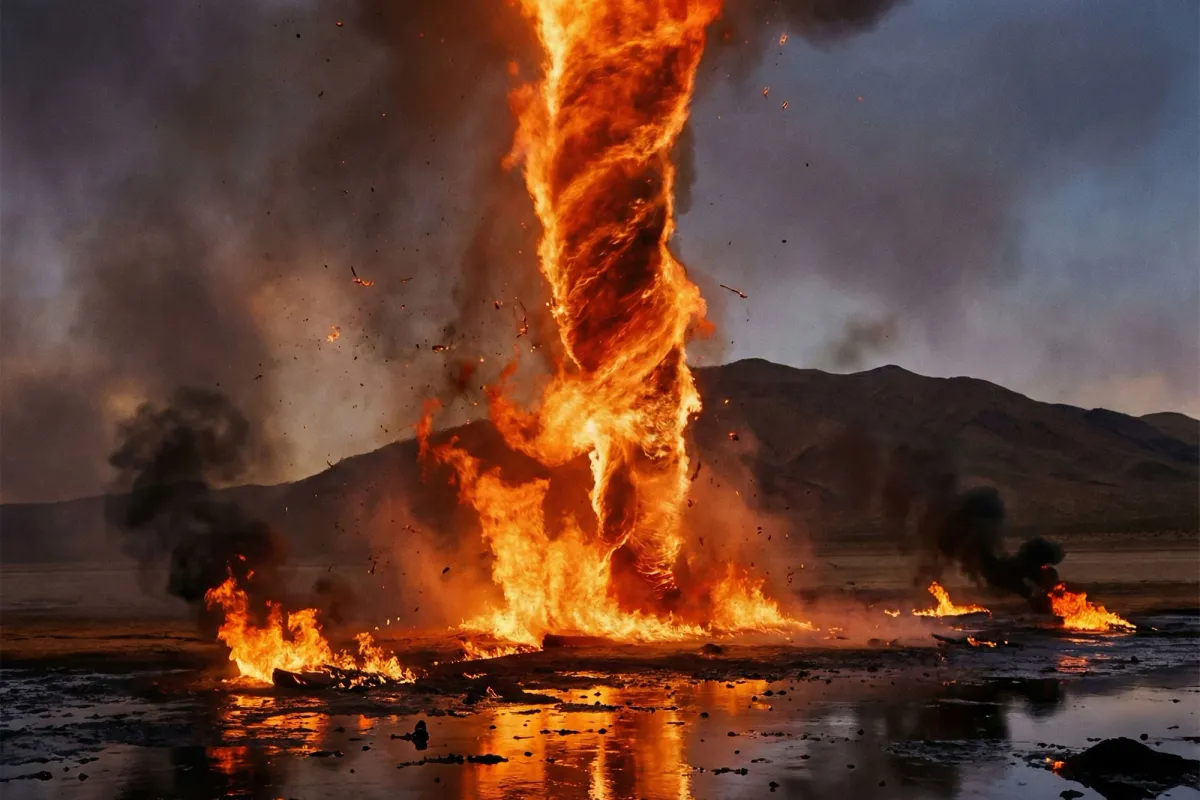
Scientists at Texas A&M and UC Berkeley have successfully created and controlled fire whirls: spinning columns of flame that rise vertically like tornadoes instead of spreading across water. In large-scale experiments, these fire whirls burned up to 95 percent of crude oil while cutting soot emissions by 40 percent compared to standard in-situ fires. The spinning motion pulls in extra oxygen, allowing the flame to burn hotter and nearly twice as fast as a traditional fire pool.
The research, led by aerospace engineer Elaine Oran, matters because time is everything in a spill. The faster crews can eliminate the slick, the less chance it has to drift into protected coastal areas or damage fragile marine ecosystems. After the 2010 Deepwater Horizon disaster — which killed 11 workers and devastated ocean habitats across the Gulf — the stakes of getting this right became impossible to ignore.
We're a new kind of news feed.
Regular news is designed to drain you. We're a non-profit built to restore you. Every story we publish is scored for impact, progress, and hope.
Start Your News DetoxThe Experiment That Changed Everything
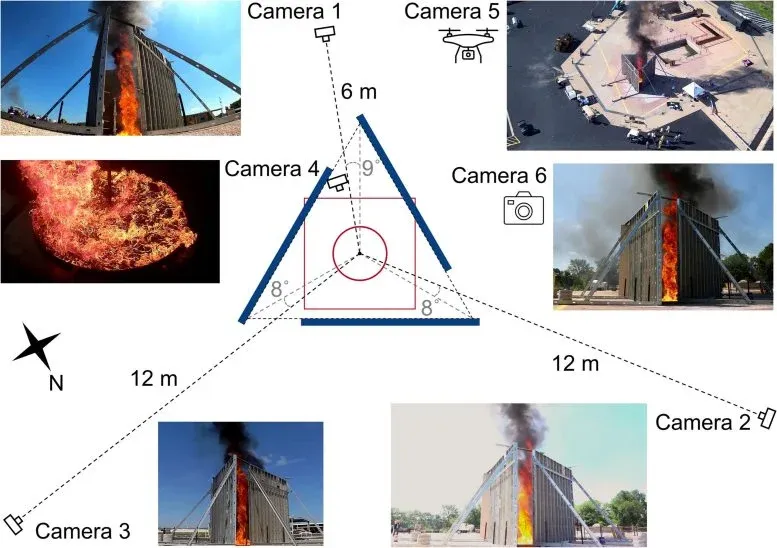
To test whether fire whirls could work at ocean-scale, the team built something that looked like an industrial furnace: a 16-foot-tall triangular structure with carefully positioned walls to direct airflow. At its center sat a 1.5-meter pool of crude oil floating on water. When ignited at Texas A&M's fire training facility, the setup produced a roaring fire whirl that reached nearly 17 feet high.
The results, published in the journal Fuel, were clear. Fire whirls burned oil 40 percent faster, slashed soot by 40 percent, and achieved 95 percent fuel consumption efficiency. But here's what makes this work genuinely novel: the researchers didn't just prove the concept works — they proved it works at a meaningful scale. Previous lab experiments with fire whirls were small and theoretical. This was the first time anyone had created one large enough to matter for real oil spill response.

What's particularly clever about the physics: the spinning column acts like a natural incinerator. As it rotates, it breaks down the particles that normally create dense smoke clouds — the thick, toxic haze that makes traditional burning such an environmental compromise. You're trading one problem (spreading oil) for another (air pollution). Fire whirls reduce that tradeoff significantly.
But there's a catch. Fire whirls are temperamental. They require what researchers call the "Goldilocks" zone — conditions have to be just right. Too much wind and the spinning column collapses. Too little airflow and it reverts to a standard fire pool. The depth of the oil layer matters too. This sensitivity means the technology won't work everywhere, and it won't work without careful engineering.
What Comes Next
Oran and her team envision portable systems that could be deployed over burning oil slicks, essentially converting ordinary flames into efficient fire whirls on demand. That's still years away. But the breakthrough here is that the physics work, the engineering is tractable, and the environmental payoff is real. The insights could also extend beyond oil spills — understanding fire whirls better might improve combustion efficiency in industrial systems or help predict wildfire behavior on land.
The deeper lesson: sometimes the solution to an environmental crisis isn't about preventing the fire. It's about redirecting it.