
For decades, doctors have asked patients about their gas, and patients have guessed. Now researchers at the University of Maryland have built the first wearable device designed to actually measure it—and the results suggest we've been wildly underestimating the whole time.
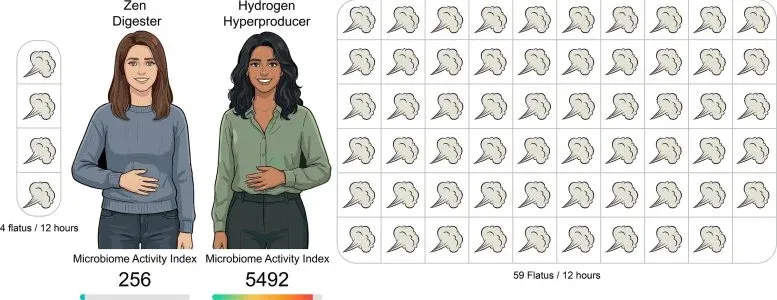
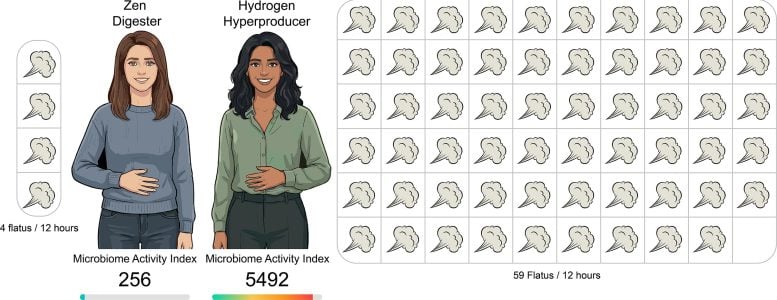
Healthy adults pass gas an average of 32 times per day, according to data from the Smart Underwear device. That's more than double the 14 times commonly cited in medical literature. The range is striking: some people recorded as few as four episodes daily, while others hit 59. The gap exists partly because earlier estimates relied on self-reporting and small lab studies—people forget, especially during sleep, and memory isn't reliable for something so routine.
"It is virtually impossible for the physician to objectively document the existence of excessive gas using currently available tests," gastroenterologist Michael Levitt wrote in 2000. Two decades later, that gap in medical knowledge finally has a tool to fill it.
We're a new kind of news feed.
Regular news is designed to drain you. We're a non-profit built to restore you. Every story we publish is scored for impact, progress, and hope.
Start Your News Detox
How it works
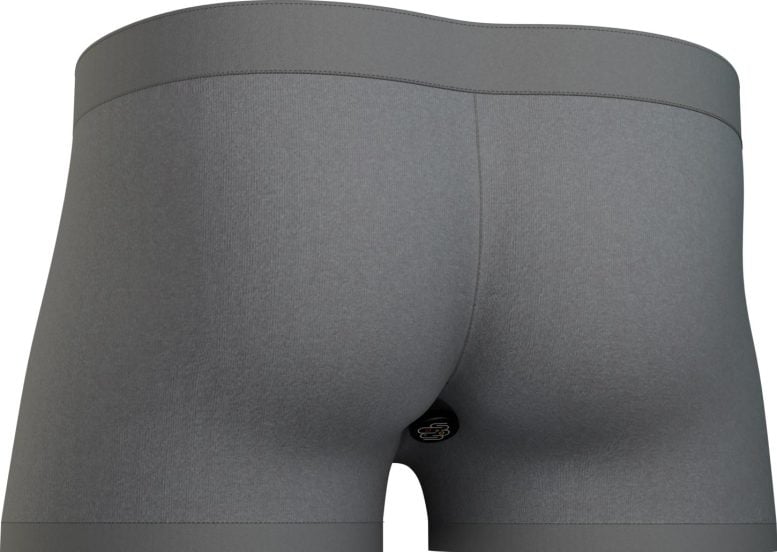
The device is a compact sensor that attaches to regular underwear and uses electrochemical detection to continuously monitor hydrogen gas—the primary component of flatus produced when gut microbes break down undigested carbohydrates. Think of it as a continuous glucose monitor, but for your digestive system.
In testing, the sensor detected spikes in hydrogen after participants ate inulin, a prebiotic fiber known to trigger microbial fermentation, with 94.7% accuracy. This matters because it means researchers can now observe, in real time and outside the lab, how specific foods and dietary changes actually influence the trillions of microbes living in your gut. Previously, understanding that relationship required invasive testing or educated guessing.
Brantley Hall, the assistant professor leading the project, points out something obvious once you think about it: medicine has reference ranges for blood sugar, cholesterol, and dozens of other metrics. Flatulence, a universal human function, has none. "We don't actually know what normal flatus production looks like," Hall said. "Without that baseline, it's hard to know when someone's gas production is truly excessive."
The bigger picture

This isn't just about counting farts. The research reveals something deeper about how we study the human body. For years, doctors have had sophisticated tools to measure what happens in the bloodstream but almost nothing to measure what happens in the gut—the site of some of the most important biological activity in your body. A wearable gas sensor is a surprisingly elegant way to eavesdrop on microbial activity without drawing blood or requiring hospital visits.
The team is now launching the Human Flatus Atlas, a crowdsourced study recruiting hundreds of adults across the U.S. Participants receive a Smart Underwear device by mail and wear it for 24 hours while researchers track their gas production, diet, and microbiome composition. Early data has already identified distinct groups: "Zen Digesters" who eat high-fiber diets but produce little gas (suggesting their microbiomes have adapted efficiently), "Hydrogen Hyperproducers" who pass gas frequently, and the broad middle of "Normal People."

Researchers will analyze stool samples from the extreme groups to understand the microbial differences—what makes one person's gut ecosystem fundamentally different from another's, and whether those differences are fixed or changeable through diet.
The project hints at a larger shift in medicine: moving from snapshot measurements taken in clinical settings to continuous, real-world monitoring that captures how your body actually functions day to day. That shift could reshape how we evaluate whether probiotics work, how fiber affects digestion, or why some people struggle with bloating while others don't. For the first time, we'll have data instead of assumptions.
U.S. adults 18 and older can enroll at flatus.info. Enrollment is limited, so the window to contribute to the atlas may not stay open long.