Beneath Venus's impenetrable clouds lies something that changes how we think about the planet's volcanic past: a lava tunnel so vast it dwarfs anything we've found on Earth or Mars.
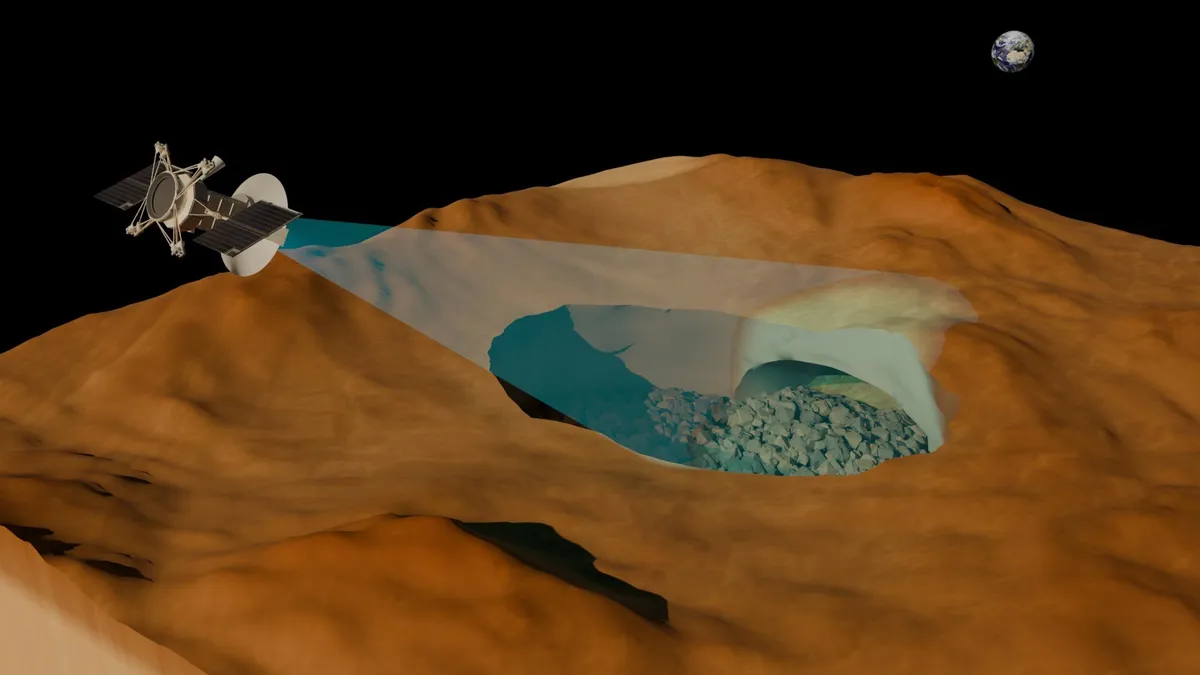
Researchers at the University of Trento used decades-old radar data from NASA's Magellan spacecraft to detect the structure in a region called Nyx Mons. The tunnel stretches roughly a kilometer across, with a roof at least 150 meters thick and a hollow void plunging 375 meters deep. What makes this discovery significant isn't just the size — it's that we've finally seen direct evidence of something planetary scientists have theorized about for years but never confirmed.
"Our knowledge of Venus is still limited, and until now we have never had the opportunity to directly observe processes occurring beneath the surface," says Lorenzo Bruzzone, who led the research. "The identification of a volcanic cavity allows us to validate theories that for many years have only hypothesized their existence."
We're a new kind of news feed.
Regular news is designed to drain you. We're a non-profit built to restore you. Every story we publish is scored for impact, progress, and hope.
Start Your News DetoxWhy Venus grows giant tunnels
Venus's conditions actually favor building bigger lava tubes than Earth does. The planet's lower gravity and crushing atmospheric pressure allow molten lava to develop a thick, insulating crust quickly once it flows from a volcanic vent. That crust then protects the tunnel beneath, letting lava carve out enormous channels underground — larger than anything we've observed on our own planet or predicted for Mars.
Finding these structures is notoriously difficult. Lava tubes form underground and stay hidden until a section of roof collapses, leaving a pit visible from above. On Venus, the challenge intensifies. Thick clouds permanently block direct observation, so scientists must rely on radar imaging that can penetrate the haze. The Magellan data the team analyzed came from 1990 to 1992 — meaning this discovery has been waiting in archived images for three decades.
Opening doors for future exploration
The researchers believe this single detected tunnel may be just the tip of something much larger. Analysis of the surrounding terrain and other similar pits suggests underground conduits could extend at least 45 kilometers — far beyond what the current data can confirm. To find more and understand the full scope of Venus's volcanic network, scientists will need sharper images and more sophisticated instruments.
Two upcoming missions will deliver exactly that. The European Space Agency's Envision and NASA's Veritas both carry advanced radar systems designed to produce far more detailed surface maps. Envision will also include a ground-penetrating radar capable of probing several hundred meters below the surface — potentially detecting lava tubes even when no skylight exists to give them away.
"Our discovery represents only the beginning of a long and fascinating research activity," Bruzzone notes. What we're learning is that Venus, long dismissed as a hellish dead world, holds geological secrets as complex as Earth's own.