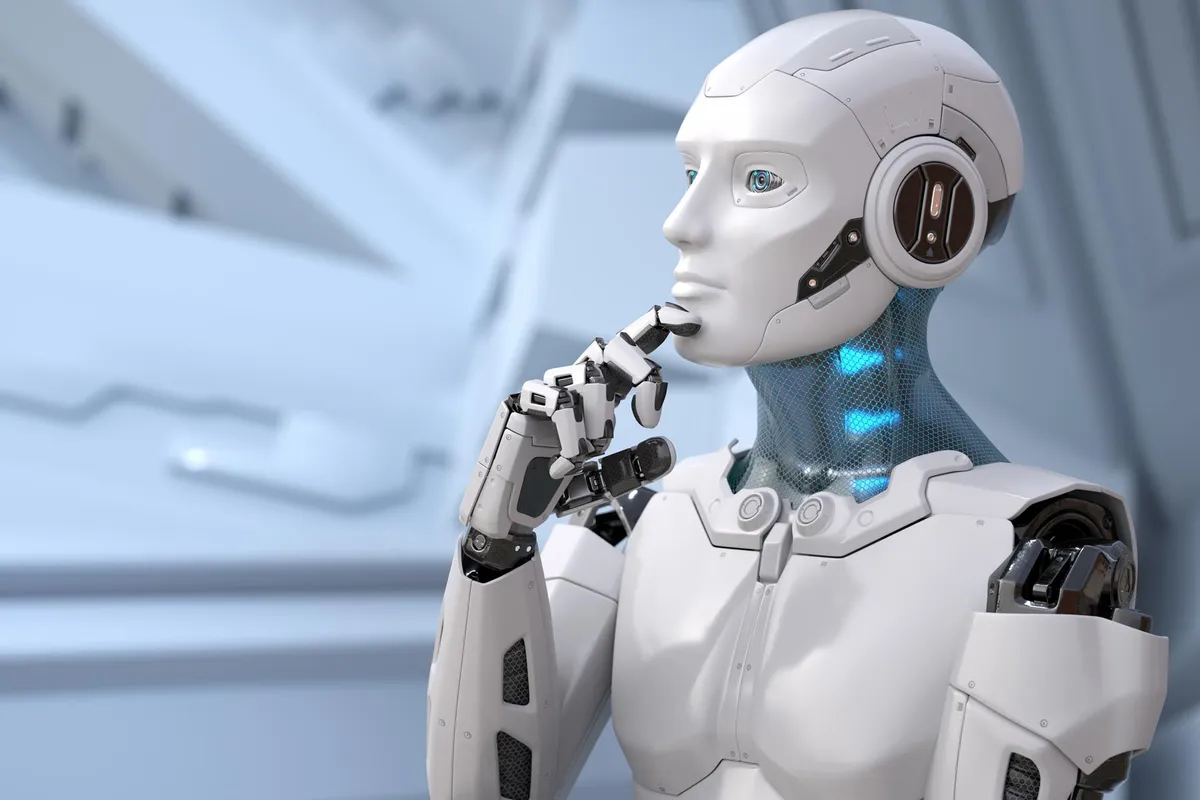
AI models might not "think" like human brains after all, according to new research from York University. While AI can predict brain responses to objects, the brain doesn't always predict the AI's internal processes. This suggests AI uses different strategies for visual tasks.
AI's Brain-Like Illusion
For the past 10 years, artificial neural networks (ANNs) have been key to understanding how the brain processes sight. These computer models are designed for visual tasks. Scientists often call them "brain-like" because they can predict activity in brain areas that help us recognize objects.
York University Assistant Professor Kohitij Kar, a lead author of the study, noted that previous research mostly tested this in one direction. They asked if AI could predict brain activity. His team decided to flip the test.
We're a new kind of news feed.
Regular news is designed to drain you. We're a non-profit built to restore you. Every story we publish is scored for impact, progress, and hope.
Start Your News DetoxThe Reverse Prediction Test
The researchers developed a "reverse predictivity test." They reasoned that if AI truly works like the brain, then recorded brain activity should also predict the AI model's internal responses.
"We need computational models to truly understand the underlying neural mechanisms of how we recognize objects," Kar explained. "How do we see objects move? While it’s a very easy task that we do every day, computationally, though, it’s a very challenging problem."
The team, including Postdoctoral Fellow Sabine Muzellec, tested the models with 1,320 real photos and synthetic images. These included animals, faces, objects, and vehicles against various backgrounds. They also used 300 altered images, like outlines and drawings, to see if the brain-AI link held up across different visual styles.
A Hidden Mismatch
The results were surprising. AI models could predict brain neuron activity well. However, the brain could not equally predict many of the AI model's internal features. This was different from when neurons from one brain were compared to another.
This imbalance suggests that ANNs might get correct visual answers using methods different from primate brains. Kar warned that this mismatch could grow as AI models become more complex. If an AI model predicts neurons but its own internal features can't be predicted from brain activity, it might not truly explain how the brain works.
"The findings suggest that today’s AI systems solve visual tasks partly using internal strategies that the brain may not use," Kar said. He added that the parts of AI models that do align with the brain are better at predicting real human behavior.
Why This Matters for Research
Researchers often use AI models to design studies on human behavior, including clinical research. They assume these systems process the world similarly to the human brain.
Muzellec noted that these findings challenge how similar current AI systems are to the primate brain. She said they show that models once thought to be brain-like rely on internal parts the brain doesn't seem to use. The team provides a new way to diagnose this issue.
More accurate, brain-like AI models could help research on conditions like PTSD and autism. But using poorly aligned systems to understand human behavior could be risky. Similar models are also used for hearing, language, and movement, making reliable validation important across many fields.
"Our approach helps identify which parts of an ANN truly match brain activity," Kar said. This allows for building more reliable models to understand how people see and interpret the world.
Deep Dive & References
Reverse predictivity for bidirectional comparison of neural networks and biological brains - Nature Machine Intelligence, 2026
The authors have also released a testing toolkit for AI developers. This tool can help evaluate models and improve how well their internal features match brain activity.