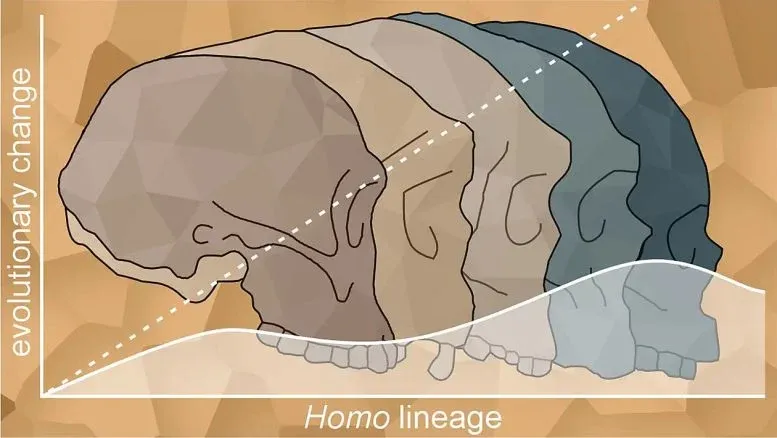
Human evolution is often seen as a steady march toward bigger brains and smaller faces. However, a new study suggests Researchers found that these key changes in the Homo genus didn't happen in a smooth, continuous way.
Instead, human anatomy might have stayed much the same for long periods. Big changes likely only happened when biological, environmental, or cultural barriers were overcome.
The study, published in Nature Communications, was led by Mark Hubbe from the University of Tennessee-Knoxville and Katerina Harvati from the Senckenberg Centre at the University of Tübingen.
We're a new kind of news feed.
Regular news is designed to drain you. We're a non-profit built to restore you. Every story we publish is scored for impact, progress, and hope.
Start Your News DetoxRethinking Human Traits
The Homo genus, which includes modern humans (Homo sapiens), appeared about 2.5 million years ago. Harvati explained that most Homo species showed an increase in brain size and a decrease in the size of their faces and jaws.
These physical changes happened alongside big shifts in behavior. Early humans started using stone tools more, found and processed food in new ways, spread across larger areas, and likely developed more complex social groups.
Traditionally, scientists linked these trends to natural selection. Bigger brains helped with advanced thinking. Tools and cooking reduced the need for large teeth and strong jaws. This view suggests that traits closer to modern humans always had an advantage, becoming more common over time. But the fossil record doesn't show such a smooth path.
What the Fossils Show
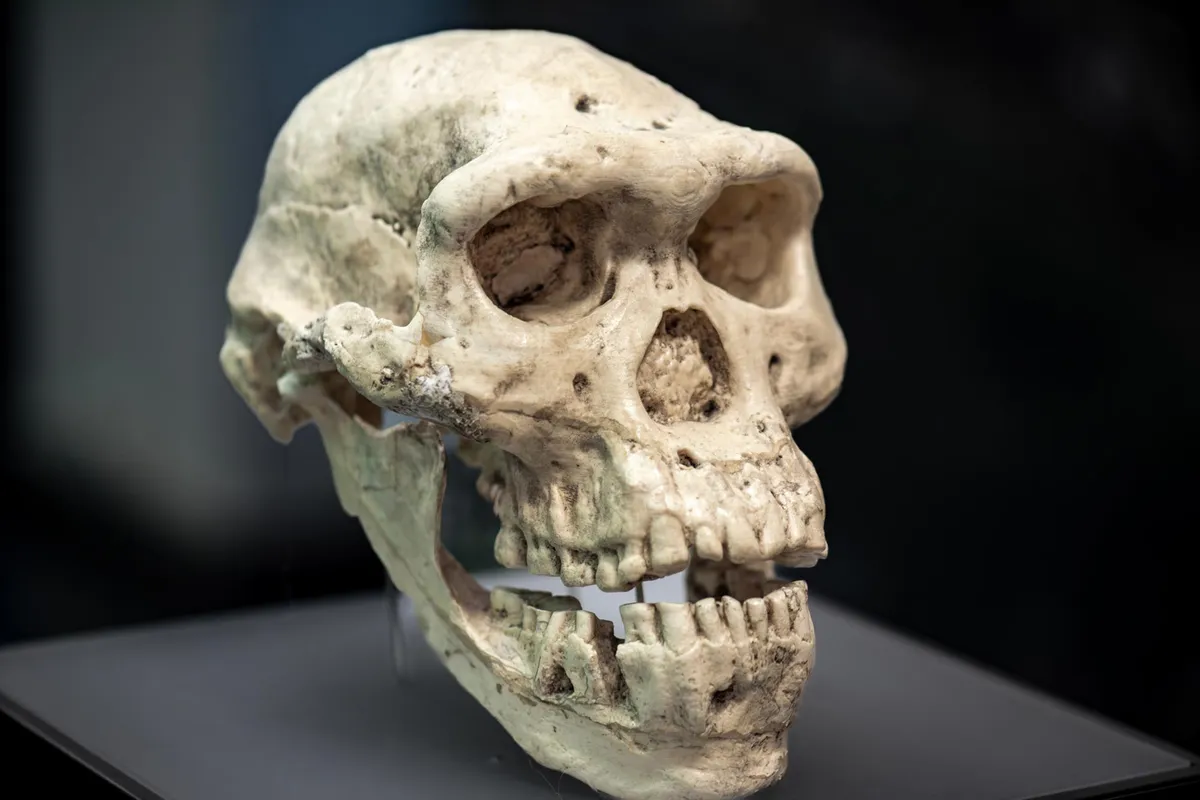
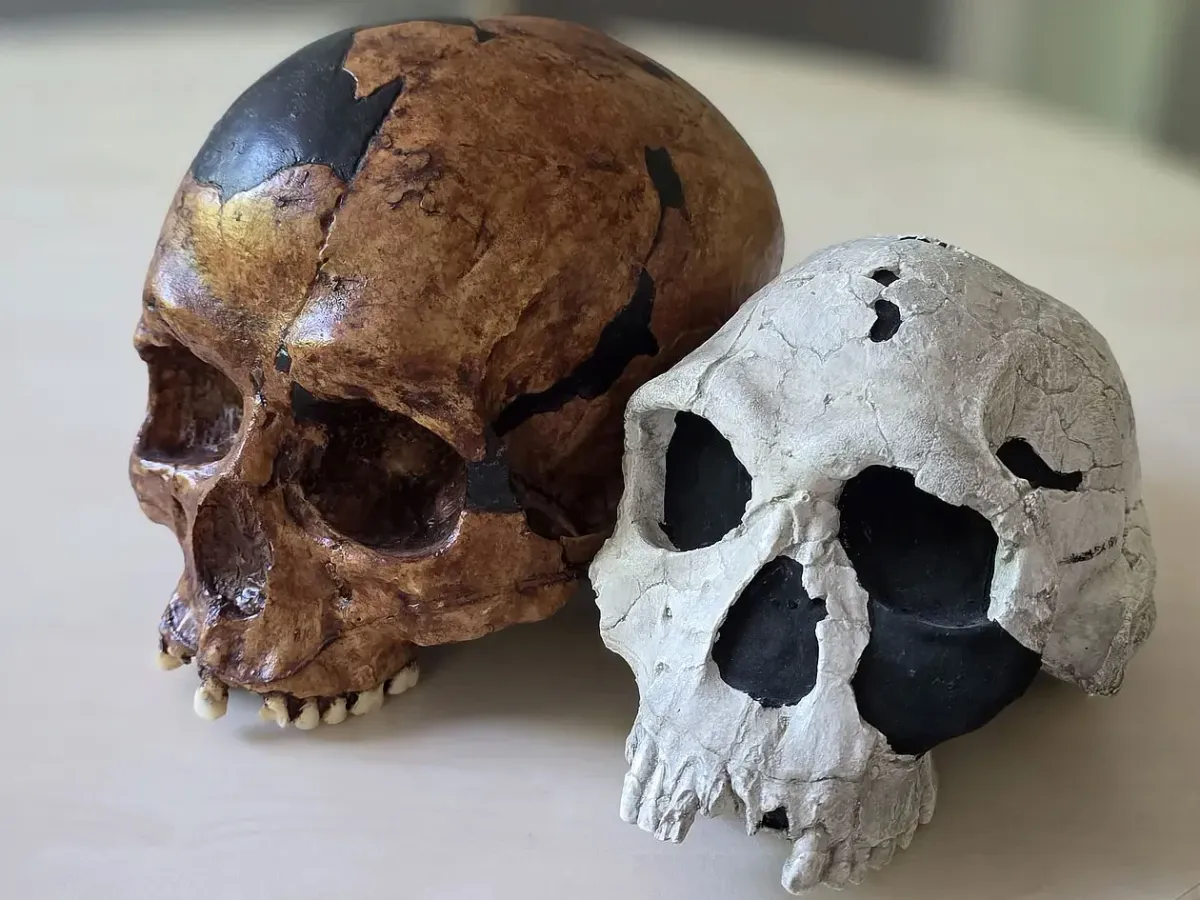
Hubbe and Harvati examined 3D measurements from 87 fossil skulls. These fossils cover most of the known history of the Homo genus over the past two million years. The sample included early species like Homo habilis and Homo rudolfensis, as well as Homo erectus, Homo heidelbergensis, Neanderthals, and early and modern Homo sapiens.
Harvati noted that they compared this data with six different evolutionary models. They wanted to see which model best explained the changes in head and face shapes in Homo.
The models included ideas like constant natural selection, random change, stabilizing selection (where traits stay within a range), and punctuated equilibrium (long periods of little change followed by rapid evolution).
The researchers found little support for the idea that natural selection steadily pushed for larger brains and smaller faces. Models that involved random processes, evolutionary limits, and long periods of minimal change explained the differences better.
Hubbe explained that while their analysis confirmed the known trends of brain growth and facial reduction, "the differences within our genus can be explained much more effectively by neutral evolutionary processes and long periods of evolutionary stasis."
Why Evolution Isn't a Straight Line
These findings challenge the idea that earlier humans were simply incomplete versions on a path to Homo sapiens. Evolution doesn't plan for a future outcome. A larger brain or smaller face doesn't automatically replace an older form just because it seems more modern. Traits only spread if the genetic variation exists and the environment allows for the change.
Random genetic changes can introduce new traits. Genetic drift can make some traits more common even without a clear survival benefit. Stabilizing selection can also keep an effective body plan instead of constantly changing it.
Development also limits what evolution can change. The brain, skull, teeth, airways, muscles, and face all grow as a connected system. Changing one part can affect many others. This might explain why major trends are seen over millions of years, even if individual species don't show a simple, steady improvement.
The Role of Culture
The researchers suggest that big increases in brain size might have happened when long-standing limits temporarily eased. Significant brain expansion occurred in Homo heidelbergensis and later in Neanderthals and Homo sapiens. These shifts likely depended on several factors coming together, such as development, metabolism, access to energy-rich food, and advances in technology and culture.
Brains are costly to maintain. A larger brain needs a steady supply of calories and nutrients, along with changes in growth and energy distribution. A large brain would offer little benefit if a population couldn't consistently meet these demands.
Cultural advances may have changed this. Hubbe explained that culture acts as a buffer. It allows humans to use new habitats and get more resources. This reduces pressure on physical structures because they don't need to be as strictly adapted to the environment.
He added that "periods of intensified technological and cultural innovation can trigger rapid evolutionary changes." These changes were crucial for the evolution of Homo. They allowed ancestors to meet the nutritional needs of larger brains and fully use higher cognitive abilities.
Culture's Impact on Anatomy
Tools, food processing, cooperation, shelter, and shared knowledge can help a population survive challenges that would otherwise require new physical adaptations. Culture can change the environment where natural selection works, opening up evolutionary possibilities that were once restricted. This framework might also explain why modern humans look so different from other members of the genus.
Neanderthal faces remained large and strong for long periods. Modern humans, however, developed much smaller and lighter faces than other human lineages. These differences might not have come from a slow, universal trend toward smaller faces. Instead, the modern human face could reflect a later period of major behavioral, dietary, developmental, or social change.
Harvati noted that these later changes might also be linked to "particularly profound behavioral shifts that accompanied the emergence of our species."
A New Perspective on Human Origins
The study suggests that modern facial anatomy appeared not from one cultural innovation, but when several evolutionary limits eased at once. Natural selection still played a role. However, human evolution likely involved pauses, inherited limits, random shifts, and occasional rapid changes, rather than a steady trend toward larger brains and smaller faces.
Harvati concluded that their findings shift the focus. Instead of asking why humans continuously evolved toward larger brains and smaller faces, it makes more sense to ask "under what conditions human populations were able to break free from existing constraints and develop new traits." This approach could help us better understand the evolution of our genus.
Deep Dive & References
Evolutionary drivers of encephalization and facial reduction in the genus Homo - Nature Communications, 2026