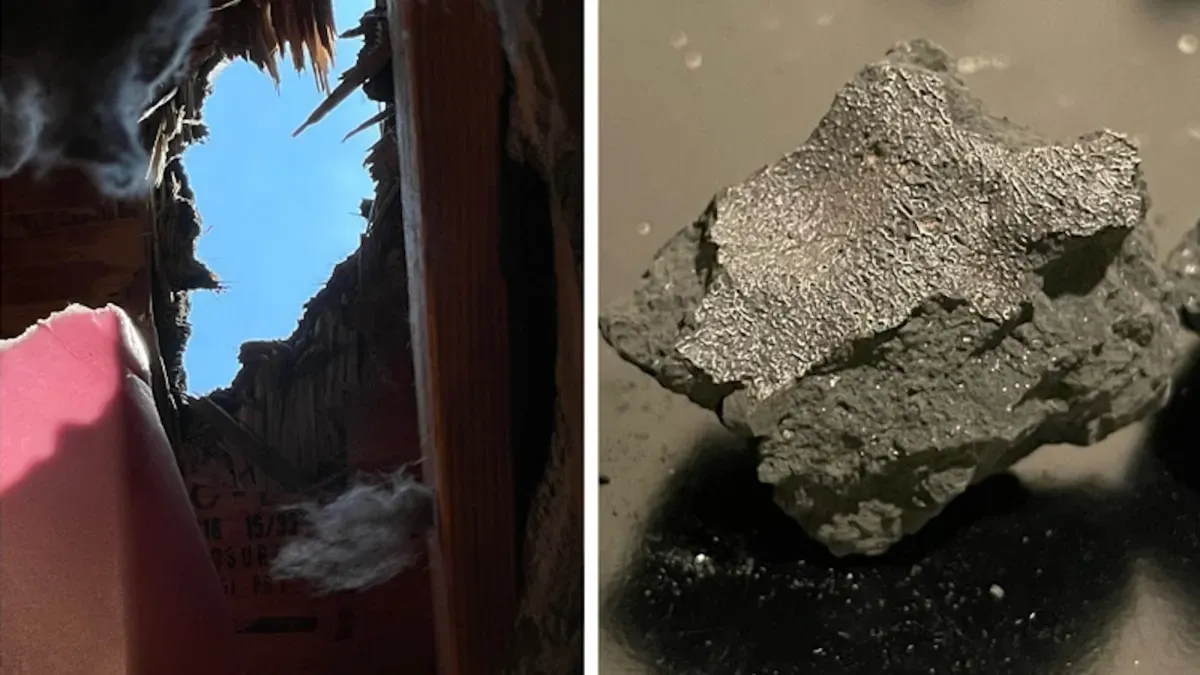
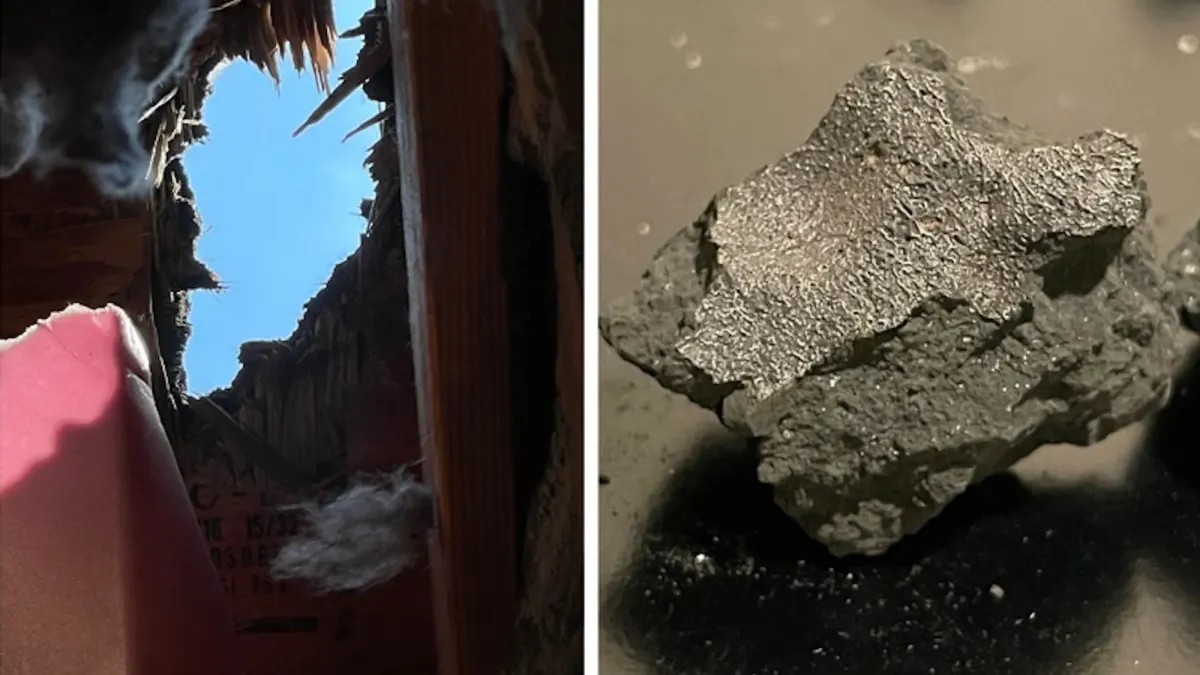
Imagine waking up to a loud crash, a hole in your bedroom ceiling, and a distinct smell of sulfur. That's exactly what happened to a homeowner in Hillsborough, New Jersey, two years ago. His bed, his carpet—all covered in black fragments and dust. Because apparently, sometimes the universe decides to redecorate with a side of celestial debris.
Turns out, a meteorite the size of a suitcase had entered Earth's atmosphere at a casual 32,000 miles per second. Cameras across three states caught the fiery entrance, and at least 16 people felt a shockwave as it disintegrated 22 miles up. Weather radar even tracked the pebble-like fallout. The largest pieces, naturally, landed right where they could do the most damage: someone's roof in Hillsborough.
Not Your Average Space Rock
After months of meticulous study, astronomers from the SETI Institute, NASA, and the American Meteor Society dropped their findings in Science Advances. This wasn't just any space rock. It was a rare, primitive asteroid fragment containing chemicals essential for life on Earth. You know, just a little something to spice up your morning coffee.
We're a new kind of news feed.
Regular news is designed to drain you. We're a non-profit built to restore you. Every story we publish is scored for impact, progress, and hope.
Start Your News DetoxPeter Jenniskens, a co-author and astronomer, noted that these fragments are like perfectly preserved time capsules from an asteroid's surface. They show evidence of concentrated salty fluids, a process previously unseen in this kind of early planet. So, not only did it crash through a roof, but it brought along some cosmic secrets.
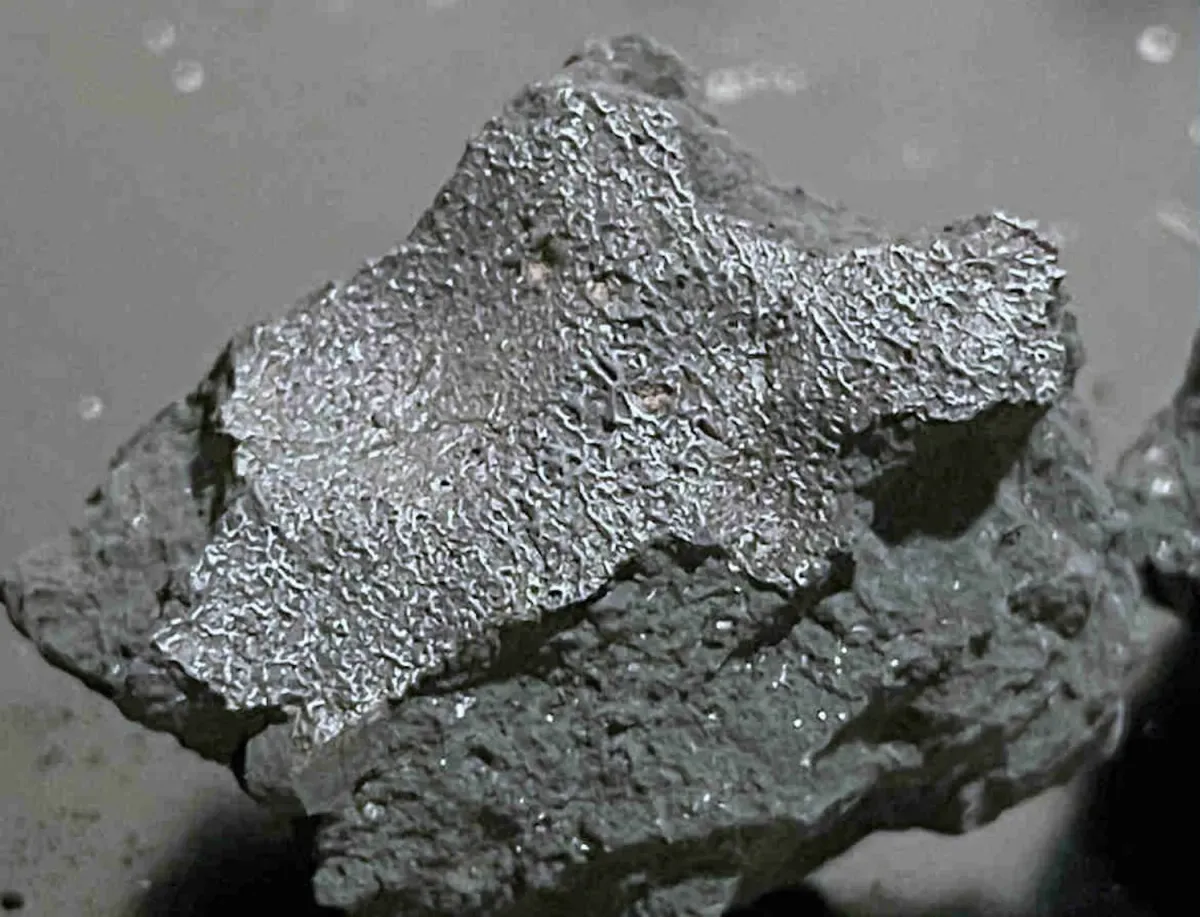
Initially, researchers thought it was a common type of primitive meteorite, a CM-type carbonaceous chondrite. But the fragments had been seriously altered by ancient water while still part of their parent asteroid. This shifted its classification to an intermediate type: a CM1/2 carbonaceous chondrite. The Hillsborough event was only the second time a CM1/2 meteorite had ever been observed on Earth. And thanks to the homeowner's quick thinking (and presumably, some very careful vacuuming), these are the most untouched CM1/2 meteorites known.
The Recipe for Life (Delivered to Your Bedroom)
This New Jersey space visitor also contained tiny, salt-filled fragments, pointing to its origins near the asteroid's surface. Picture it: liquid water evaporating, leaving behind a salty residue. These salts are crucial because they can protect phosphate, a chemical compound that kicks off reactions between minerals and organic materials. The salts inside this meteorite are remarkably similar to those required for life to begin on Earth. Talk about a cosmic coincidence.
Experts like Queenie Chan and Nana Ogawa highlight that studies of carbon and nitrogen isotopes suggest these primitive carbonaceous chondrites, including CM-types, likely delivered organic matter to early Earth. Phil Schmitt-Kopplin added that many compounds were born from organic chemistry interacting with minerals.
While scientists are still debating if these compounds formed through brine chemistry or earlier impact processes, one thing is clear: the meteorite's components are organo-metallic compounds vital for life. We're talking about the stuff found in animal blood and the very things that help plants photosynthesize. Plus, it was packed with various amino acids, which are, you know, pretty critical for everything that breathes.

So, despite the sudden and rather dramatic home renovation, the New Jersey meteorite fragments serve as a rare, slightly jarring reminder: asteroids aren't just barren rocks. They're often complex chemical factories, carrying organic matter that likely played a starring role in kicking off life on Earth billions of years ago. Who knew the universe was such a diligent delivery service?