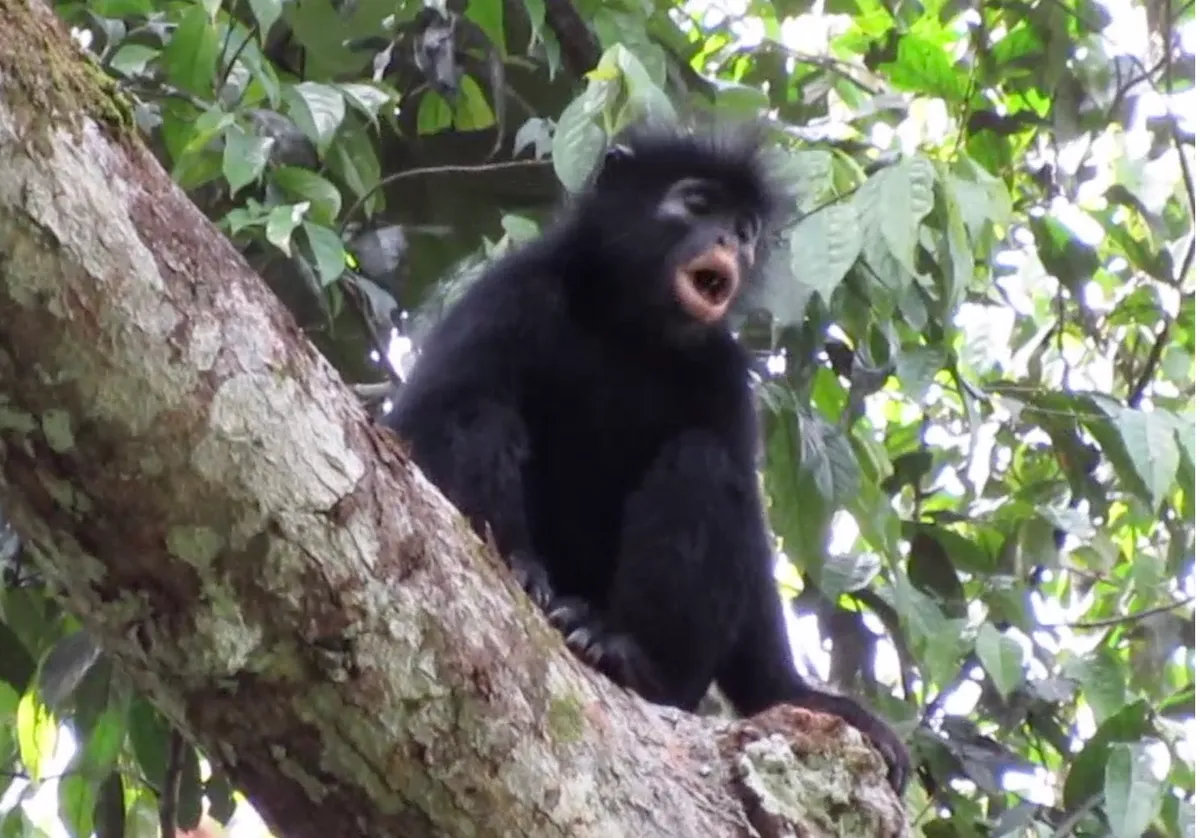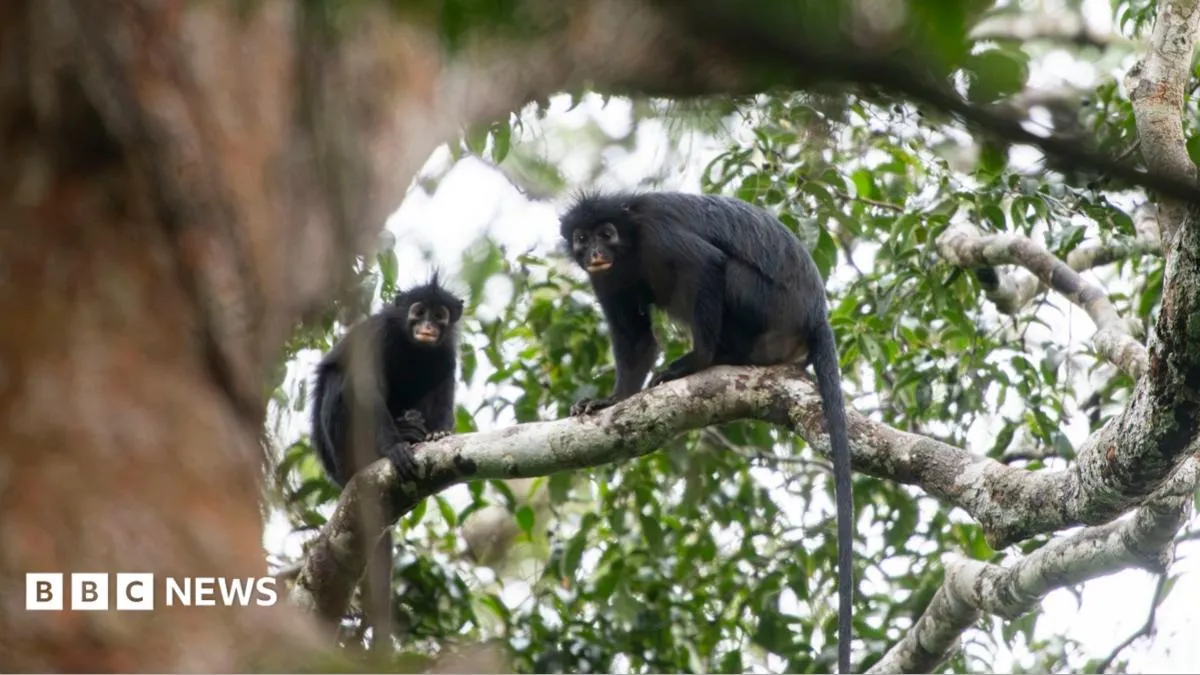
Turns out, some of the best secrets are kept at the top of the tree canopy. Case in point: a brand new monkey species, sporting bright pinkish-orange lips and sleek black fur, that's been chilling in the dense tropical forests of the Democratic Republic of Congo.
Conservationists first caught a blurry glimpse of this fashion-forward primate back in 2008. But it took another decade, and another sighting, for an international team to confirm what local communities already knew: this monkey, which they call "Likweli," was something entirely new. It’s only the fifth African monkey species to be officially identified in the last 75 years. Let that satisfying number sink in.
Leading the charge was PhD student Junior Amboko, whose team deployed audio recordings, photos, and genetic studies to confirm the species. He described the moment of seeing an animal so few people knew existed as "amazing." Which, if you think about it, is both impressive and slightly terrifying.
We're a new kind of news feed.
Regular news is designed to drain you. We're a non-profit built to restore you. Every story we publish is scored for impact, progress, and hope.
Start Your News DetoxThe Shy Socialites of the Treetops
These monkeys are apparently quite the introverts, preferring the high life (literally) in the treetops. Amboko's team interviewed 52 villages near the monkeys' habitat, and only eight had ever actually laid eyes on them. Talk about exclusive.
They've officially named the new species Colobus congoensis, a nod to the DRC's incredible biodiversity. And those striking facial markings? Professor Kate Detwiler thinks they might be a primate version of a neon sign, a visual signal to attract mates or identify fellow Colobus congoensis in the leafy crowd.
Beyond the lips, these monkeys have another unique trait: a distinctive "roaring" call. Amboko noted, "You often hear them, but don't see them." Which, honestly, sounds like a lot of us before our first cup of coffee. As important herbivores, these colobus monkeys also play a vital role in seed dispersal and germination, essentially keeping the forest's plumbing running smoothly.
Researchers believe these shy socialites are rare and confined to specific forest areas. Unfortunately, they're also hunted for meat. The hope is that officially classifying Colobus congoensis will bring much-needed protection, because a creature this fabulous deserves to keep its lips, and its life.