For ages, if you wanted to dig up ancient DNA, you headed to the frosty north. Think mammoths in permafrost, Neanderthals in chilly caves. Cold preserves. Heat, on the other hand, usually turns genetic material into a molecular dust bunny. So, finding 50,000-year-old animal DNA in sub-Saharan Africa? That’s like finding an ice sculpture in a sauna.
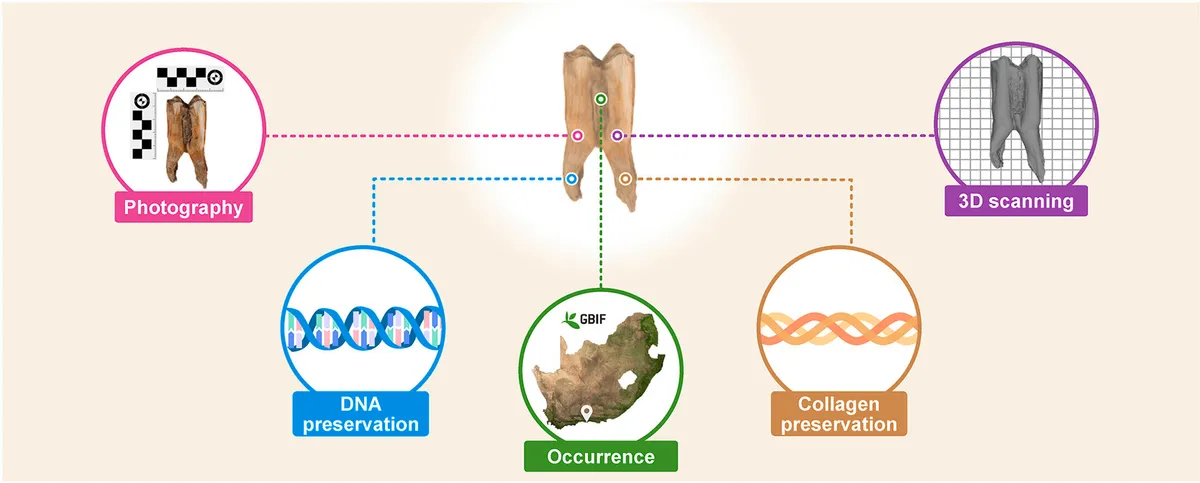
Yet, that’s exactly what an international team just pulled off. They found the oldest animal DNA ever recovered from sub-Saharan Africa, tucked away in a tooth from South Africa. It redefines what we thought was possible for ancient genetic survival.
Africa, with its rich fossil record, has always been a bit of a cold case for ancient DNA. Scientists figured the heat and humidity just weren't conducive to preservation. But this team, clearly undeterred by conventional wisdom, decided to go prospecting for viable DNA in old skeletons across various South African sites and time periods. Because why not try, right?
We're a new kind of news feed.
Regular news is designed to drain you. We're a non-profit built to restore you. Every story we publish is scored for impact, progress, and hope.
Start Your News DetoxThe Great Tooth Hunt
They started with a whopping 320 fossil teeth and bones, mostly from wild bovids like antelope and buffalo, some dating back 110,000 years. These came from six cave and rock shelter sites along South Africa's southern coast. Basically, they went through a lot of dental records.
Out of those, they screened 144 specimens, employing a newer method that targets tiny, single-stranded DNA fragments. This technique is a bit of a forensic wizard, able to “unzip” damaged DNA and snatch up bits that traditional methods, which look for intact double-stranded DNA, often miss. And miss they did.
The newer method was a resounding success, extracting up to 6.7 times more animal DNA than the old-school approach. All told, they recovered ancient DNA from 65 of the 144 samples—a 45% success rate. Not bad for something that was supposed to be impossible.
Before this, the oldest genome from a wild South African animal clocked in at a relatively youthful 9,300 years, from an extinct blue antelope. Most of the new successful samples were also from this more recent period. But then came the real stunners: four much older specimens, including three teeth from an extinct long-horned buffalo and one from a mountain reedbuck, dating back between 12,000 and 50,000 years.
This isn't just a win for ancient buffalo; it's a massive leap for paleogenetics in warmer climates. The researchers, in a moment of scientific understatement, simply noted in their paper: "We show that paleogenetic studies on fauna at lower latitudes are possible." Translation: The rulebook just got a serious rewrite. And now, the hunt for ancient African secrets is officially on.