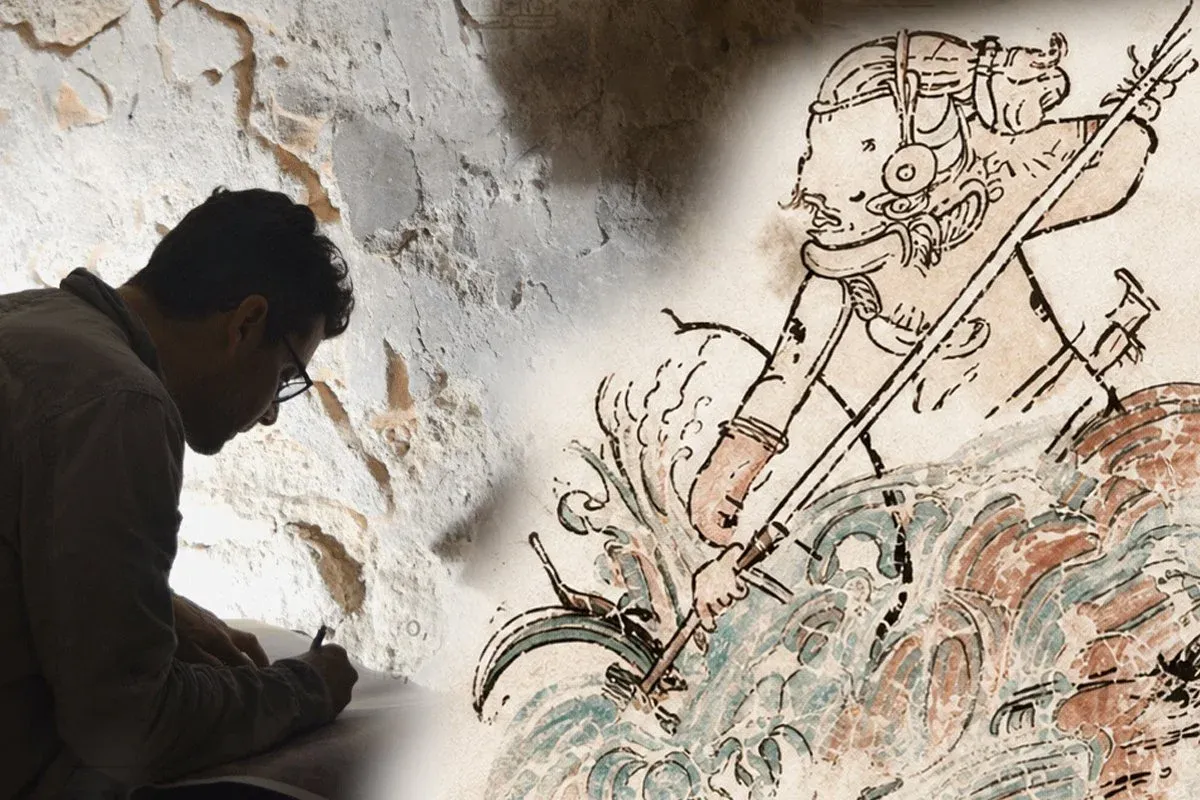
For years, a mural discovered deep within the ancient Maya city of Calakmul was thought to depict a run-of-the-mill warrior. You know, spear, headdress, the usual. But after three years of meticulous research, a team of archaeologists thinks they’ve found something far more significant: a potential portrait of Juun Ajaw, one of the most important heroes in Maya mythology.
Because apparently, sometimes a warrior is actually a god. And this particular god-in-disguise might be the oldest known image of him.
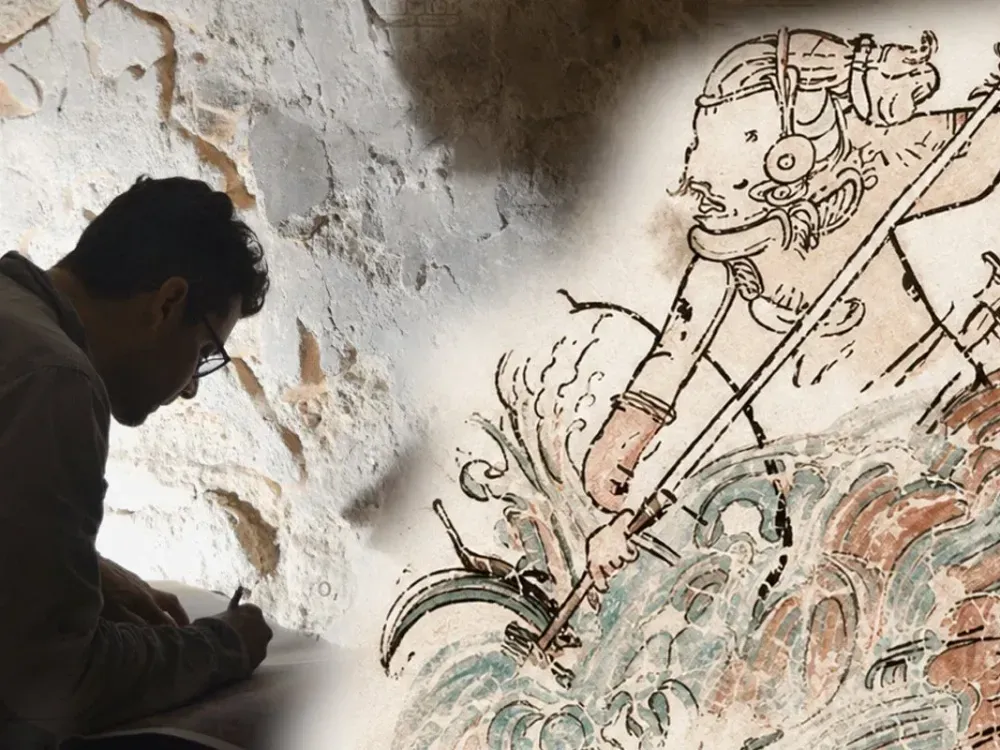
The discovery comes from the formidable ruins of Calakmul, a sprawling Maya metropolis hidden in the Yucatán jungle, first stumbled upon in 1931. Archaeologists Daniel Salazar Lama, Ana García Barrios, and Benjamin Esqueda Lazo De La Vega honed in on the earliest mural painting found there. It had been carefully removed for protection back in 2004, and the team used some seriously advanced imaging to reconstruct the artwork and its original architectural context.
We're a new kind of news feed.
Regular news is designed to drain you. We're a non-profit built to restore you. Every story we publish is scored for impact, progress, and hope.
Start Your News DetoxThe Hero in the Cave
Their big revelation, published in the journal IdeAs, is that the figure isn't just any warrior. It’s Juun Ajaw, a central character in the sacred Maya text, Popol Vuh. This wasn't just a painting; it was likely part of a ritual space dedicated to the hero.
Calakmul itself was a powerhouse kingdom between the 7th and 8th centuries, renowned for its art. But this mural dates back to the city's origins, around 500-400 BCE. It was found in an underground vault, deliberately stuccoed to mimic a natural cave. In ancient Maya belief, caves weren't just holes in the ground; they were literal gateways to the world of the gods. These artificial caverns were used for rituals of protection or remembrance.
The figure in the mural appears partially submerged in swirling water, spear pointed downwards. While some facial features are missing, the mouth and nose hint at Olmec influences. The researchers noticed a double line on his right arm, which they believe was an artist's clever trick to suggest depth.
Then came the "aha!" moment during their 2022 field season. During a particularly heavy rain, the researchers observed how the structure's corridors channeled water down an inner staircase, directly into the artificial cave. This would have created a watery environment, perfectly recreating the mythical tales of Juun Ajaw, famous for his legendary hunting prowess.
So, it wasn't just a painting in a cave. It was a stage. A fully immersive, ancient theatrical experience designed to bring a god to life. Which, if you think about it, is both impressive and slightly terrifying.