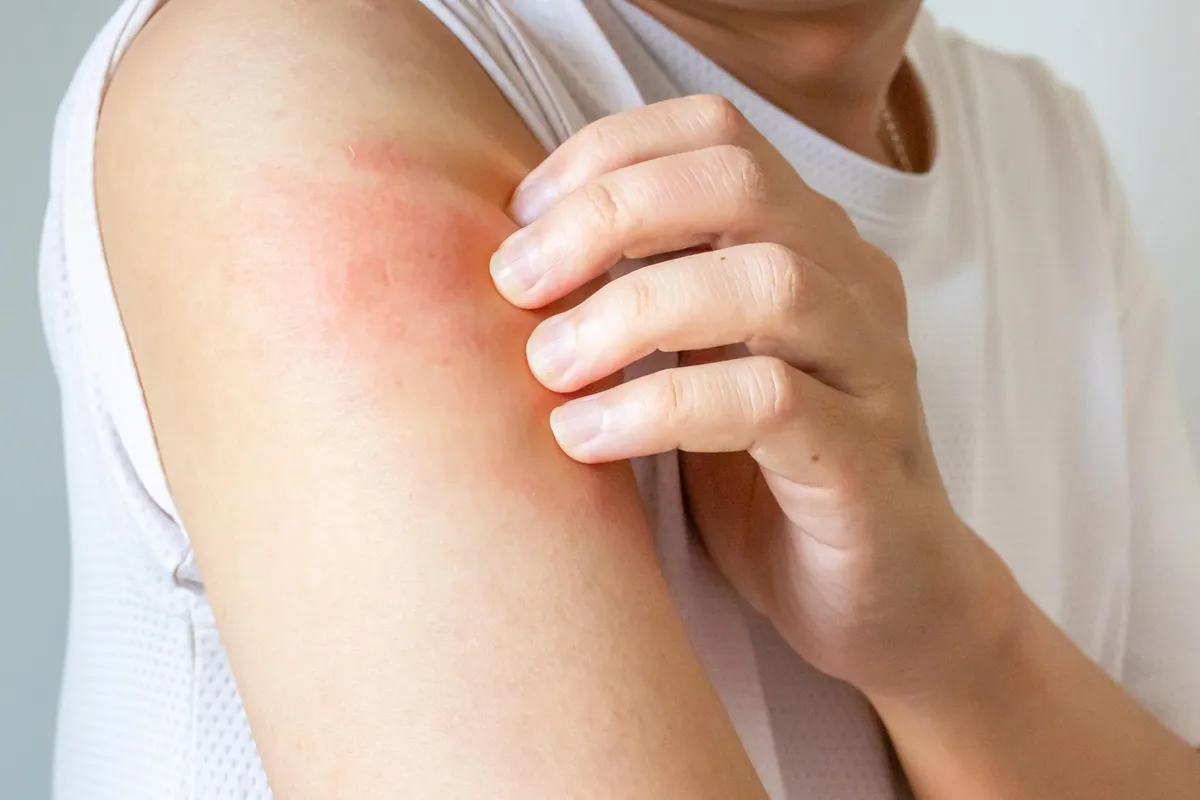
Your brain has a built-in off switch for itching. When you scratch an itch and that moment comes where it feels "enough," that's not random relief—it's a molecular signal telling your nervous system to stop. Researchers at the University of Louvain in Brussels have now identified the mechanism behind it, and the discovery could reshape how we treat chronic conditions like eczema and psoriasis that affect millions of people.
The key player is an ion channel called TRPV4, a molecular gate in sensory neurons that responds to physical pressure and touch. Roberta Gualdani's team wasn't even looking for an itch solution when they found it. "We were initially studying TRPV4 in the context of pain," Gualdani explained. "But instead of a pain phenotype, what emerged very clearly was a disruption of itch, specifically, how scratching behavior is regulated."
How the Stop Signal Works
To understand exactly where TRPV4 acts, the researchers engineered mice that lacked the channel only in sensory neurons—a precision approach that earlier studies couldn't achieve because they removed TRPV4 from all tissues at once. Using genetic tools and calcium imaging, they watched what happened when these mice experienced chronic itch similar to atopic dermatitis.
We're a new kind of news feed.
Regular news is designed to drain you. We're a non-profit built to restore you. Every story we publish is scored for impact, progress, and hope.
Start Your News DetoxThe results were counterintuitive. Mice without neuronal TRPV4 scratched less frequently, but when they did scratch, they couldn't stop. Each scratching session lasted much longer than normal. This paradox revealed the channel's true role: it doesn't create itch, it regulates when scratching should end.
When you scratch an itch, TRPV4 in mechanosensory neurons triggers a negative feedback signal—a neural message sent to your spinal cord and brain saying "that's enough." Without it, the sensation of relief never arrives, and scratching continues. "Without TRPV4, the mice don't feel this feedback, so they continue scratching much longer than normal," Gualdani said.
The finding has an important implication for drug development. TRPV4 appears in two different places with opposite jobs: in skin cells, it helps trigger itch sensations, but in neurons, it helps restrain them. A drug that simply blocks TRPV4 everywhere could backfire. "Future therapies may need to be much more targeted—perhaps acting only in the skin, without interfering with the neuronal mechanisms that tell us when to stop scratching," Gualdani noted.
Chronic itch remains one of the most undertreated problems in medicine. Millions of people with eczema, psoriasis, and kidney disease scratch themselves raw, and current treatments are often ineffective. Understanding the precise neural circuit that controls when scratching stops opens a new path toward therapies that could actually work. The research will be presented at the Biophysical Society Annual Meeting in San Francisco in February 2026.