Dogs have been human companions for a very long time. New research shows they lived with people in western Eurasia about 14,000 to 16,000 years ago. This was even before humans started farming.
These findings come from two studies published in Nature on March 25. They push back the earliest genetic proof of domesticated dogs by about 5,000 years. The studies also offer new ideas about how dogs spread across the world.
Tracing Ancient Dog Ancestry
Modern dogs came from ancient wolves. However, scientists are still unsure exactly when domestication started. A 2015 analysis suggested the split happened between 27,000 and 40,000 years ago. Before these new studies, the oldest genetic evidence of a domesticated dog was from remains found in northwestern Russia, dated to nearly 11,000 years ago.
We're a new kind of news feed.
Regular news is designed to drain you. We're a non-profit built to restore you. Every story we publish is scored for impact, progress, and hope.
Start Your News DetoxIn one new study, researchers looked at DNA from over 200 canine bones. These bones came from archaeological sites in Europe and southwestern Asia, including Turkey, Switzerland, and Scotland. The analysis showed some animals were dogs. The oldest was a Swiss dog from 14,200 years ago, which lived with a hunter-gatherer group.
This ancient Swiss dog shared ancestors with later dogs found elsewhere. This suggests that dogs came from one population. Different human groups then got dogs from each other. Greger Larson, a paleogeneticist at the University of Oxford and co-author, noted that people were excited about having these "fun new things" that were useful, interesting, and cute.
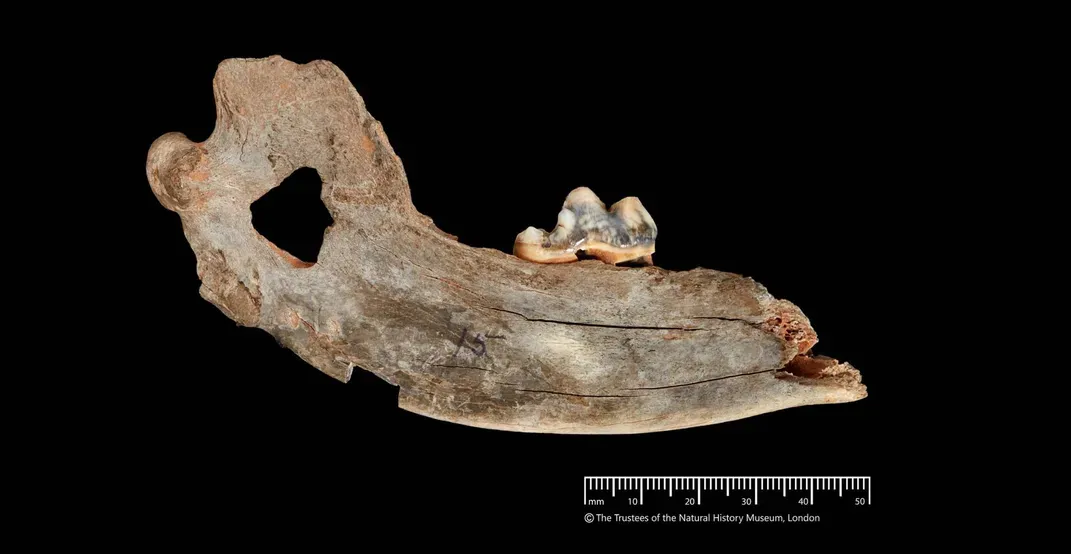
The other study found even older genetic evidence. Remains from a site in Turkey revealed a domesticated animal from 15,800 years ago. DNA analysis also showed ancient dogs at other western Eurasian sites, including one from England that was 14,300 years old. Even though the Turkish and English dogs were nearly 2,000 miles apart, they were closely related genetically. This means dogs were widespread in the region by that time.
William Marsh, a paleogeneticist at the Natural History Museum in London, said these dogs were treated very similarly. Chemical tests showed that people in both groups fed their dogs the same food they ate. The English dog's skull had decorative holes, like those on human skulls. In Turkey, dogs were buried on top of deceased people.
Later, about 9,000 years ago, the first farmers came to Europe from southwestern Asia. They also brought dogs, leading to more animal trading. These farmers largely replaced earlier human groups in Europe. However, they seemed to keep the European dogs. Only about 50% of European dog DNA was replaced in later animals, according to the new research.
Anders Bergström, a geneticist at the University of East Anglia, said they seemed to "incorporate these dogs rather than trying to replace them with their own."
Unanswered Questions and Future Insights
This new work supports the idea that all dogs came from one place, possibly in Asia. There was also some interbreeding between early dogs and wolves. Adam Boyko, a geneticist at Cornell University, noted that while some early fossils classified as wolves might have been tame, modern dogs seem to share a single origin of domestication.
However, researchers still don't know what roles dogs played in hunter-gatherer groups 14,000 years ago. Laurent Frantz, a paleogeneticist at Ludwig Maximilian University of Munich, said dogs might have had different jobs in each human society.
Many big mysteries about dogs are still unsolved. Scientists don't yet know exactly where dogs came from or who first domesticated them. Despite this, Beth Shapiro, an evolutionary biologist at the University of California, Santa Cruz, called the studies a "significant advance" in understanding dog origins.
Deep Dive & References
Ancient DNA pushes back timing of origin of dogs - Science News, 2015 Palaeolithic dogs in western Eurasia were an integral part of hunter-gatherer societies - Nature, 2026 Ancient dog genomes reveal a single origin for domestic dogs - Nature, 2026 World’s oldest dog identified at ancient hunter-gatherer site - Science, 2026 Oldest dog DNA pushes back domestication timeline - Science News, 2026