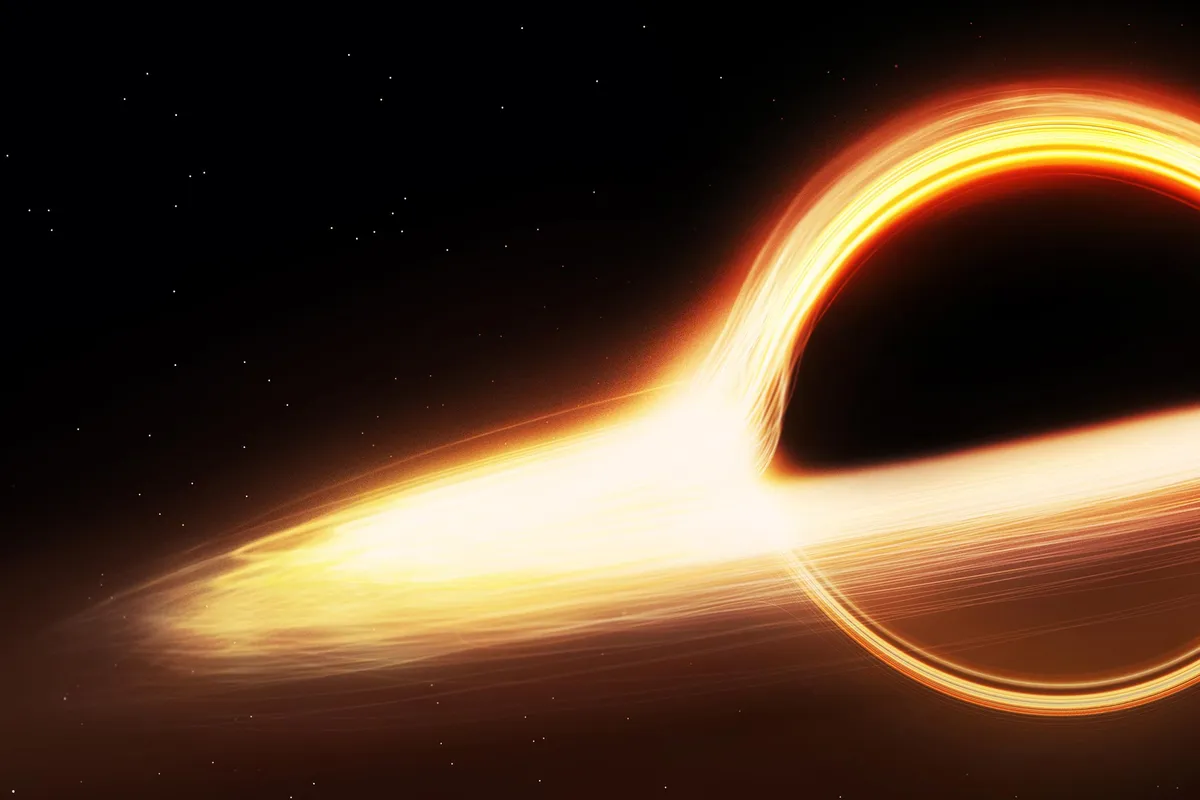
For years, astronomers have been scratching their heads over how some black holes get so ridiculously massive. We're talking cosmic heavyweights, far beyond what a single collapsing star should produce. Now, it looks like they've found the answer, and it's less about individual stellar drama and more about a chaotic, galactic mosh pit.
Turns out, these behemoths aren't just born big; they eat their way to greatness. The new evidence points to a universe where black holes grow through repeated collisions inside incredibly dense star clusters. Think of it as a cosmic snowball effect, but with spacetime-ripping singularities instead of snow.
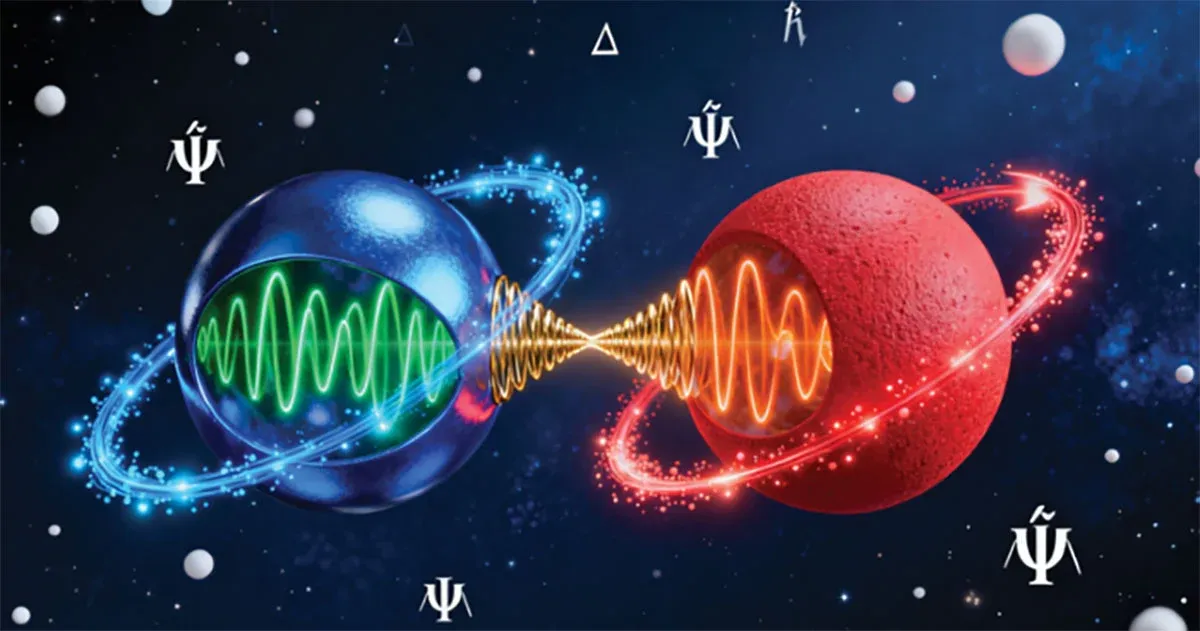
This insight comes courtesy of gravitational waves, those subtle ripples in spacetime that only the most cataclysmic events (like, say, two black holes slamming into each other) can create. The LIGO–Virgo–KAGRA detectors have been listening in, and scientists at Cardiff University have been doing the cosmic detective work, sifting through data from 153 confirmed black hole mergers.
We're a new kind of news feed.
Regular news is designed to drain you. We're a non-profit built to restore you. Every story we publish is scored for impact, progress, and hope.
Start Your News DetoxThe Black Hole Binge-Eating Plan
The research suggests that the heaviest black holes observed are "second-generation" or even older. This means two black holes merge, creating a bigger one, which then that new, larger black hole merges again with another one. It's like a recursive nightmare for anything nearby, and it happens in star clusters that are a million times more packed than our own stellar neighborhood. Talk about a crowded dance floor.
Dr. Fabio Antonini, the lead author, dryly noted that gravitational-wave astronomy is now showing us not just how black holes grow, but where. Which, if you think about it, is both impressive and slightly terrifying.
The team spotted two distinct groups of black holes: a lighter bunch, likely from your garden-variety stellar collapse, and a much heavier group. The heavier ones had spin patterns that were, shall we say, unusual. Their faster spins and random orientations were a dead giveaway. Dr. Isobel Romero-Shaw, a co-author, put it plainly: "This is exactly what you'd expect if black holes kept merging in dense star clusters."
The Mass Gap Mystery
The study also provided strong evidence for something called the "mass gap." This is a theoretical range of black hole masses that stars shouldn't be able to produce directly. It's believed that extremely massive stars, instead of collapsing into black holes, just... explode completely. No black hole for you. This creates a gap in the black hole size chart.
The researchers found this transition around 45 times the mass of our Sun. Black holes found at or near this 45-solar-mass mark are a bit of a cosmic head-scratcher. Are our stellar evolution models off, or are these black holes built differently? Dr. Antonini pointed out that above 45 solar masses, the spin distribution completely changes. It's a pattern that's hard to explain with normal stellar binary systems alone, but fits perfectly if these black holes have been through a few mergers in a crowded cluster.
And if that's not enough, the team also used this mass gap to study a key nuclear reaction involved in how helium burns inside massive stars. Turns out, gravitational-wave observations might just unlock secrets of nuclear physics. Who knew black holes were also cosmic chemists?