Imagine trying to fix a supercomputer without a wiring diagram. That's essentially what neuroscientists have been up against when it comes to the human brain. But now, a team of researchers has cracked the code, using molecular "barcodes" to map thousands of neural connections in a mouse brain with unprecedented speed and detail.
This isn't just a cool party trick; it's a profound leap forward. This new technique could finally help us understand how those incredibly complex brain networks actually work, and, more critically, what goes haywire in debilitating disorders like Alzheimer's.
Boxuan Zhao, a professor at the University of Illinois Urbana-Champaign who led the study, puts it simply: "You need to know how it's wired to fix it." Their new tech, dubbed Connectome-seq, maps connections down to a single synapse – the tiny gap where two neurons meet. A capability that, until now, was largely the stuff of science fiction.
We're a new kind of news feed.
Regular news is designed to drain you. We're a non-profit built to restore you. Every story we publish is scored for impact, progress, and hope.
Start Your News DetoxThe Brain's New Barcode System
Historically, mapping brain connections was a slow, painstaking process. Think slicing brain tissue thinner than paper, imaging each piece, and then manually trying to stitch together the neural spaghetti. Tedious doesn't even begin to cover it.
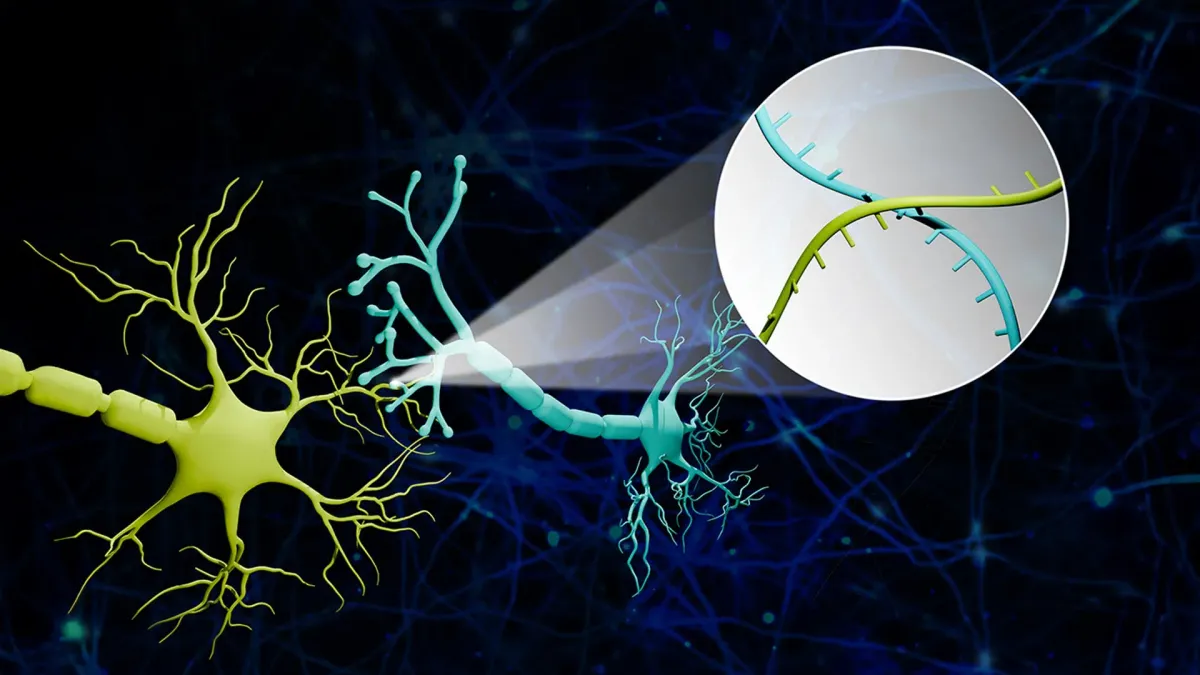
Connectome-seq changes the game entirely. It assigns a unique RNA "barcode" to each neuron. Special proteins then ferry these barcodes from the neuron's main body right to the synapse. The researchers then collect these synaptic connections and use high-speed sequencing to read which barcode pairs are found together. If barcode A and barcode B are at the same synapse, well, congratulations, you've found a direct connection.
Zhao likens it to balloons with unique stickers: if a knot tying two balloons has stickers from both Balloon A and Balloon B, you know they're connected. Now, apply that logic to thousands of neurons in a living brain. Which, if you think about it, is both impressive and slightly terrifying.
The team has already used Connectome-seq to map over 1,000 neurons in a mouse brain circuit, the pontocerebellar circuit. Their analysis revealed entirely new connection patterns, even finding direct links between cell types previously thought to be unconnected in adult brains. The next goal? Mapping the entire mouse brain. Because apparently that's where we are now.
A "Weak Link" Detector for Disease
The real power of Connectome-seq lies in its speed and scalability. This isn't just about making pretty maps; it's about accelerating research into neurodegenerative diseases. By comparing the intricate wiring of healthy brains to those afflicted with conditions like Alzheimer's, scientists might finally pinpoint the early, subtle changes that kick off these devastating diseases.
Zhao hopes this method can help them find the "weak link" that initiates diseases like Alzheimer's. And once they find it, perhaps they can strengthen those connections, slowing or even stopping the disease in its tracks. A future where we can literally re-wire our brains for health? Now that's a thought worth connecting with.