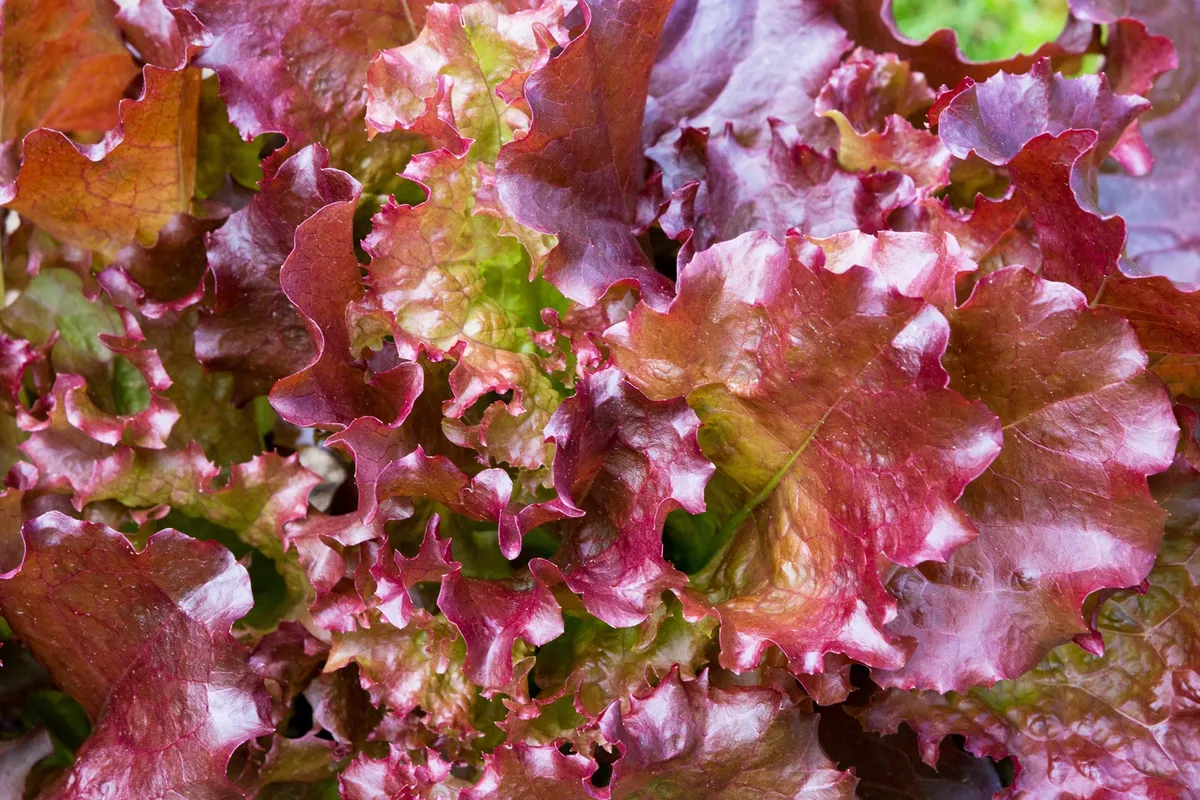
Red-leaf lettuce: known for its mild taste, its satisfying crunch, and, well, its redness. That vibrant crimson hue comes from anthocyanins, those lovely antioxidant pigments that fight all sorts of cellular mischief. But what if you could take the red out, and in doing so, add even more good things?
Turns out, you can. Scientists recently found a way to flip the script on red lettuce, making it green while simultaneously boosting other beneficial compounds like quercetin. The best part? The lettuce doesn't even notice the color change, growing just as happily as its ruby-hued cousins.
How to Make a Salad Superfood
Think of it like this: red lettuce has a whole chemical assembly line dedicated to making those red pigments. It starts with an amino acid called phenylalanine, then goes through a series of steps, creating various flavonoids along the way, before finally landing on anthocyanins.
We're a new kind of news feed.
Regular news is designed to drain you. We're a non-profit built to restore you. Every story we publish is scored for impact, progress, and hope.
Start Your News DetoxResearchers decided to mess with one specific step. Using some clever genome editing (the kind that lets you snip out or turn off specific genes), they targeted a gene responsible for an enzyme called dihydroflavonol 4-reductase. This enzyme is crucial, sitting right before the big anthocyanin finale.
When they turned off this gene, the lettuce literally couldn't make its signature red color anymore. It went green. But here's where it gets interesting: the plant didn't just throw its hands up and quit. Instead, it redirected its chemical efforts.
Without being able to complete the anthocyanin production line, the lettuce started accumulating other flavonoids, like quercetin. Essentially, it took all that raw material meant for red pigment and funneled it into making more of these other healthy compounds instead.
And the plant's growth? Completely unaffected. Which means we might be on the cusp of designer lettuce — varieties specifically engineered to deliver targeted nutritional punches, all while still looking good in your salad bowl. Because apparently, even plants can be optimized.
The Future of Your Greens
This isn't just a fun lab trick. Environmental factors like light and temperature play a huge role in how plants produce these beneficial compounds. Imagine growing lettuce in controlled indoor farms, precisely adjusting the conditions to maximize its quercetin content, or whatever other nutrient we decide we need more of. It's like a botanical chef, perfectly seasoning your greens before they even leave the soil.
Your future salad might just be a lot smarter than you think.