The Mystery of Mouse Dads
Most male mammals don't help raise their young. Only about three to five percent of mammal species have dads involved in caregiving. Even among these, fatherly behavior can range from very caring to neglectful or even violent.
New research on African striped mice offers some answers. It suggests that a mix of social life and genetics explains these differences. Social settings can change how genes work in the mice's brains. One specific gene seems to act like a "switch" for a male mouse's parenting style. This study was published in Nature on February 18.
Catherine Peña, a neuroscientist at Princeton University and co-author, noted that all male mice of this species have the biological ability to be good dads. The findings suggest that certain conditions might help bring out their best parenting.
We're a new kind of news feed.
Regular news is designed to drain you. We're a non-profit built to restore you. Every story we publish is scored for impact, progress, and hope.
Start Your News DetoxHow Social Life and Genes Connect
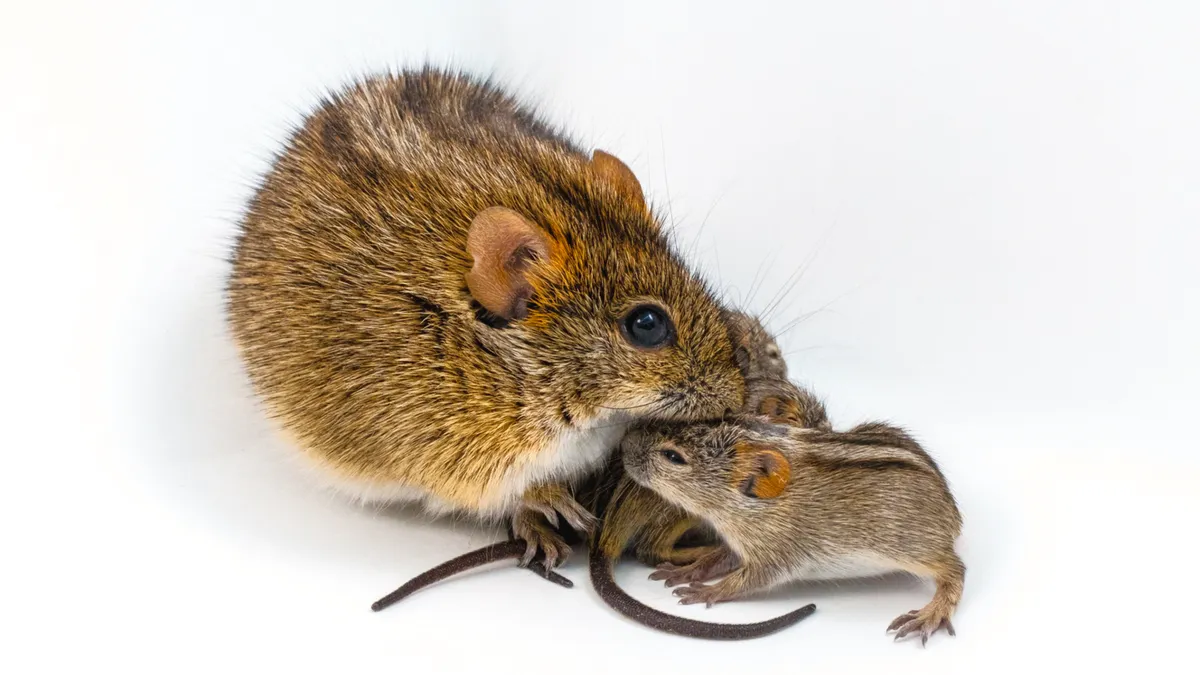
African striped mice are small rodents from southern Africa. Their parenting styles vary a lot. Some dads groom and protect their pups, while others ignore or attack them.
Researchers wanted to know why. They set up experiments with male mice and pups. They raised some males alone and others in groups. Males raised alone were more caring towards pups than those raised in groups.
In another experiment, researchers showed male mice either an empty cage or a pup. Being near a pup activated a brain area called the medial preoptic area (MPOA). This area was especially active in the more nurturing males. The MPOA is known to be important for maternal care in mammals and seems to be a key area for parenting in the brain.
Sarah Hrdy, an anthropologist not involved in the study, explained that many of the same brain responses seen in maternal behavior are also at work in males.
The researchers also looked at gene activity in the MPOA. They found that a gene called Agouti was more active in hostile males than in nurturing ones. This was surprising because Agouti is mostly known for its role in metabolism and skin color, including the mice's stripes.
When scientists increased Agouti gene activity in the MPOA, mice became more hostile or indifferent to pups. When mice were moved from group housing to solo cages, their Agouti expression went down, and they became more nurturing.
These results show that Agouti plays a key role in how African striped mouse fathers behave. Scientists believe the gene responds to social signals and can turn off paternal behaviors.
What This Means
Other mammals with involved fathers include gray wolves, African wild dogs, Golden lion tamarins, mountain gorillas, and pygmy marmosets.
Catherine Dulac, a neuroscientist at Harvard University, praised the study. She noted it revealed a surprising way the social environment can stop male parenting by changing Agouti expression in the MPOA.
Researchers are still figuring out why Agouti expression changes with social settings. They think it might relate to social competition and how many mice are in an area. These factors could affect whether a mouse focuses on its own survival or on raising offspring.
Ricardo Mallarino, a molecular biologist and co-author, said the animal has developed the ability to use environmental information to control its energy-demanding behaviors.
Humans also have the MPOA and the Agouti gene. However, the researchers caution against applying these findings directly to people. Future research might explore if similar brain factors play a role in child abuse or neglect in humans.
For now, Peña emphasized that they are not suggesting a pill can make someone a better parent, or that parenting struggles are due to a molecular problem.
Deep Dive & References
- Nature - Nature, 2026
- Research briefing - Nature, 2026