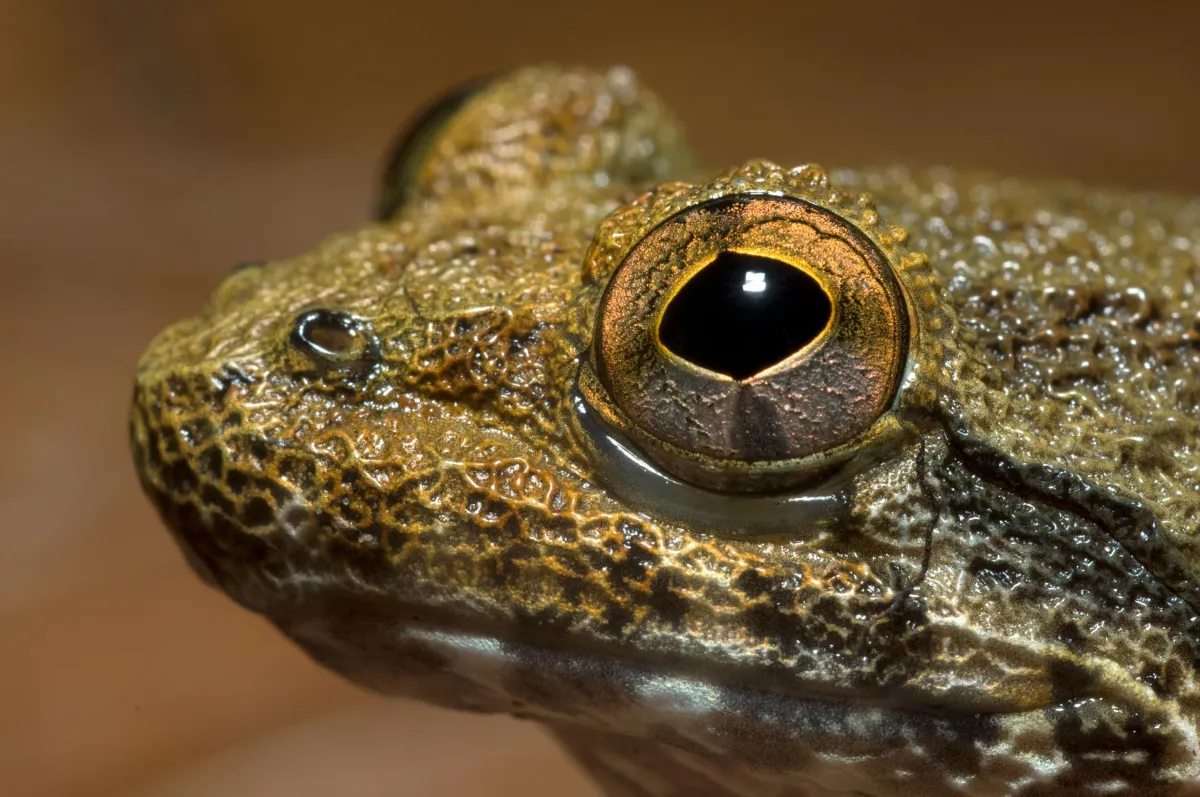
Remember those cool fanged frogs from Southeast Asia? The ones with the tooth-like bumps on their jaws? For almost 200 years, everyone thought Limnonectes kuhlii was just one species. But a new genetic study just dropped a bombshell: it's actually six or seven distinct species hiding in plain sight.
Chan Kin Onn, a herpetologist from Michigan State University, explained that finding new species isn't always about discovering creatures in uncharted jungles. Often, it's about taking a closer look at animals we think we know. Modern DNA tools are seriously changing the game here.
Scientists suspected something was up with the Bornean fanged frog. Over the last two decades, genetic hints suggested this single species could be as many as 18! That's a huge jump. So, Chan and his team dove deep, analyzing over 13,000 genes from frogs collected in the Malaysian Borneo rainforests.
We're a new kind of news feed.
Regular news is designed to drain you. We're a non-profit built to restore you. Every story we publish is scored for impact, progress, and hope.
Start Your News DetoxThe Big Reveal
Their work, published in Systematic Biology, showed clear genetic groups. Not 18, but a solid six or seven. That's a pretty wild discovery for a creature first identified way back in 1838. It's like finding out your favorite band is actually a supergroup of six different artists.
This matters a lot for conservation. Frogs are in serious trouble globally, with two out of five amphibian species facing extinction. Knowing exactly how many species exist helps scientists figure out who needs urgent protection. If we don't know they're there, we can't save them.
But it's a delicate balance. Splitting species too much can make their habitats seem tiny, making their conservation status look worse than it is. Chan points out that resources are limited, so getting the numbers right is key to protecting the species that truly need it.
This study also revealed a lot of interbreeding among these frogs. That can blur the lines between species, showing that evolution isn't always a clean, sudden break. It's often a gradual process, creating what Chan calls a "speciation 'gray zone.'"
It's not just fanged frogs, either. Genetic research is revealing that many species, from tiny insects to large mammals, might be secretly diverse. We once thought Earth had about 8.7 million species. Now, some models suggest the real number could be up to 250 times higher. Seriously cool stuff.