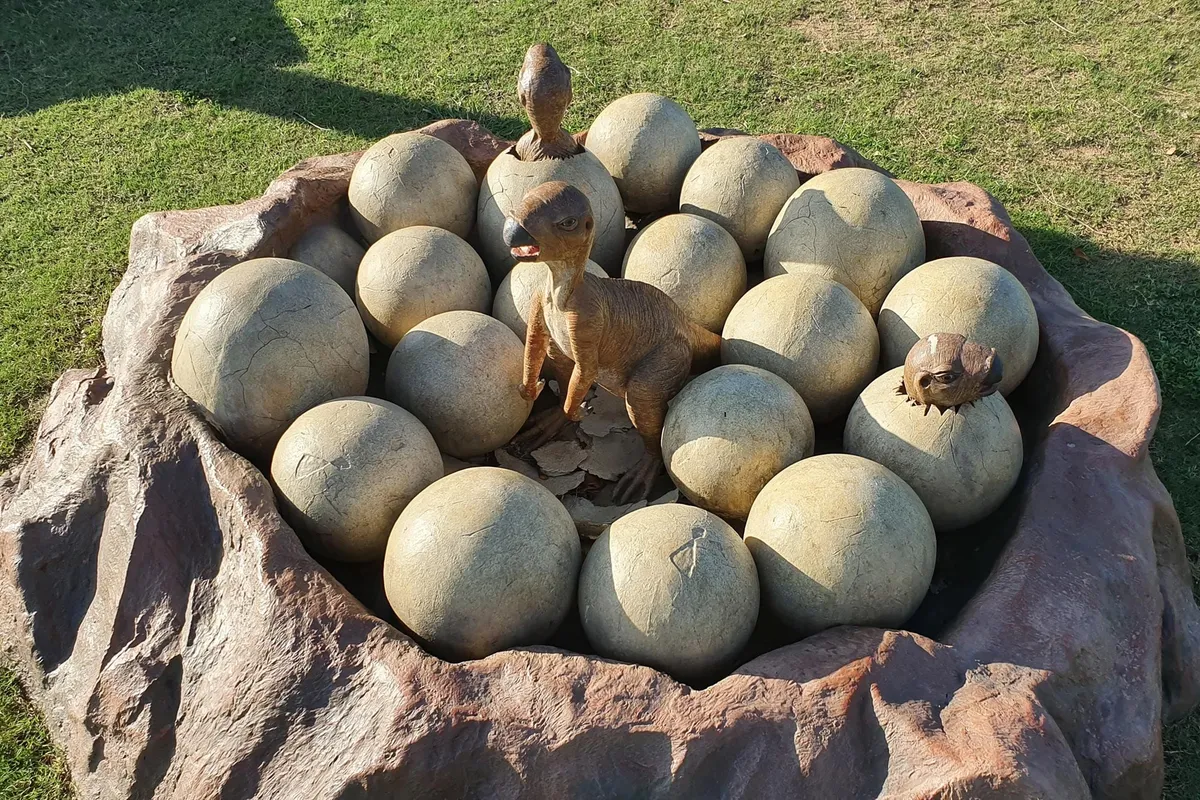
Scientists built a life-sized model of an oviraptor and its nest. They wanted to learn how these bird-like dinosaurs hatched their eggs.
For a long time, experts wondered if oviraptors used environmental heat, like crocodiles, or body warmth from a parent, like modern birds. A new study looked closely at this question.
Recreating a Dinosaur Nest
Researchers in Taiwan studied how oviraptors brooded and how their eggs hatched. They also ran computer simulations of heat moving through oviraptor egg clutches. They compared these results to how well modern birds incubate their eggs.
We're a new kind of news feed.
Regular news is designed to drain you. We're a non-profit built to restore you. Every story we publish is scored for impact, progress, and hope.
Start Your News DetoxTo test their ideas, the team made a life-sized oviraptor model and artificial eggs. These eggs were designed to be like real oviraptor eggs.
Dr. Tzu-Ruei Yang, a curator at Taiwan’s National Museum of Natural Science, said the way oviraptor eggs hatched depended on where the adult sat relative to the eggs.
Chun-Yu Su, the first author of the study, added that oviraptors were much less efficient at incubating eggs than modern birds.
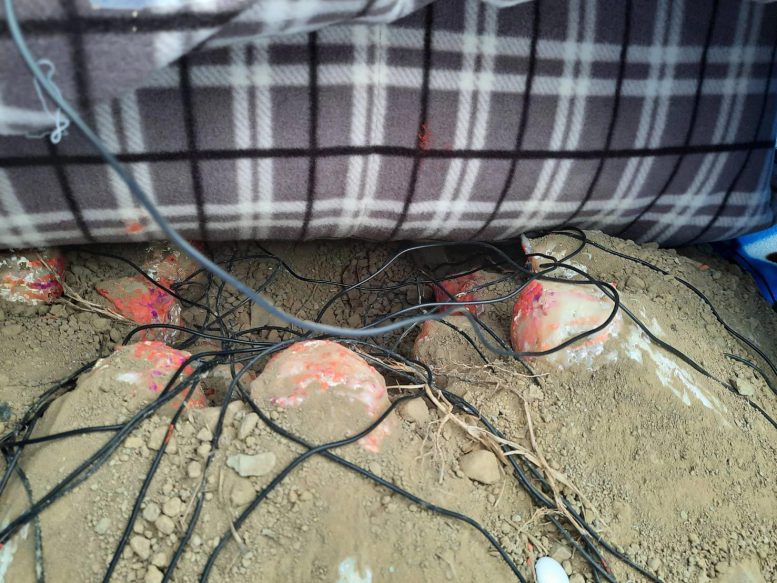
The team based their model on Heyuannia huangi, an oviraptor species from about 70 to 66 million years ago in China. This dinosaur was about 1.5 meters long and weighed around 20 kilograms. It built semi-open nests with eggs arranged in multiple rings.
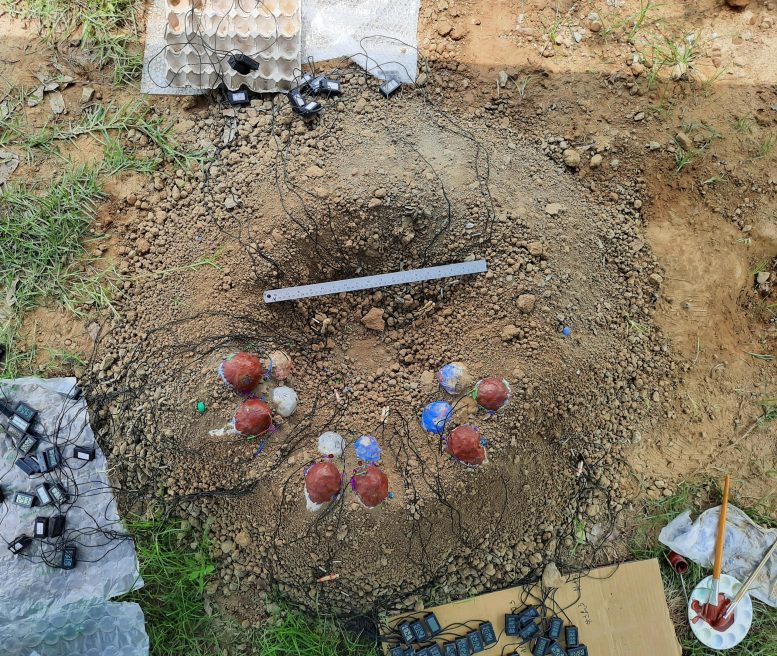
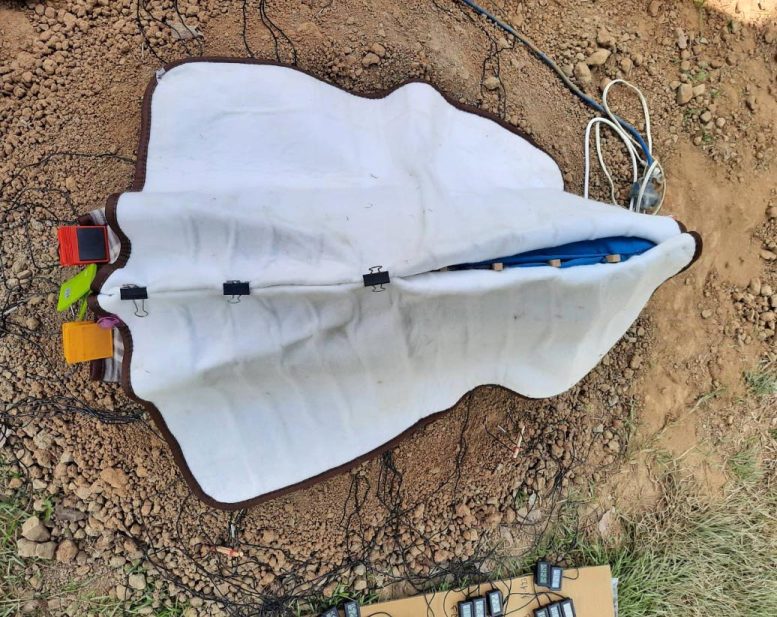
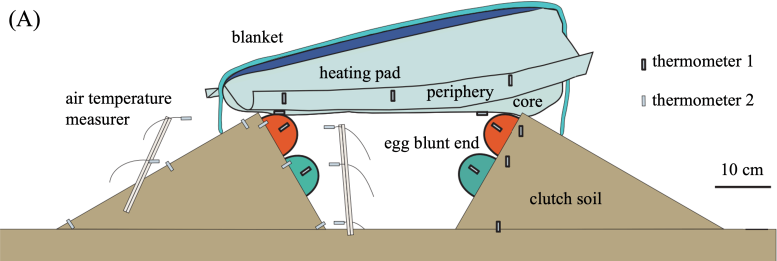
To build the brooding dinosaur, researchers used polystyrene foam and wood for the frame. They added cotton, bubble paper, and cloth to make it feel like soft tissue. The eggs were made from casting resin.
They set up two experimental nests with eggs in double rings. This mirrored how fossilized oviraptor nests looked. This unique setup meant the adult could not touch every egg directly.
Su noted that recreating oviraptor incubation was hard. Their eggs are different from any living species, so they had to invent resin eggs that were as close as possible to real ones.
Temperature Differences and Incubation
The experiments looked at how a brooding adult and different environmental temperatures affected egg warming and hatching.
In colder conditions, with an adult on the nest, eggs in the outer ring showed temperature differences of up to 6°C. This could lead to eggs hatching at different times.
In warmer conditions, the outer ring eggs had only about a 0.6°C temperature difference. This suggests that oviraptors in warmer places might have had different hatching patterns. Sunlight could have provided extra heat.
Yang explained that large dinosaurs likely did not sit directly on their nests. They probably used heat from the sun or soil, like turtles. Since oviraptor nests were open, sun heat was likely more important than soil heat.
Comparing Dinosaurs and Birds
The researchers also compared how well oviraptors incubated their eggs to modern birds.
Most birds use thermoregulatory contact incubation (TCI). This means a parent sits on the eggs and transfers body heat. For this to work, the adult must touch every egg, be the main heat source, and keep all eggs within a small temperature range.
Oviraptors likely could not meet these conditions. Their circular egg arrangement meant the adult could not touch every egg.
Su said oviraptors might not have used TCI like modern birds. Instead, these dinosaurs and the sun might have worked together to incubate the eggs. This was less efficient than modern birds. However, this mix of parental warmth and environmental heat might have been a good way to adapt as nests changed from buried to semi-open.
Yang pointed out that modern birds are not "better" at hatching eggs. Instead, birds today and oviraptors simply have different ways of incubating. It just depends on their environment.
New Insights into Dinosaur Parenting
The researchers noted that their findings apply to the specific nest they rebuilt. Also, today's climate is different from the Late Cretaceous period, which could change the results. Oviraptors also seemed to have longer incubation times than modern birds.
Still, the study gives important information about how these dinosaurs might have cared for their eggs. By combining physical experiments with heat simulations, this research offers a new way to study dinosaur reproduction.
Yang said this study is also an encouragement for students, especially in Taiwan. There are no dinosaur fossils in Taiwan, but that does not mean they cannot study dinosaurs.
Deep Dive & References
Heat transfer in a realistic clutch reveals a lower efficiency in incubation of oviraptorid dinosaurs than of modern birds - Frontiers in Ecology and Evolution, 2026