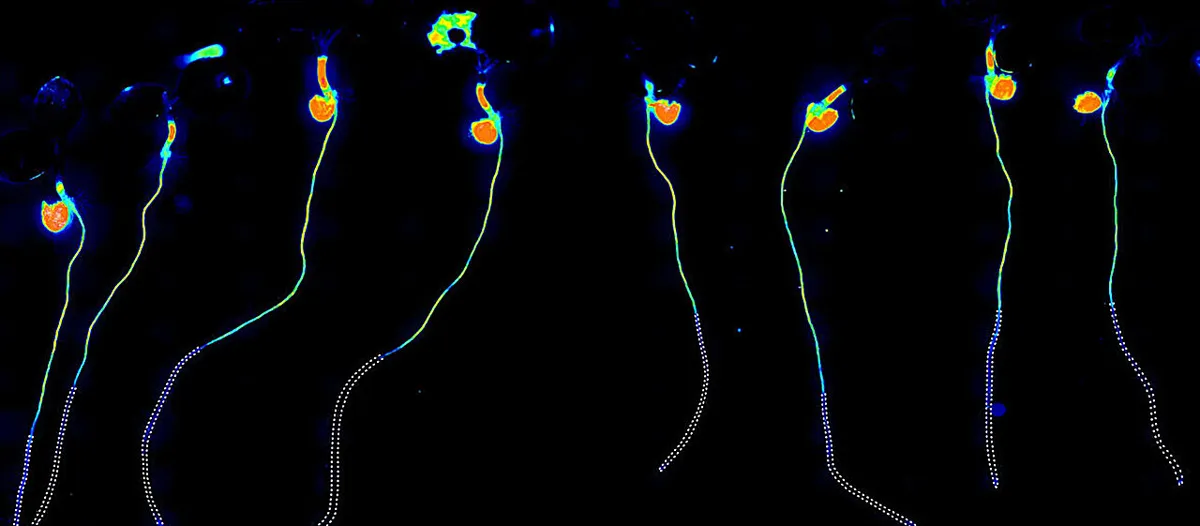
Scientists have found a way to use sound waves to create tiny protective layers. They showed this by shielding Epipremnum aureum plant leaves from harmful UV rays. The method blocked UV light without stopping the plant from making food through photosynthesis.
Researchers at RMIT University in Melbourne tested this gentle yet effective coating on plants. However, the technology is designed for other materials too, like textiles, plastics, glass, and silicon.
Javad Khosravi Farsani, a lead author and PhD researcher at RMIT, explained that the coating absorbs bad UV light but lets visible light pass through. This means plants stay protected while still photosynthesizing.
We're a new kind of news feed.
Regular news is designed to drain you. We're a non-profit built to restore you. Every story we publish is scored for impact, progress, and hope.
Start Your News DetoxHow the Sound Wave Coating Works
The process uses high-frequency sound waves to break down a liquid. This liquid is sprayed onto leaves as a fine mist. These tiny aerosol droplets then form a covalent organic framework (COF). This framework creates a thin, consistent layer of protection.
The scientists noted that COFs can protect plant leaves from UV light. This shows the potential for COFs in real-world devices, living systems, and environmental uses.
COFs are porous, crystalline materials. They are like molecular scaffolding with tiny holes. These holes can be designed to absorb light, trap chemicals, or protect surfaces.
However, the parts that form COFs are hard to assemble. It has been tough to master this in the lab and even harder to use outside of it. Because of this, COFs have mostly stayed in labs. They often need special materials, extreme heat, and long processing times. These conditions would harm delicate surfaces in the real world.
Distinguished Professor Leslie Yeo from RMIT’s School of Engineering said that COFs have amazing properties. But usually, you had to choose between keeping their structure and protecting the surface you were coating. This new work shows a way to do both by forming and coating the material gently.
A Simpler, Cooler Approach
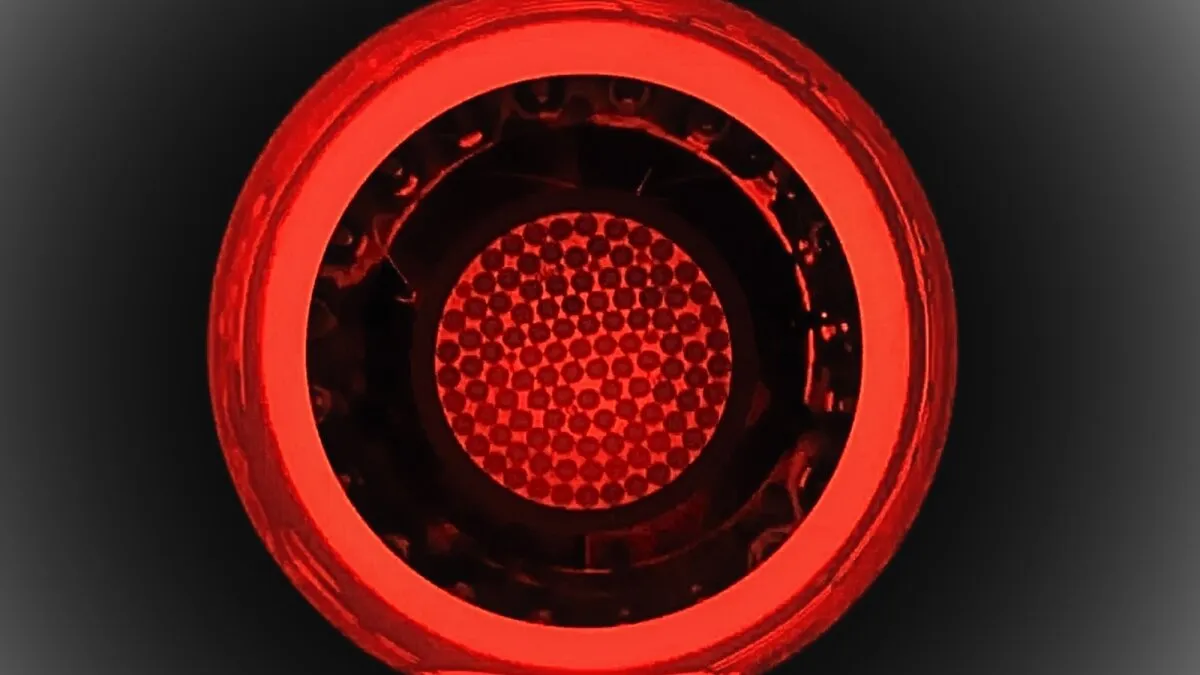
The researchers used acoustomicrofluidics, which are ultra-high-frequency sound vibrations, to control liquids. They used a tiny chip that makes 10-MHz waves.
When a liquid flows onto this vibrating chip, sound waves stretch the liquid. This breaks it into a fine mist. As the mist travels, the droplets arrange themselves into protective layers on surfaces. This works even on very delicate materials like plant tissue.
Associate Professor Joseph Richardson, a co-author, said their method combines manufacturing and coating into one step. He added that the process is simpler because it doesn't need heat or lab controls. It works in open air at room temperature. This simplicity makes it useful for many different surfaces and uses.
Associate Professor Amgad Rezk from RMIT’s School of Engineering believes this method greatly increases how COFs can be used in the real world. The team has already filed for an Australian patent.
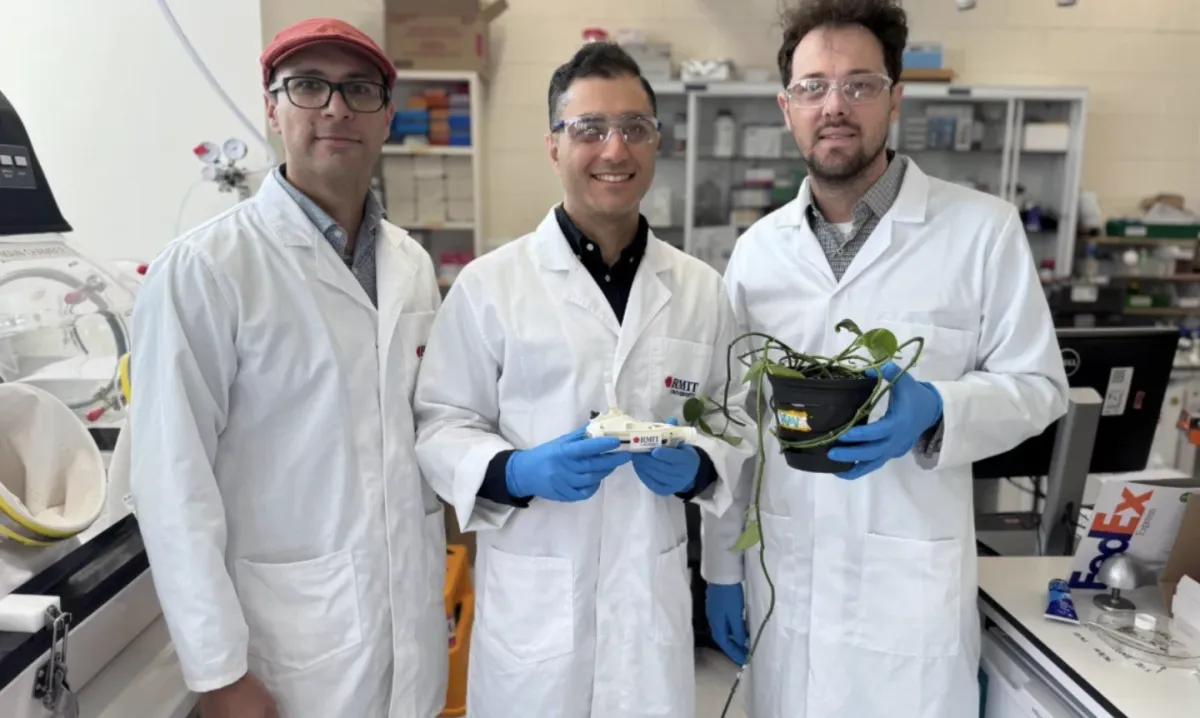
Rezk explained that using sound waves allows them to form and apply the coating in minutes. It does this without heating or damaging the surface. This is a big change from older coating methods. It lets them work with fragile materials, including living plant tissue.
This opens up new chances for industries that work with sensitive materials. These materials couldn't be processed this way before.
The team showed their method on plant leaves. The leaves remained undamaged for 60 days after the coating was applied, exposed to UV, and then removed. There are still questions about how long the technology will last when exposed to outdoor elements.
However, finding a way to coat new electronics, sensors, and membranes could be a game-changer. These items are often too sensitive to heat for current methods but still need protection. The researchers are confident about scaling up the technology, which has been another challenge for COFs.
The scientists concluded that their small, light platform can be put on a drone or autonomous vehicle. This would allow precise coating on plant leaves. The low cost of the chip, thanks to mass manufacturing, makes it possible for large-scale use in real-world biotechnology.
Deep Dive & References
COF-based protective coatings on plant leaves for solar ultraviolet shielding - Science Advances