Half a million years ago, our evolutionary cousins weren't the meat-obsessed hunters we thought they were.
Researchers at Spain's Centro Nacional de Investigación sobre la Evolución Humana have spent years examining the teeth of hominids who lived at Sima de los Huesos, a cave site in the Sierra de Atapuerca mountains. These creatures, who lived around 450,000 years ago and are the closest relatives of Neanderthals, left behind something that tells a surprisingly detailed story: their molars.
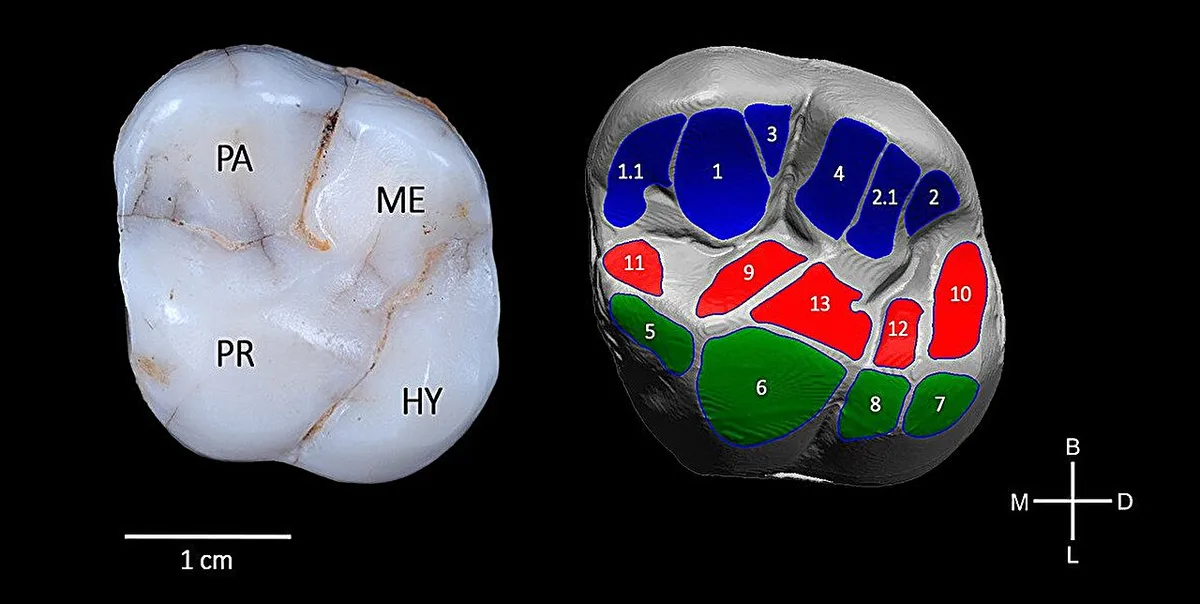
Using high-resolution 3D scanning, scientists analyzed 16 teeth and looked at the wear patterns etched into them over a lifetime of chewing. The results, published in the Journal of Human Evolution, upend a long-held assumption. These hominids weren't the strict carnivores that researchers had assumed cold-adapted populations must be. Instead, their teeth show evidence of a balanced diet—roughly equal amounts of plant and meat.
We're a new kind of news feed.
Regular news is designed to drain you. We're a non-profit built to restore you. Every story we publish is scored for impact, progress, and hope.
Start Your News DetoxWhat the teeth revealed
The key was in how their molars wore down. When you chew plants versus meat, you create different patterns on your teeth. The researchers compared the Sima de los Huesos molars to both Neanderthal samples and modern hunter-gatherer populations. What emerged was a clear picture: these ancient hominids were eating a mixed diet, and their teeth bore the marks of it.
The wear patterns also suggested something else—their food wasn't as abrasive as what other groups were consuming. This hints at their environment. Rather than surviving in the brutal, open tundra we'd imagined, they likely inhabited a landscape of open forests with relatively stable conditions. Even during a glacial period, their world was more hospitable than we'd assumed.
Lead researcher Laura Martín-Francés puts it plainly: "Our study of the dental wear has observed a similar proportion of facets on the surface of the molars, indicating a comparable consumption of vegetable and meat products." It's a small detail—a wear pattern on a tooth—but it reshapes how we understand human evolution. These weren't desperate survivors clinging to meat in a frozen wasteland. They were adaptable foragers who knew how to make use of what their landscape offered.
This kind of flexibility, it turns out, may have been one of the things that helped our lineage survive.