You know how some volcanoes are all fire and brimstone, spewing lava like a broken fire hydrant, while others just sort of… ooze? Scientists have been scratching their heads over this for ages. Turns out, the secret might be in how hot the magma gets before it even thinks about erupting.
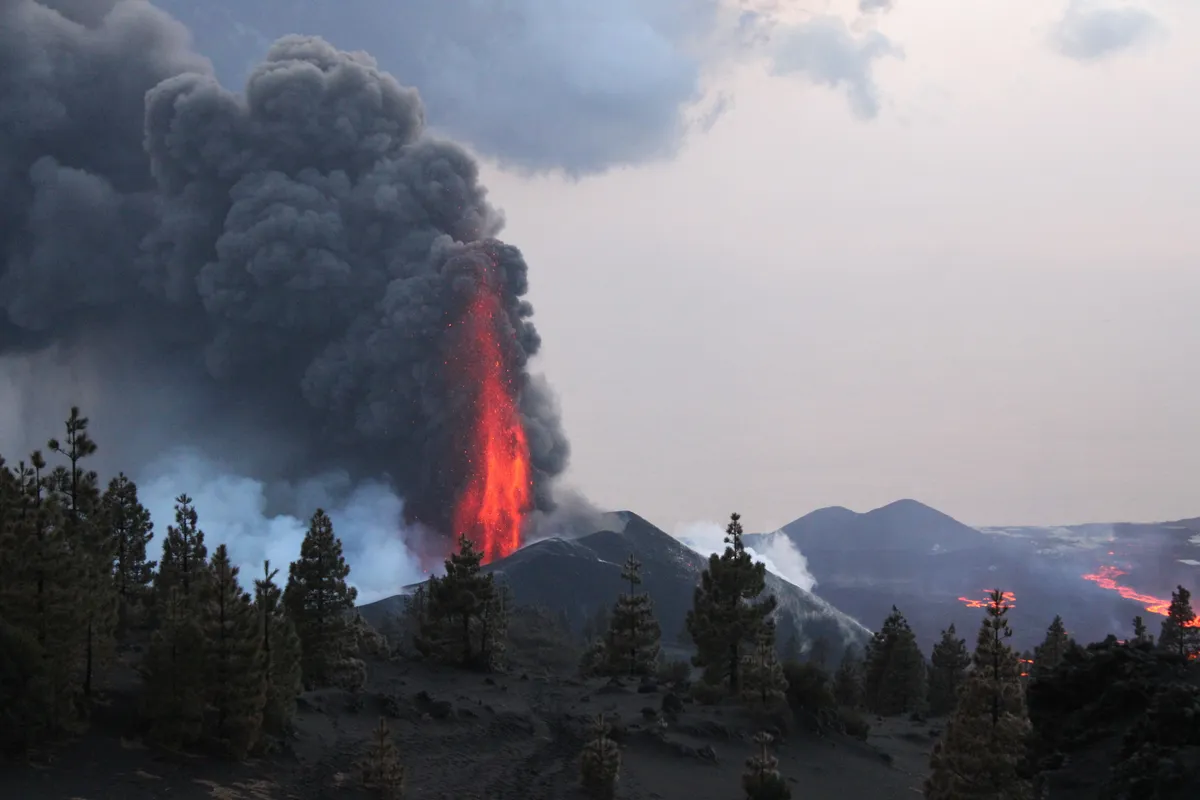
Picture this: magma, but cranked up to eleven. We're talking "superheated" magma, which is basically lava that's had too much coffee and is running hotter than usual. An international team, spearheaded by the University of Manchester, got up close and personal with magma from the 2021 Tajogaite eruption in La Palma, Spain, and found something wild.
When magma goes superheated, it gets picky. It melts those tiny crystal "seeds" that usually help new crystals grow as the magma makes its way to the surface. No seeds, no new crystals. It's also just generally more uniform, like a well-blended smoothie, which further discourages any crystal formation. This might sound like a minor detail, but it dramatically changes how fast the magma moves and how easily volcanic gases can escape. And that's the recipe for whether you get a dramatic lava fountain or a chill lava flow.
We're a new kind of news feed.
Regular news is designed to drain you. We're a non-profit built to restore you. Every story we publish is scored for impact, progress, and hope.
Start Your News DetoxThe Lab Recreates Lava's Mood Swings
To really get a handle on this, the researchers basically built a mini-volcano in the lab. They recreated the intense conditions using actual Tajogaite magma, which they suspected had been superheated. They then used fancy X-ray tech (synchrotron X-ray microtomography, if you're asking) to watch crystals form in real-time. Because apparently, that's where we are now.
The results were pretty stark: regular magma started forming crystals in about 20 minutes. The superheated stuff? It held off for over eight hours. Let that satisfyingly long delay sink in.
Then, they plugged these findings into computer models that predict magma movement. The models showed that when crystallization is delayed this long, magma can shoot up quickly and stay fluid, leading to those dramatic lava fountains. Magma that crystallizes earlier, however, gets thicker and moves slower, giving gases plenty of time to escape, resulting in a much calmer, effusive eruption. Basically, superheating gives magma a serious case of FOMO, making it rush to the surface before it can settle down.
This whole discovery could seriously level up how scientists interpret volcanic signals and, hopefully, get better at predicting what kind of mood a volcano is in. Because while magma chemistry and gas content are important, it seems the magma's heat history is also a crucial, fiery piece of the puzzle. Which, if you think about it, is both impressive and slightly terrifying.