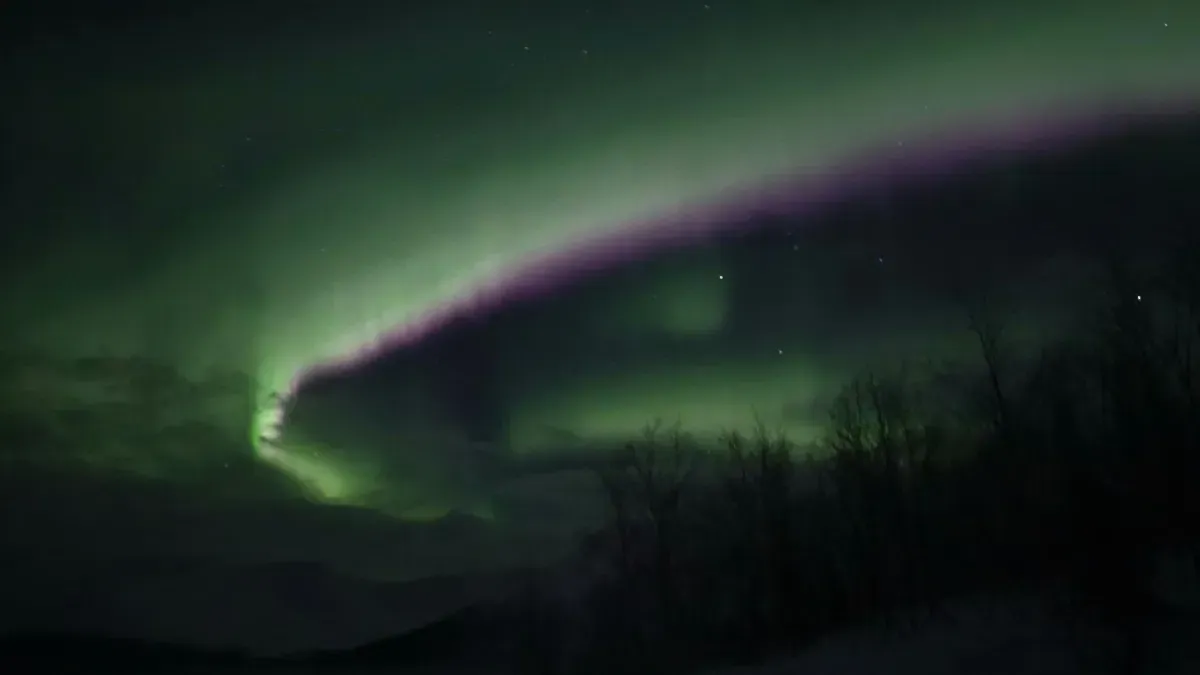
The aurora borealis is coming south. Tonight, January 19, a severe geomagnetic storm will push the northern lights into the night sky above more than half the United States — and if you're in one of 24 states stretching from the Pacific Northwest to New England, you might catch it.
The National Oceanic and Atmospheric Administration confirmed the storm levels strong enough to make the aurora fully or partially visible across Alaska, Washington, Oregon, Idaho, Montana, North Dakota, Minnesota, South Dakota, Wisconsin, Wyoming, Michigan, New York, Vermont, Maine, New Hampshire, Massachusetts, Nebraska, Iowa, Illinois, Indiana, Ohio, Pennsylvania, Missouri, and Colorado. That's a rare gift for anyone outside the Arctic Circle.
How to actually see it
The key is darkness. Find somewhere with minimal light pollution — the further from city glow, the better. The aurora shifts through greens, reds, and purples, but even a faint shimmer is worth the cold walk outside.
We're a new kind of news feed.
Regular news is designed to drain you. We're a non-profit built to restore you. Every story we publish is scored for impact, progress, and hope.
Start Your News DetoxYou don't need a telescope or professional camera. Your phone will work. The trick is patience and darkness. If you're photographing it, keep your headlamps off and avoid turning on car headlights anywhere near your shot. Even a few seconds of light will show up as a harsh flash in your video. Let your eyes adjust first, let the aurora be the focus, and let the camera catch what your eyes are already seeing.
This is the kind of night that doesn't happen often in the lower 48. Bundle up and look up.