Get ready to dim the lights (or just your screen) because a total solar eclipse is making a grand, albeit brief, appearance over parts of Europe on August 12, 2026. If you're not planning a last-minute trip to Spain, the European Space Agency (ESA) has you covered with a live stream that promises to be far more comfortable than battling crowds for a glimpse.
This celestial showstopper kicks off at 1:30 p.m. EDT (19:30 CEST). So mark your calendars, grab some popcorn, and prepare for the sun to temporarily vanish.
The Sun's Disappearing Act
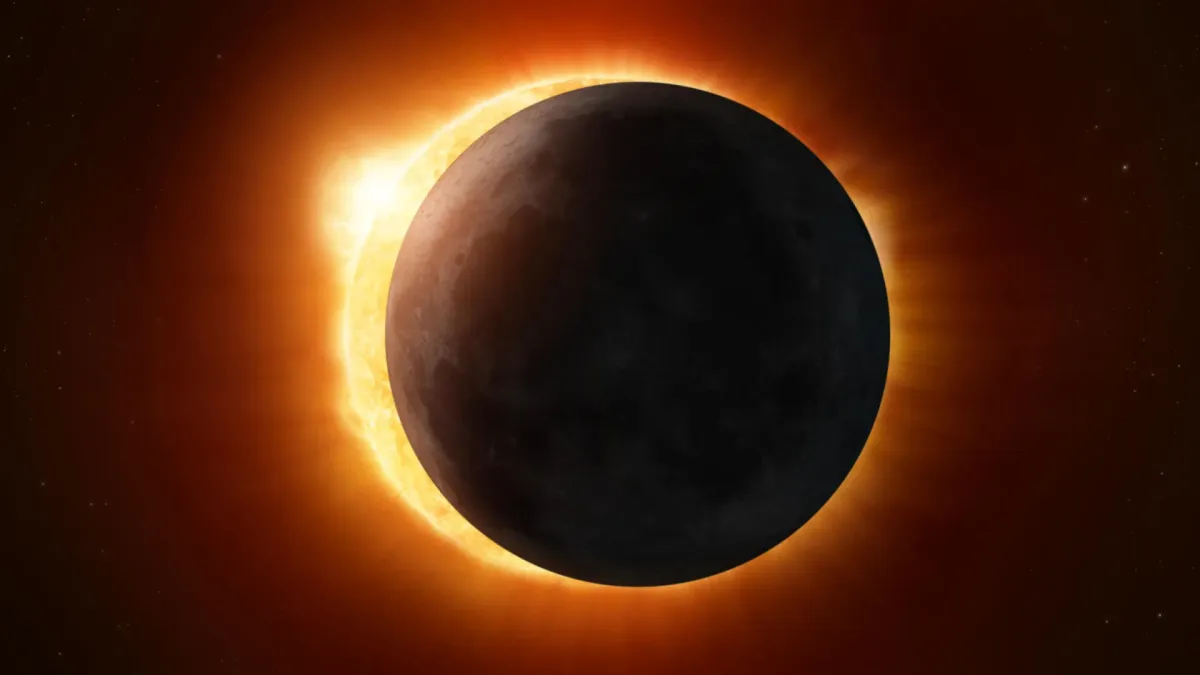
For the uninitiated, a total solar eclipse is when the moon decides to play peek-a-boo directly in front of the sun, casting its shadow on a very specific sliver of Earth. The real magic happens when the sun's blinding surface is completely obscured, revealing its ethereal outer atmosphere, the corona – a sight usually hidden in plain view.
We're a new kind of news feed.
Regular news is designed to drain you. We're a non-profit built to restore you. Every story we publish is scored for impact, progress, and hope.
Start Your News DetoxDuring this rare blackout, the sky can darken enough for stars and planets to pop out in the middle of the day. Temperatures might drop, winds could pick up, and birds might even decide it's bedtime. Because, apparently, even nature gets confused by a disappearing sun.
The path of totality for this particular event will sweep across Greenland, Iceland, a tiny corner of northeastern Portugal, and then straight through Spain. The rest of Europe will get a partial eclipse, where the moon just takes a polite "bite" out of the sun, making daylight feel a bit… off.
ESA's broadcast will be live from the Observatorio Astrofísico de Javalambre in Teruel, Spain, a location chosen for its ridiculously good viewing conditions. Award-winning space scientist Dr. Maggie Aderin will host, joined by ESA's Director of Science Professor Carole Mundell and other experts, who will likely drop some fascinating tidbits about gravity and solar coronas. Because what's a cosmic event without a little science chat?
At Javalambre, the main event – a whole 81 seconds of total darkness – is expected at 2:31 p.m. EDT (11:31 a.m. PDT). That's a minute and 21 seconds for the sun to really make an exit. The broadcast will feature live telescope views and, because it's 2026, drone footage, ensuring you don't miss a single second of the moon's audacious photobomb. You can catch all the action on ESA Web TV or ESA's YouTube channel.
Why Javalambre is the VIP Seat
Why Spain? Why Javalambre? Well, this observatory isn't just any old stargazing spot. It's a top-tier astronomical facility sitting directly in the eclipse's path, known for its minimal cloud cover, low light pollution, and a perfectly clear view towards the western horizon. Which is crucial, since the sun will be nearing its sunset performance when the eclipse hits.
They're even setting up multiple smaller telescopes just for the occasion, promising continuous close-up feeds of the moon's slow creep across the sun. And if that's not enough, ESA plans to pull in feeds from other prime locations, like their public event in León and observations from Frómista, just to maximize the chances of a perfect shot.
So, while a select few will be experiencing the sun's vanishing act firsthand, the rest of us can enjoy the spectacle from the comfort of our homes, probably with better snacks and no risk of sunburn. Which, if you think about it, is both impressive and slightly terrifying that we can now watch the sun disappear from our phones.