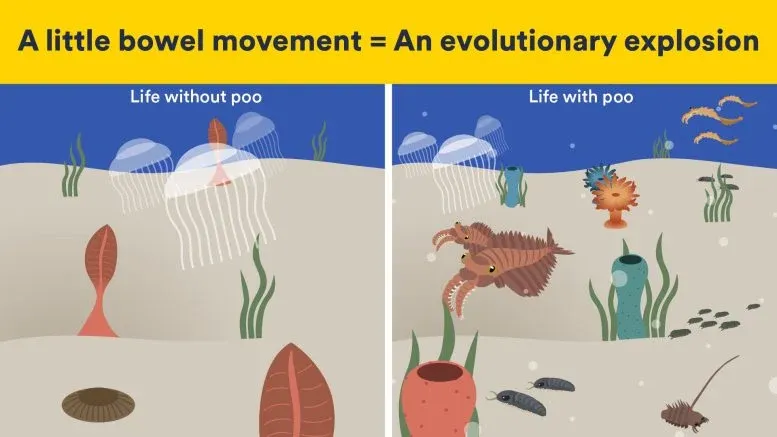
Ancient animal waste might have played a big role in how early ocean life developed. A study from Flinders University suggests that prehistoric poop helped change ancient oceans during a key time in evolution.
This process is called the 'fecal revolution.' Researchers believe that more and more animal waste moved organic material and nutrients around, making marine ecosystems more complex.
The Cambrian Explosion and Ancient Poop
Writing in Trends in Ecology & Evolution, researchers from Australia and Germany say this buildup of waste contributed to the 'Cambrian Explosion.' This happened about 540 million years ago. During this time, the first complex marine ecosystems appeared, and most major animal groups began to emerge.
We're a new kind of news feed.
Regular news is designed to drain you. We're a non-profit built to restore you. Every story we publish is scored for impact, progress, and hope.
Start Your News DetoxEarly sea animals left behind fossilized waste pellets called 'coprolites.' By moving nutrients and carbon through the oceans, this waste might have created conditions that helped marine organisms evolve and become more diverse. This idea offers a new way to look at the biological and environmental changes that led to this rapid growth of animal life.
Dr. Russell Bicknell from Flinders University noted that the importance of feces in ancient ecosystems is often overlooked, even with other factors like rising oxygen levels.
The researchers looked at ancient diets, how digestive systems developed, and how organisms got food and transferred energy. These changes together might explain how more organic matter and nutrients entered the oceans around the end of the Ediacaran Period and the start of the Cambrian Period.
Tracing Digestion Through Fossils
The first animals appeared about 600 million years ago during the Ediacaran Period. More complex digestive systems and the first fossilized coprolites started showing up near the beginning of the Cambrian Period.
Dr. Bicknell and Dr. Julien Kimmig found that fossilized digestive systems and coprolites became more varied in size, shape, and complexity as the Cambrian Period went on. They gathered evidence from over 35 fossil sites worldwide.
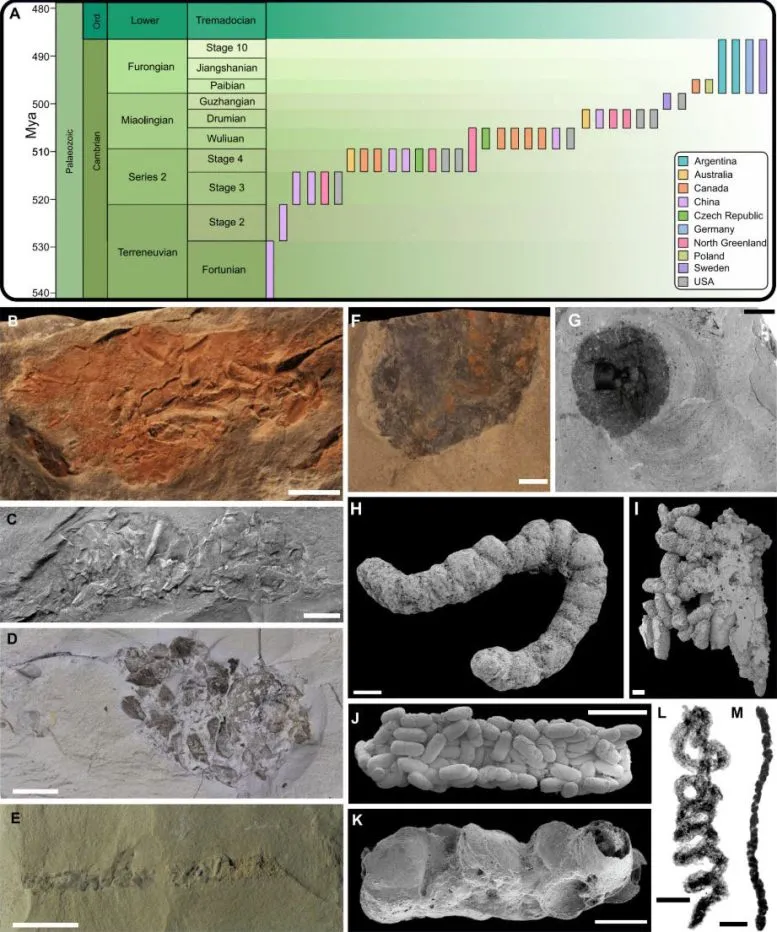
Dr. Bicknell, an evolutionary biologist, explained that the fecal matter ranged from tiny pellets to centimeter-sized coprolites containing shells and other animal parts. Some coprolites even show recognizable remains of prey, giving direct clues about what early animals ate. Their increasing variety also shows that animals developed more specialized ways of feeding and more complex relationships between predators and prey.
As animals processed a wider range of food, their waste moved organic carbon and nutrients to new parts of the marine environment. This movement might have helped create ecological processes similar to those in modern oceans.
Dr. Bicknell added that the evolution of feeding strategies matches the production and distribution of organic carbon and nutrients. This started to create conditions seen in modern oceans and later on land, where fertilizer is used today to grow food.
Deep Dive & References
The Cambrian fecal revolution: Fueling the Cambrian Radiation - Trends in Ecology & Evolution, 2026