Scientists just demonstrated a way to store quantum information that sidesteps one of the field's most stubborn problems: how to keep delicate quantum states intact long enough to be useful.
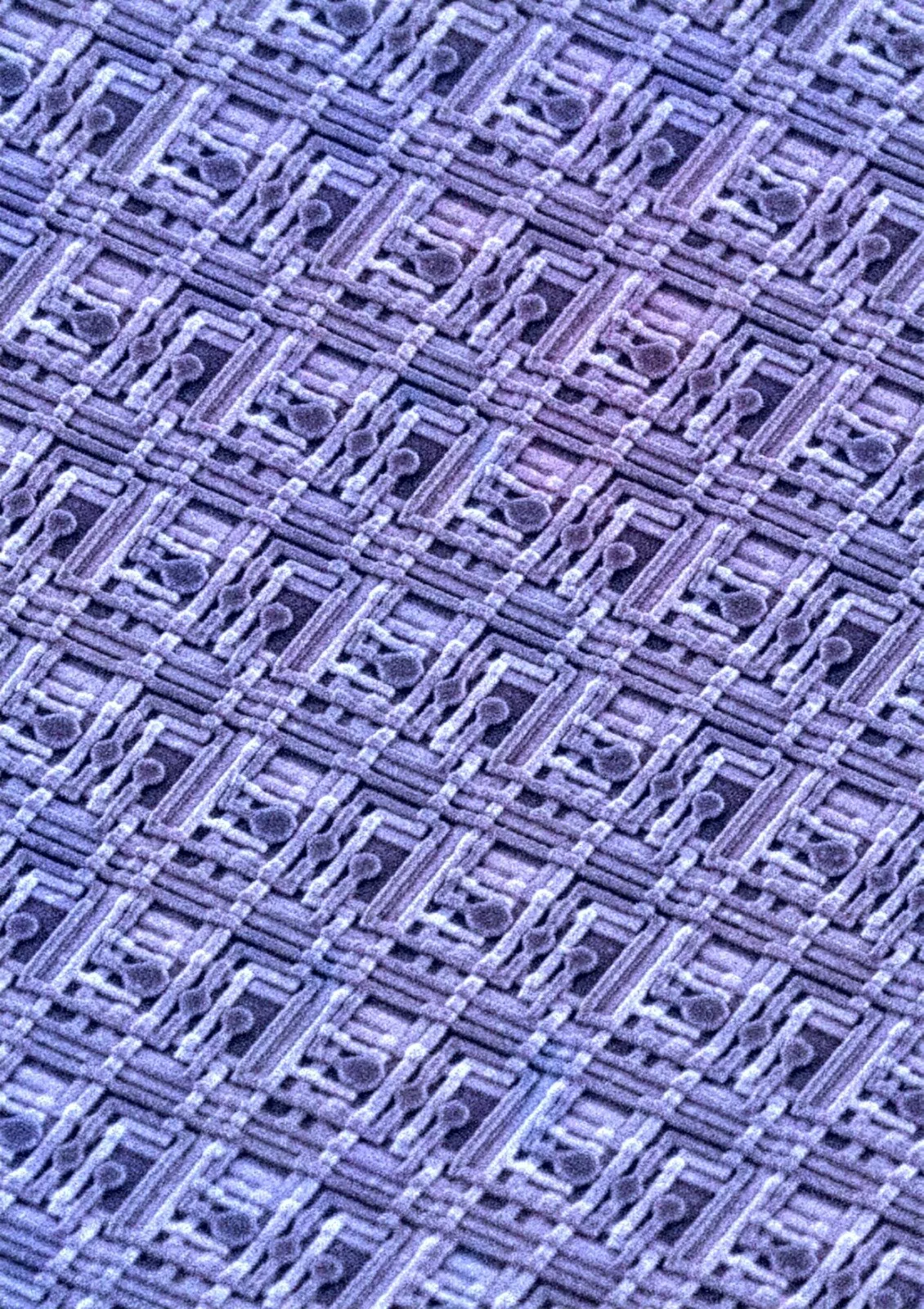
The solution sounds like science fiction but works with everyday physics. Researchers have built microscopic hollow structures—they're calling them "light cages"—that trap light and atoms together on a silicon chip. Think of them as tiny containers that hold onto quantum data without letting it decay.
Here's why this matters. Quantum networks need to move information across long distances, but quantum states are fragile. They collapse if you look at them wrong. Current approaches use long glass fibers to guide light, but getting atoms into those fibers takes weeks. The new light cages cut that down to days, and more importantly, they do it without losing the tight control you need.
We're a new kind of news feed.
Regular news is designed to drain you. We're a non-profit built to restore you. Every story we publish is scored for impact, progress, and hope.
Start Your News DetoxHow the cages actually work
The team used a 3D-nanoprinting technique called two-photon polymerization to etch these structures directly onto chips with extraordinary precision. The result: hollow cores small enough to confine light tightly, but with openings on the sides that let cesium atoms diffuse in quickly. Once the atoms are inside, light pulses can be converted into what physicists call "collective atomic excitations"—basically, the light's information gets stored in the atoms. Later, a laser pulse can reverse the process and release the stored light on demand.
In their tests, the researchers stored light pulses containing just a few photons for several hundred nanoseconds. That doesn't sound long, but it's long enough for quantum systems to do useful work. They're confident they can push single-photon storage out to milliseconds—which would be genuinely transformative.
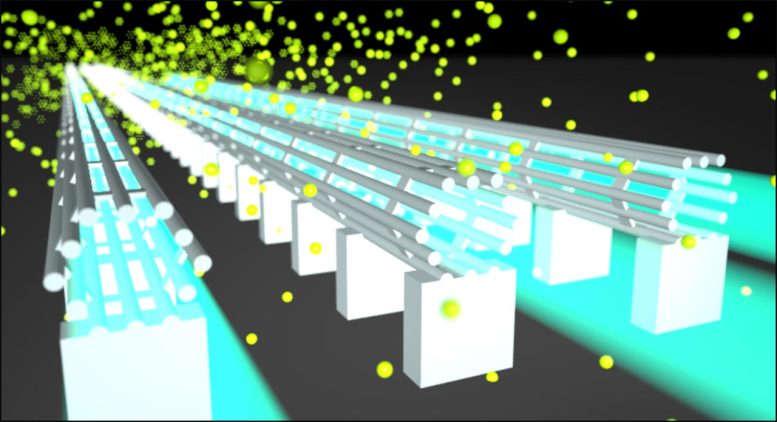
The real breakthrough came when they packed multiple light cages onto a single chip and watched them perform nearly identically. That precision—the ability to manufacture these structures consistently—is what separates "interesting lab result" from "technology that could actually scale."
For quantum networks, this opens two concrete paths forward. In quantum repeater systems, these memories could synchronize single photons across long distances, making quantum communication far more efficient. For quantum computers built from photons, the cages provide the controlled delays needed for the machine to actually compute.
The whole system operates at room temperature and fits on a chip. No extreme cooling. No exotic materials. That's the kind of engineering that moves from research papers to actual infrastructure. The next step is connecting these chips to fiber optic cables and seeing if the advantage holds up in real-world conditions.