Imagine finding a dinosaur with wings, only to discover it couldn't actually fly. Sounds wild, right? Well, scientists just figured out which feathered dinosaurs were grounded, and the secret was in their molting patterns.
Turns out, a dino called Anchiornis — which totally had wings — likely never left the ground. Researchers found that its feathers grew back in a messy, irregular way. That's a huge clue, because flying birds replace their feathers in a super neat, symmetrical order to keep soaring.
Think about it: if you're a bird and you need to fly to find food or escape danger, you can't have big gaps in your wings. So, flying birds shed a few feathers at a time, making sure their wings stay balanced. Flightless birds, on the other hand, just shed whenever. It's like the difference between a carefully planned reno and just tearing down walls wherever.
We're a new kind of news feed.
Regular news is designed to drain you. We're a non-profit built to restore you. Every story we publish is scored for impact, progress, and hope.
Start Your News DetoxA Feathered Mystery
Dinosaurs split off from other reptiles about 240 million years ago, and feathers popped up pretty quickly. They're not just for flying; they also help keep animals warm. Around 175 million years ago, a group called Pennaraptora showed up. These are the distant relatives of modern birds, and they were the only dinosaur group to survive the giant extinction event 66 million years ago.
Scientists used to think these early feathered dinosaurs evolved wings for flight. But then, some species might have lost that ability, much like today's ostriches or penguins. The Anchiornis fossils are a big piece of that puzzle.
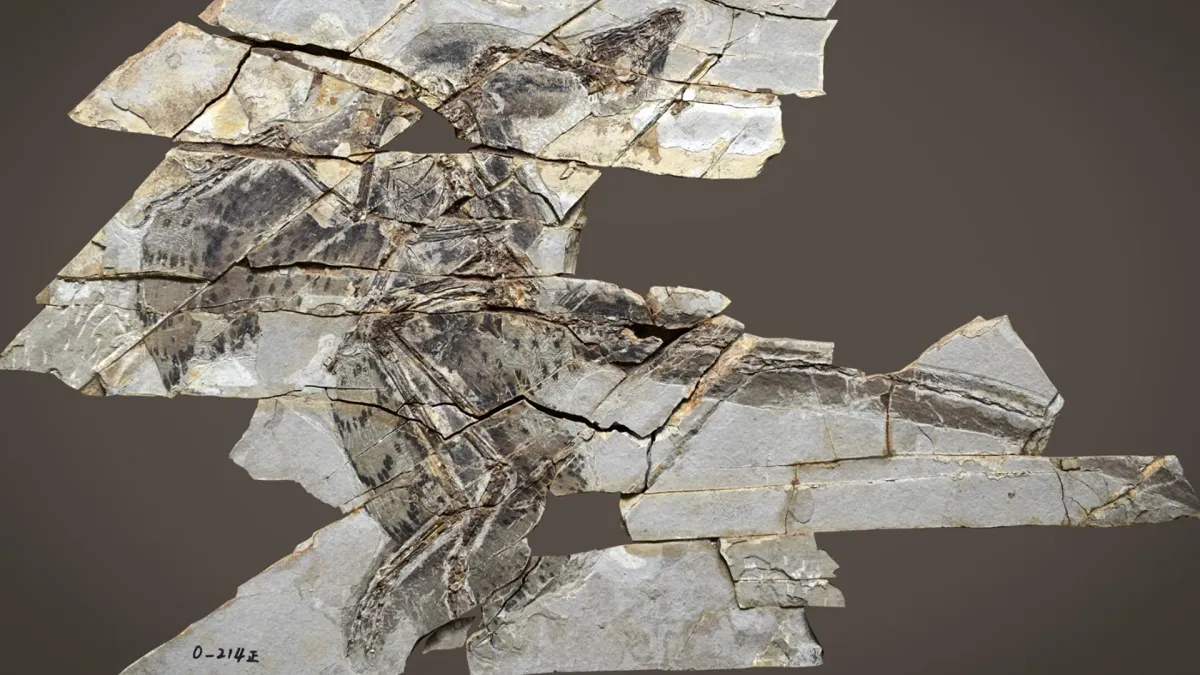
Researchers studied nine super rare fossils from eastern China. What makes them so special? They preserved not just the feathers, but their original colors! Each Anchiornis fossil showed white wing feathers with a distinct black spot at the tip. This unique preservation let scientists look at feather structure and growth in a way usually impossible.
They found a continuous line of black spots along the wing edges, but also saw new feathers growing in that were totally out of alignment. That's the tell-tale sign of an irregular molt. Dr. Yosef Kiat, an ornithologist, called it an exciting discovery. It's a tiny detail, but it completely changes what we thought about how flight evolved.
So, while Anchiornis looked the part with its cool wings, it was probably just strutting around. It joins other feathered dinosaurs that couldn't fly, showing us just how many twists and turns evolution took on the path to true flight. It's a reminder that even ancient history has some seriously clever secrets hidden in plain sight.