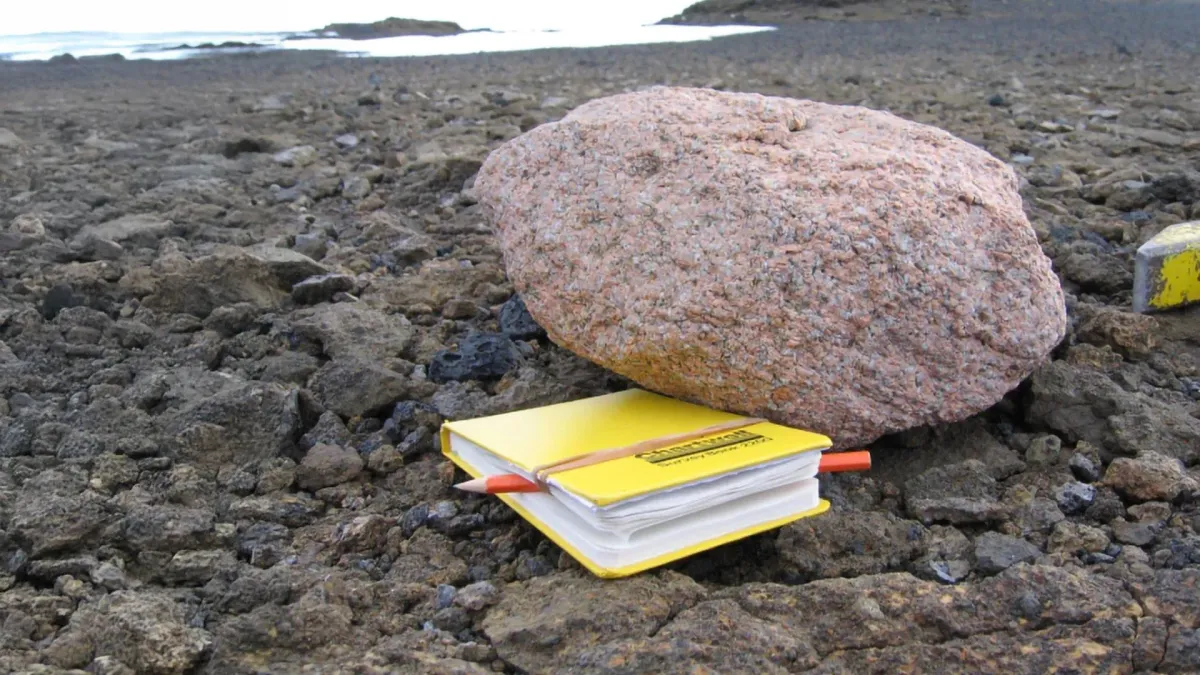
Get this: scientists just found a massive, hidden granite body — nearly 100 kilometers wide — deep under Antarctica's Pine Island Glacier. And they found it all thanks to some really weird, bright pink rocks sitting on mountaintops.
These pink granite boulders have puzzled researchers for years. They were just... there, high up in the Hudson Mountains, looking totally out of place. No one knew how they got there or what they meant for Antarctica's past.
A team from the British Antarctic Survey (BAS) got to work. They checked out the tiny crystals in the granite. Turns out, these rocks are ancient — about 175 million years old, from the Jurassic period. But their age didn't explain how they ended up on mountain ridges.
We're a new kind of news feed.
Regular news is designed to drain you. We're a non-profit built to restore you. Every story we publish is scored for impact, progress, and hope.
Start Your News DetoxThen, the real clever part happened. Scientists flew planes equipped with special gravity sensors over the area. These sensors picked up a massive signal under the ice. It was exactly what you'd expect from a huge chunk of granite buried deep down.
That's when it clicked. The pink boulders on the surface were just pieces of this giant, hidden granite mass. The Pine Island Glacier, when it was much thicker, actually scraped these rocks from its base and pushed them uphill. Seriously cool.
This discovery isn't just a neat trick. It tells us a ton about how this glacier behaved during the last ice age, some 20,000 years ago. Knowing how thick and fast the ice moved back then helps scientists make way better computer models. These models predict how Antarctica's ice sheets will react to our changing climate.
And here's why that matters: Pine Island Glacier is one of the fastest-melting spots on Earth. The type of rock underneath it changes how easily the ice can slide and how meltwater flows. Understanding this hidden geology helps us get a clearer picture of future sea level rise, which impacts coastal cities all over the world.
So, these strange pink rocks didn't just solve a geologic mystery. They gave us a crucial peek at Earth's past to help us prepare for its future. Pretty wild, right?