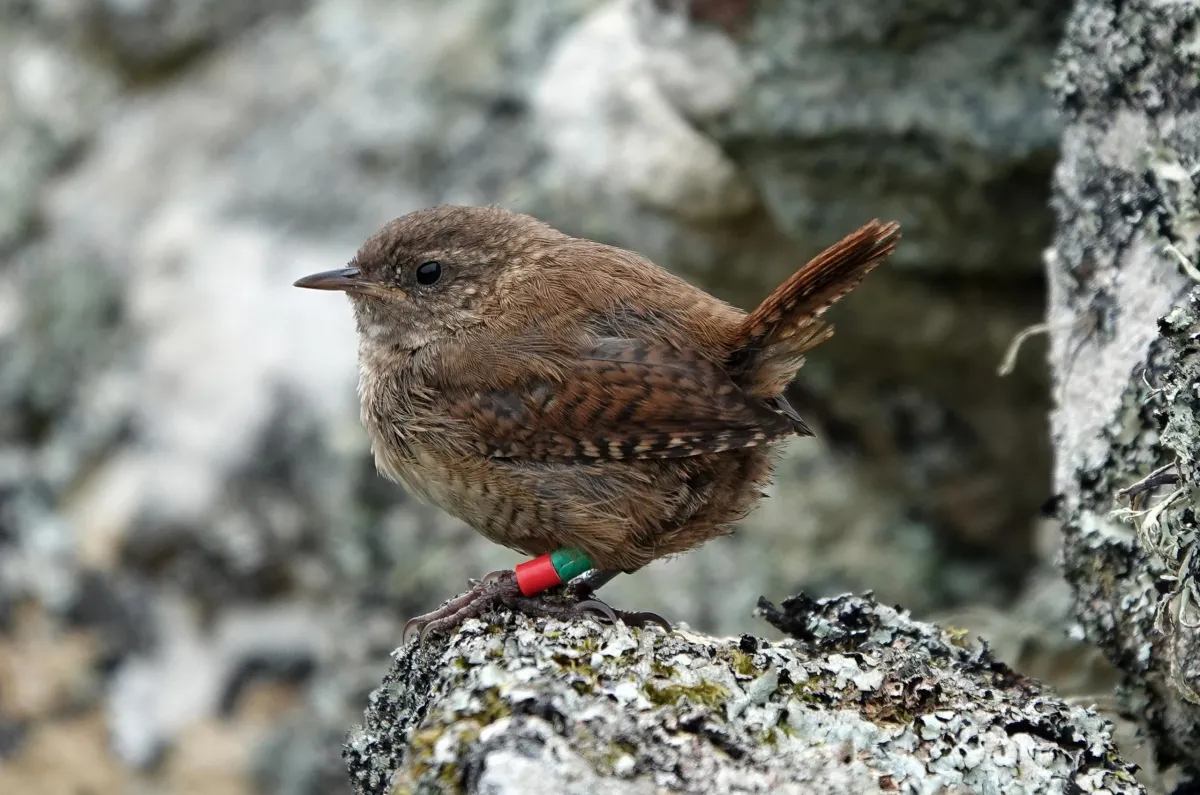
Imagine a bird so small it weighs less than two quarters. Now imagine its distant cousin, living on a remote Scottish island, weighing in at more than double that. No, it's not a cartoon — it's evolution, baby, and it’s turning some of Scotland's wrens into feathered giants.
A new study out of the University of Birmingham just dropped the mic on what happens when tiny birds get isolated on islands. Turns out, some of these island wrens have bulked up significantly compared to their mainland relatives, offering a hilariously oversized example of what scientists call "island syndromes."
When Wrens Go XL
Researchers zoomed in on four distinct wren populations living on Scottish islands: Shetland, Fair Isle, the Outer Hebrides, and St Kilda. While these islands might seem similar to us, each wren group has been doing its own evolutionary thing, looking distinctly different from their mainland British and European kin.
We're a new kind of news feed.
Regular news is designed to drain you. We're a non-profit built to restore you. Every story we publish is scored for impact, progress, and hope.
Start Your News DetoxThe star of the show? "Island gigantism." This is when island-bound animals decide to go big, literally. Think the Galápagos giant tortoises or the infamous dodo. These Scottish wrens, however, are taking it to an extreme, becoming one of the most striking examples in the avian world.
Take the St Kilda wren. Your average English wren tips the scales at a dainty 7 to 10 grams. The St Kilda version? A whopping 13 to 16 grams. The biggest St Kilda birds are more than twice the size of the smallest mainlanders, putting them in the top 25% of known bird island gigantism cases globally. Someone's been hitting the protein shakes.
According to Dr. Michał Jezierski, the lead author, all four Scottish wren types are genetically unique. The Shetland and St Kilda wrens are so visually and vocally distinct, they might just be evolving into entirely new species. Which, if you think about it, is both impressive and slightly terrifying for anyone trying to classify them.
Parallel Paths to Gigantism
To figure out what was going on, the scientists measured bodies, recorded songs, and sequenced entire genomes. They discovered that each island population is genetically distinct and largely cut off from the mainland dating back thousands of years. It’s like a tiny, feathered social experiment.
What’s truly fascinating is how the Shetland and St Kilda wrens, despite looking quite similar, got to their super-sized status through different genetic pathways. It's a prime example of "parallel evolution" – similar starting populations, likely from the British mainland, landed on different islands and independently evolved into giants. Their songs also veered off into totally different, island-specific melodies.
Co-author Will Smith (not that one, probably) noted that similar island environments can lead to similar evolutionary outcomes, even if the genetic routes are different. These Scottish wrens are basically an evolutionary masterclass in how island biodiversity is cooked up worldwide.
Islands, making up only a small fraction of Earth’s land, host 20-30% of the world's species. Their isolation, often with fewer predators or competitors, creates bizarre evolutionary conditions. While the exact reasons for island gigantism (and its equally weird cousin, island dwarfism) remain a bit of a mystery, these chunky wrens are giving scientists a front-row seat to evolution in action. And just maybe, a new appreciation for what a little alone time can do for your physique.