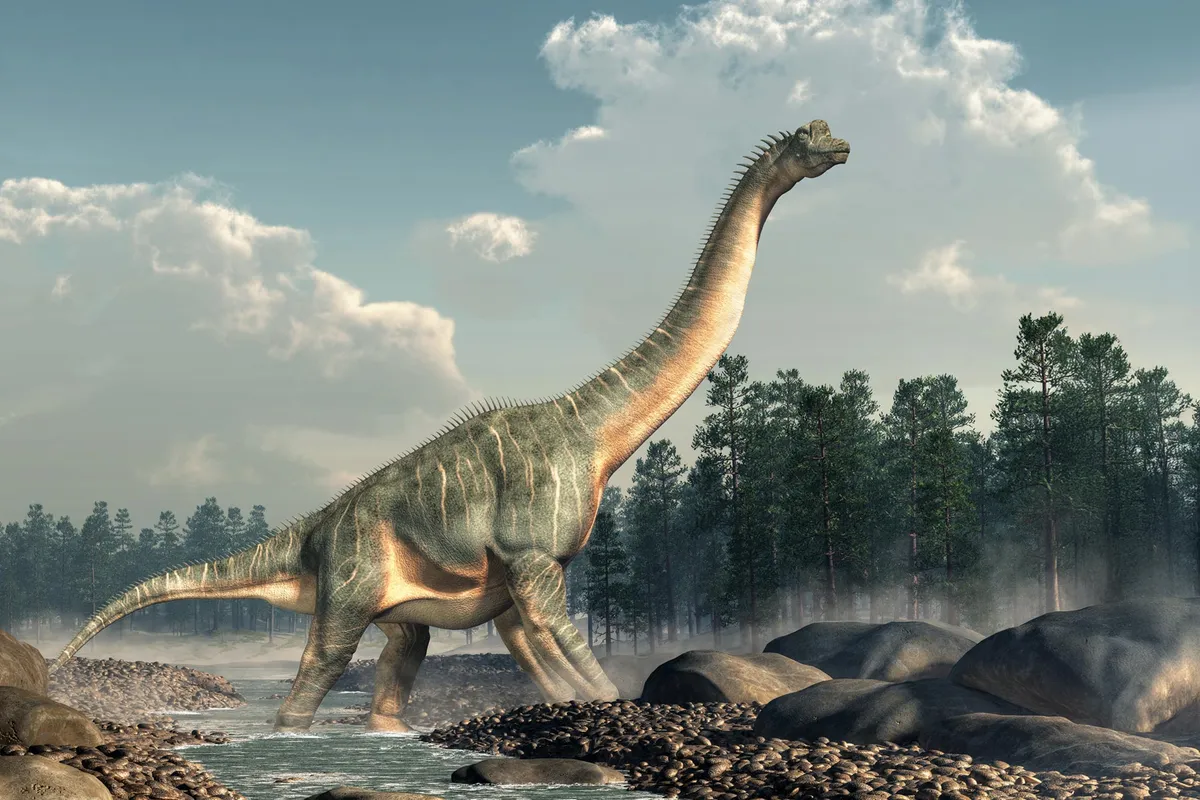
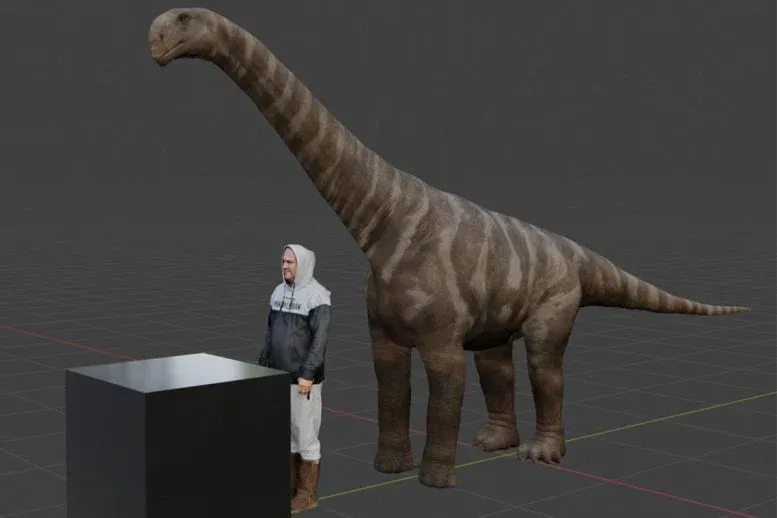
In the rocks near Ouray, Colorado, scientists found something rare: a complete loop traced by a giant sauropod's feet 150 million years ago. Over 130 individual footprints stretch across 95.5 meters of ancient ground—a continuous record of a dinosaur's movement that's almost never this clear.
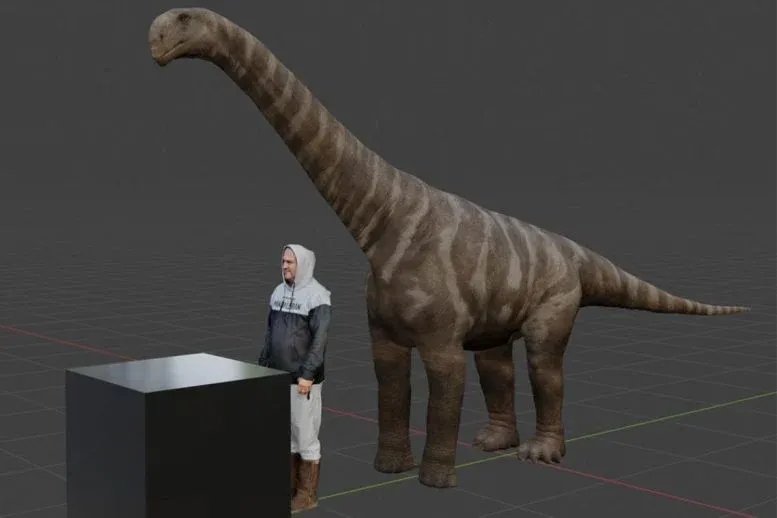
Dr. Anthony Romilio from the University of Queensland's Dinosaur Lab spent time studying this trackway, which was left during the Late Jurassic when long-necked giants like Diplodocus and Camarasaurus walked across North America. What makes this one special isn't just its length. The dinosaur actually curved back on itself, completing a full loop before heading in its original direction again. "While we may never know why this dinosaur curved back on itself, the trackway preserves an extremely rare chance to study how a giant sauropod handled a tight, looping turn," Romilio said.
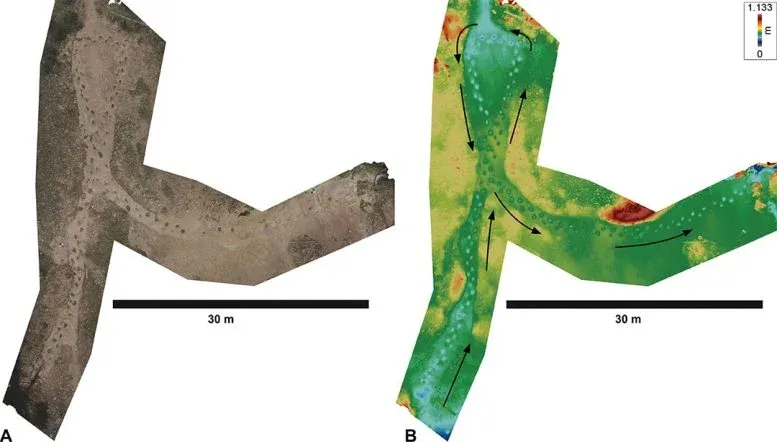
Drones turned stone into data
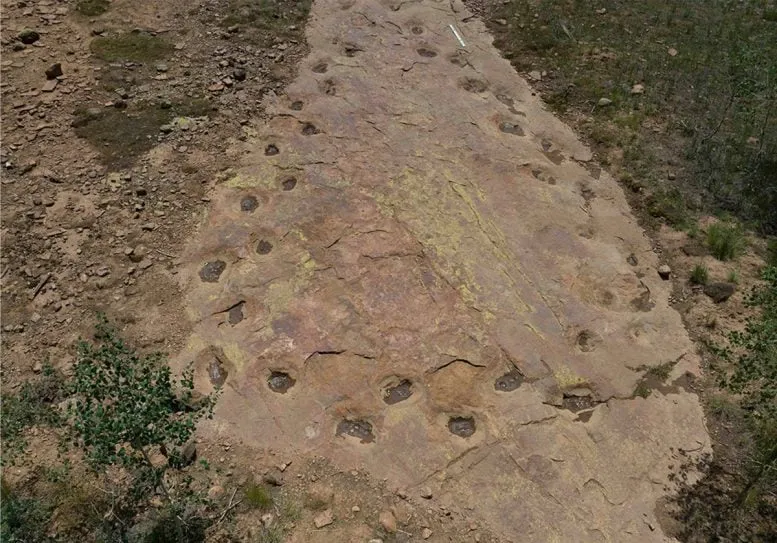
Documenting a trackway this large meant researchers couldn't rely on traditional field notes. Dr. Paul Murphey from the San Diego Natural History Museum explained the challenge: "We used drones to capture the entire trackway in high resolution. With these images we generated a detailed 3D model, which could then be digitally analyzed in the lab at millimeter-scale accuracy."
We're a new kind of news feed.
Regular news is designed to drain you. We're a non-profit built to restore you. Every story we publish is scored for impact, progress, and hope.
Start Your News Detox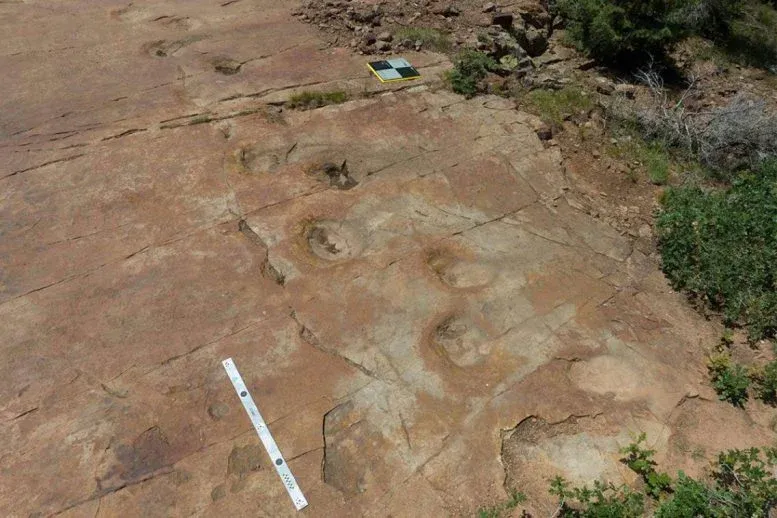
That digital reconstruction changed what the team could see. Instead of standing at ground level trying to measure footprints, they could examine the shape, spacing, and orientation of each print with precision that field work alone would never allow.
The footprints tell a story—maybe
Once they had the 3D model, the researchers traced the dinosaur's path. It walked toward the northeast, completed that full loop, and then continued in its original direction. Within that loop, subtle patterns emerged.
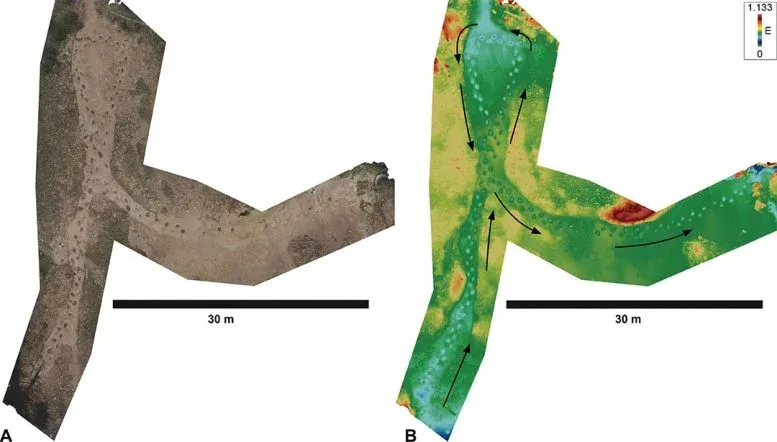
"One of the clearest patterns was a variation in the width between left and right footprints, shifting from quite narrow to distinctly wide," Romilio said. "This shift from narrow to wide step placement shows that footprint width can change naturally as a dinosaur moves."
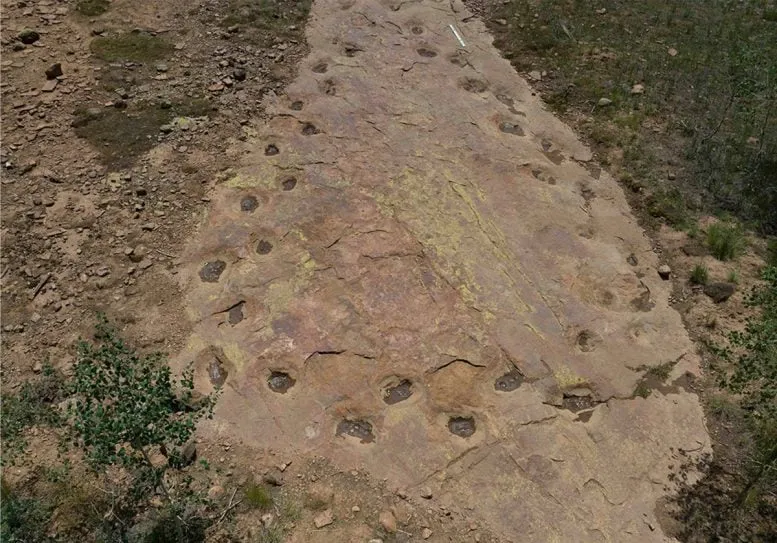
There was also a small but consistent difference in left and right step lengths—about 10 centimeters, or four inches. "Whether that reflects a limp or simply a preference for one side is hard to say," Romilio noted. It's a reminder that even with perfect data, 150 million years of time creates distance between what we can measure and what we can truly know.
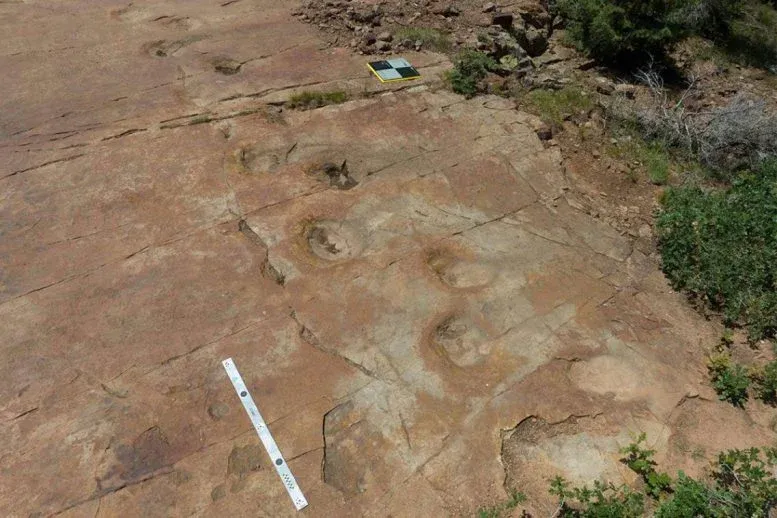
But here's what matters: this method works. There are long dinosaur trackways scattered across the world where the same approach could reveal behavior that's been invisible until now. A limp, a preference, a moment of hesitation—all potentially readable in stone.