Ever wished you could slow down time, just for a second, to see exactly how something happens? Like, really slow it down? Well, scientists in China just built a camera that essentially does that, capturing events that unfold in a mind-bending trillionth of a second.
That's not a typo. A trillionth.
This isn't just about making things look blurry in slow motion. This new imaging method, led by Yunhua Yao at East China Normal University, turns those blink-and-you-miss-it moments into full-blown movies. We're talking about watching plasma form, electrons zoom, and materials morph in real time. Because apparently that's where we are now: making Hollywood-level blockbusters out of subatomic shenanigans.
Beyond Brightness: The Hidden Details
Old-school ultrafast cameras were a bit like watching a silent movie in black and white; they mostly captured changes in brightness. But light, it turns out, is a bit more complex. It also carries "phase information" – essentially, how light bends or changes speed as it passes through something. Think of it as seeing the texture and depth, not just the color.
We're a new kind of news feed.
Regular news is designed to drain you. We're a non-profit built to restore you. Every story we publish is scored for impact, progress, and hope.
Start Your News DetoxThe team's brilliantly named method, Compressed Spectral-Temporal Coherent Modulation Femtosecond Imaging (CST-CMFI), combines three different techniques to capture both brightness and this crucial phase information simultaneously. The result? A much fuller, richer picture of what's actually happening at speeds our brains can't even comprehend. It's like going from a flip-book animation to IMAX 3D.
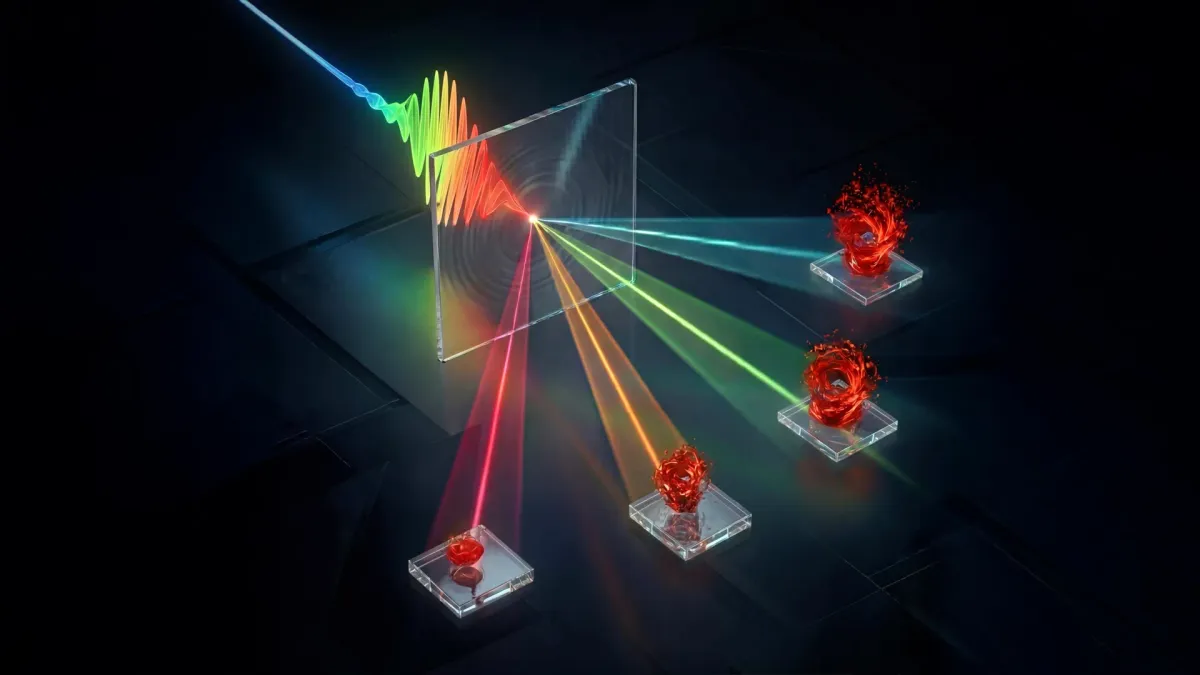
So, how does this sorcery work? It uses a specialized laser pulse where different colors of light arrive at slightly different times, essentially tying color to a moment in time. When this pulse interacts with a super-fast event, the scattered light carries all the juicy details. This information is then compressed into a single image, which a clever computer program then decodes, separating the colors and rebuilding both the brightness and phase over time. The outcome? A sequence of frames, an ultrafast movie, all from a single shot.
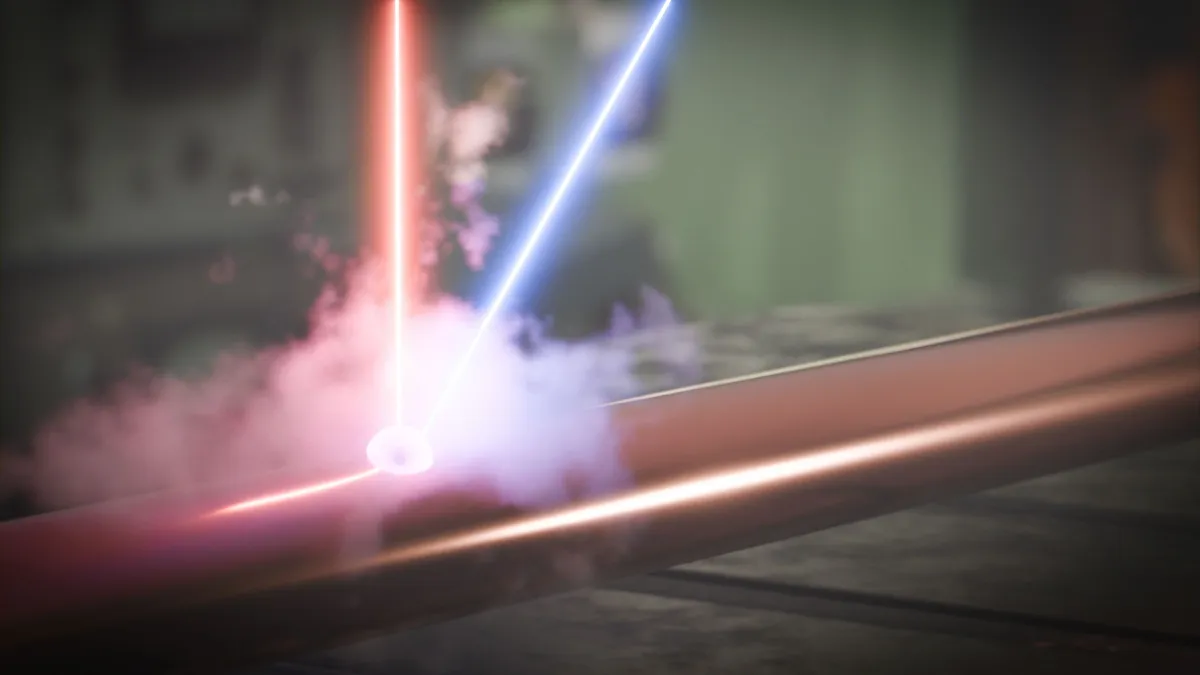
They've already put it to the test, watching plasma created by lasers in water (which could help with medical treatments, because of course it could). They also tracked electrical charges moving in a material, crucial for better electronics. Yao noted that CST-CMFI could pick up subtle phase changes even when brightness stayed the same, proving just how sensitive this thing is.
Now, the team plans to point this ridiculously fast camera at everything from how surfaces change to ultrafast phase transitions. The current setup links light color to time, which has some limitations, but they're already dreaming up ways to combine it with other tech to make it even more versatile. Because if you can capture a trillion frames per second, why stop there?