Imagine harnessing the power of the Sun, right here on Earth. Sounds like science fiction, or perhaps a particularly ambitious villain's monologue, but it's the audacious goal of Francesco Sciortino and his company, Proxima Fusion. They're tackling nuclear fusion, a project many once deemed "impossible," with the promise of abundant, cheap, and blessedly clean electricity.
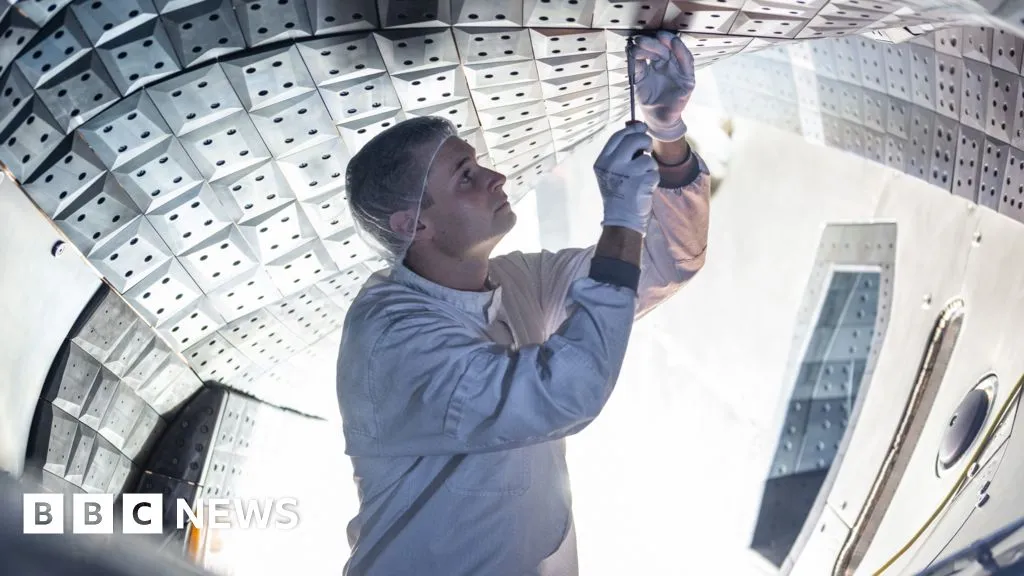
Fusion, for the uninitiated, is essentially smashing hydrogen atoms together until they release a colossal amount of energy. The Sun does this with the help of gravity. We, on the other hand, need to create plasma hotter than the Sun's core and then somehow contain the unruly stuff. Most fusion projects use a doughnut-shaped device called a tokamak, which wrangles the plasma with powerful magnets. Sciortino, however, is betting on the stellarator – a far more complex, twisted, and frankly, weirder-looking magnetic cage.
The Stellarator: A Fussy Cat
While tokamaks might be simpler to build, Sciortino calls them "beasts." Stellarators, with their intricate, pretzel-like designs, are the "little cats." They're a nightmare to design and construct, but once you've wrestled them into existence, they're supposedly "dumb machines" – like a microwave oven, just sitting there doing their job. Which, if you think about it, is both impressive and slightly terrifying.
We're a new kind of news feed.
Regular news is designed to drain you. We're a non-profit built to restore you. Every story we publish is scored for impact, progress, and hope.
Start Your News DetoxProxima's stellarator, aptly named Alpha, isn't starting from scratch. It's building on decades of German ingenuity from the Max Planck Institute for Plasma Physics. The big goal for Alpha? To produce more energy than it consumes. The even bigger goal: to pave the way for an actual power plant called Stellaris. This isn't a cheap date, though. Bavaria recently ponied up €400 million, and Proxima is now eyeing over a billion dollars from the German federal government. A decision is expected next year, which is probably giving a few accountants heart palpitations.
Of course, Proxima isn't alone in this cosmic race. There are 52 other groups trying to crack the fusion code. The UK's Step project, for example, is sticking with the tokamak approach. Ryan Ramsey, a director at Step, points out that tokamaks have a solid track record. They've gotten closer to power plant-level plasma performance and can already run on fusion fuel. Plus, their simpler magnetic geometry means fewer, more regular coils, making them easier to manufacture and maintain.
Sciortino knows his stellarator magnets are a beast of a different kind – incredibly complex and expensive. He's leaning heavily on Germany's robust manufacturing sector, specifically its legion of CNC machinists, to build these precise, twisted steel components. The original W7-X stellarator took over a decade to get up and running. Sciortino aims to get Alpha operational in a third of that time. A prototype magnet coil, one of the most complex magnets in the world, is being tested next year. After that, Proxima will need to churn out 40 more. Good thing they're already building a dedicated magnet factory.
Ultimately, fusion is no longer just a physics experiment. It's a manufacturing challenge, a geopolitical race, and a very expensive gamble. Europe, with its industrial might, might just be the one to pull it off. The main question isn't if fusion will work, but which of these clever, complicated machines will reliably deliver power to our grids. And perhaps, whether we can afford the electricity bill.