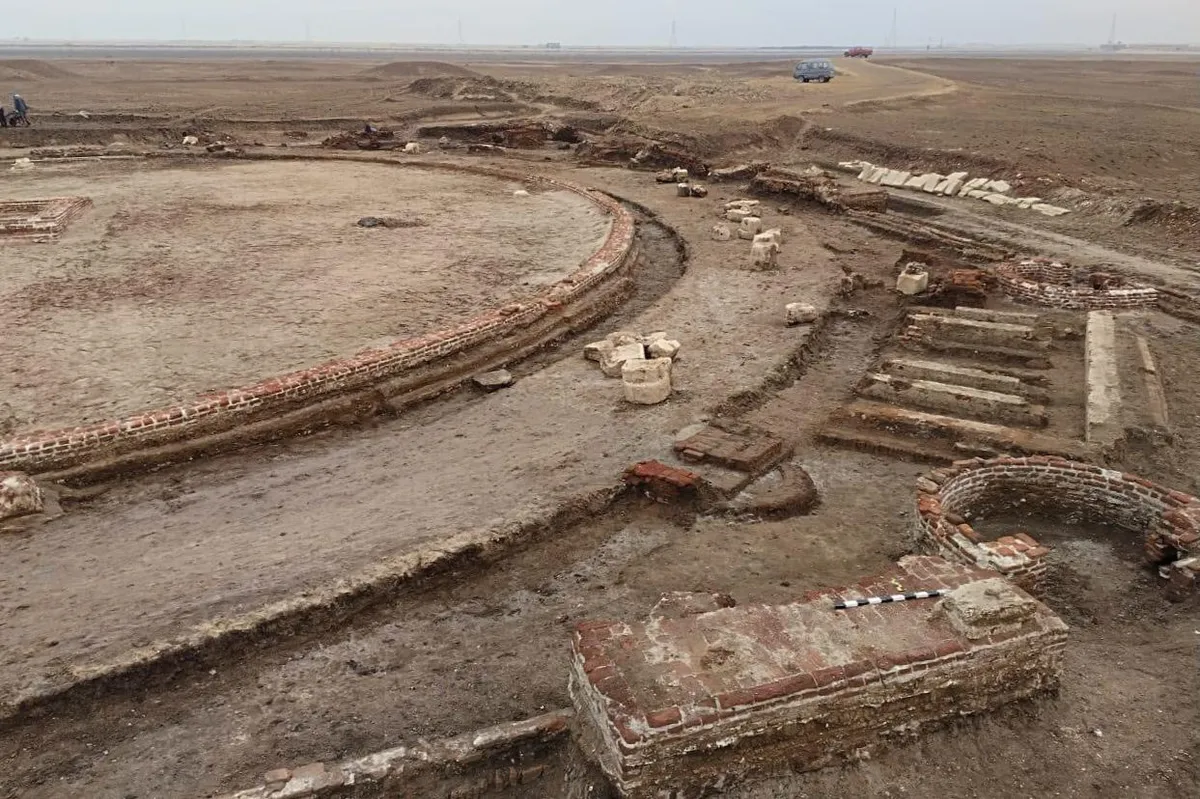
Archaeologists in Egypt believe a newly uncovered circular basin is a temple dedicated to an ancient river god. This unique temple was found in the ruins of Pelusium. It was once filled with the fertile silt of the Nile River.
The temple's design shows a mix of Egyptian, Greek, and Roman cultures. This reflects the different groups that influenced the region over time.
Uncovering a Sacred Water Site
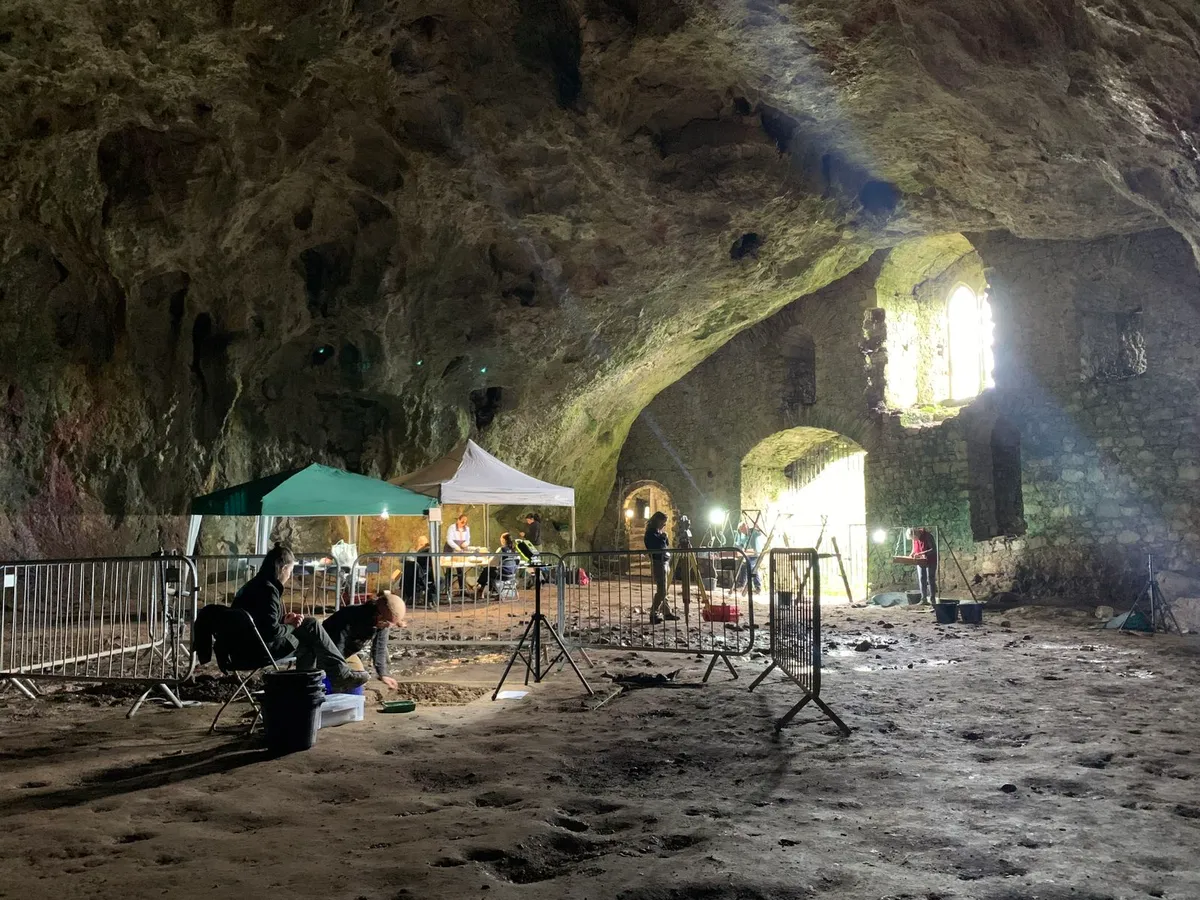
Researchers have been studying this temple for years. Hesham Hussein, an undersecretary for Lower Egypt and Sinai archaeology, shared this in a statement. In 2019, during excavations at Tell el-Farama, a curving red brick wall was found. Initially, experts thought it was part of Pelusium’s senate building.
We're a new kind of news feed.
Regular news is designed to drain you. We're a non-profit built to restore you. Every story we publish is scored for impact, progress, and hope.
Start Your News DetoxHowever, further study changed their minds. Hussein explained that ongoing excavations and comparisons showed it was a sacred water site. It was used for religious rituals, not for politics.
Ancient Egypt relied heavily on the Nile River. Its yearly floods made the farmland fertile and provided water. The river also helped transport people and building materials. The Greek historian Herodotus noted that Lower Egypt was a "gift of the river." Ancient Egyptians even had a god for the river, Hapi.
Egyptians also built structures to manage the river's water. Historian Arthur Goldschmidt, Jr. explained that building dikes, channels, and basins to store Nile waters required great skill.
A Temple for the God of Mud
New research suggests Egyptians also used river water for religious purposes. The Pelusium temple was designed to be filled with silty water from the Nile. Its brick walls form a circular courtyard, about 115 feet across. This courtyard is surrounded by channels and cisterns.
In the center of the basin, there is a square pedestal. This may have once held a large statue of the god Pelusius. His name means "mud" or "silt" in ancient Greek.
The city of Pelusium was built before the sixth century B.C.E. It was located at the eastern edge of the Nile Delta. This made it a center for different cultures to meet. Egyptians built it as a fortress. Persians and Greeks attacked it. Later, Ptolemaic rulers used it as a customs station, and the Roman Empire took it over.
Hector Williams, an archaeologist, noted that the mix of Greek and Egyptian culture has been clear since Alexander the Great conquered Egypt in the late fourth century B.C.E.
Hisham El-Leithy, secretary general of the Supreme Council of Antiquities, said the temple's unique design shows this Hellenistic influence. The site was used continuously from the second century B.C.E. to the sixth century C.E.
During Egypt's Hellenistic period, new gods were introduced. For example, Ptolemy I Soter brought in Serapis. This deity combined Egyptian gods like Osiris and Isis with Greek gods like Zeus and Hades. In 2022, researchers in Pelusium also found a temple dedicated to Zeus.
Pelusius was another deity added later in Egypt. Egyptologist Steve Harvey described him as a "shadowy figure." The Greek biographer Plutarch once connected Pelusius to Isis and Osiris.
Harvey noted that if this Roman-era structure is confirmed to be a temple for Pelusius, it would be a remarkable discovery. It would show a temple for a god previously known only from ancient texts.