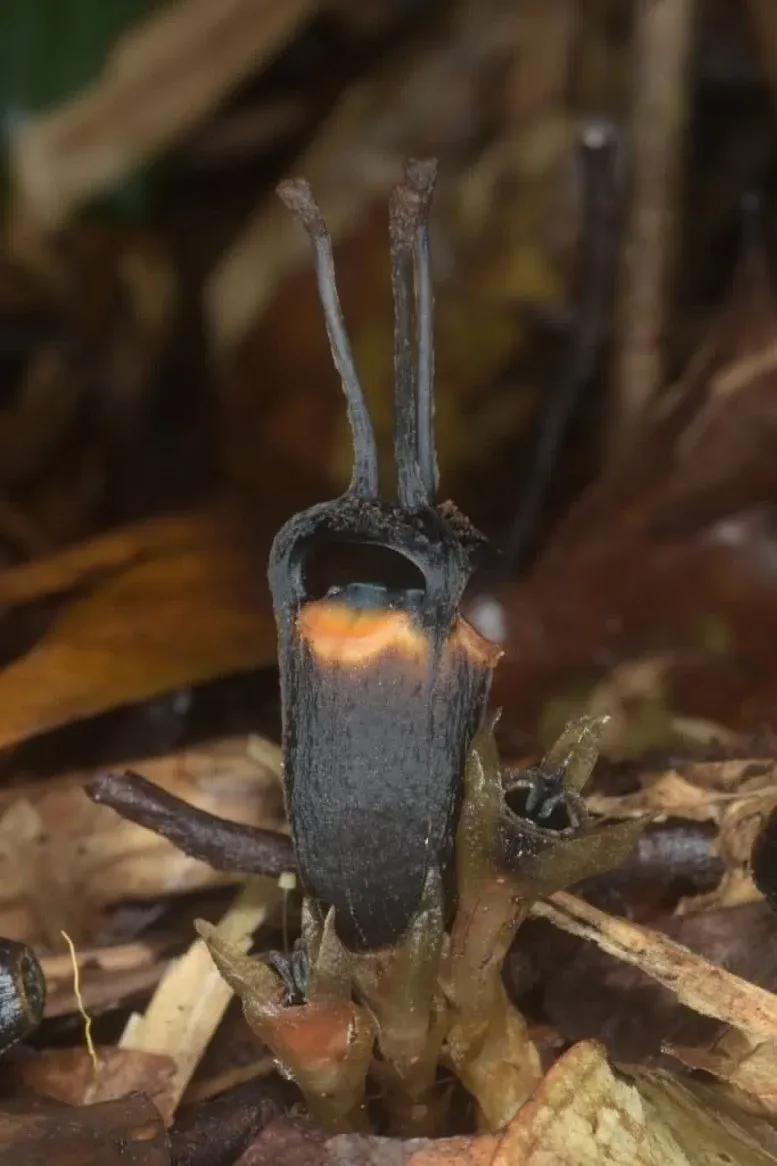
Researchers found a new plant species in western Thailand. Its unusual look inspired the name Thismia daemona, or the "devil flower."
This nearly black flower has horn-like parts and reddish-orange flashes. It was found hidden under leaf litter in a mountain forest.
Its discovery is important not just for its looks. Fewer than 50 of these plants are known. They all grow in an area smaller than a football field. Experts believe this new species is Critically Endangered.
We're a new kind of news feed.
Regular news is designed to drain you. We're a non-profit built to restore you. Every story we publish is scored for impact, progress, and hope.
Start Your News DetoxA Plant That Lives Without Sunlight
Thismia daemona is part of the Thismia genus, also called "fairy lanterns." Unlike most plants, these do not have chlorophyll. This means they cannot use sunlight to make their own food.
Instead, they get nutrients from underground fungi. They spend almost their entire lives hidden under leaves.
Botanists from Chulalongkorn University and Prince of Songkla University found the species. They were surveying Thong Pha Phum National Park.
Unexpected Mountain Home
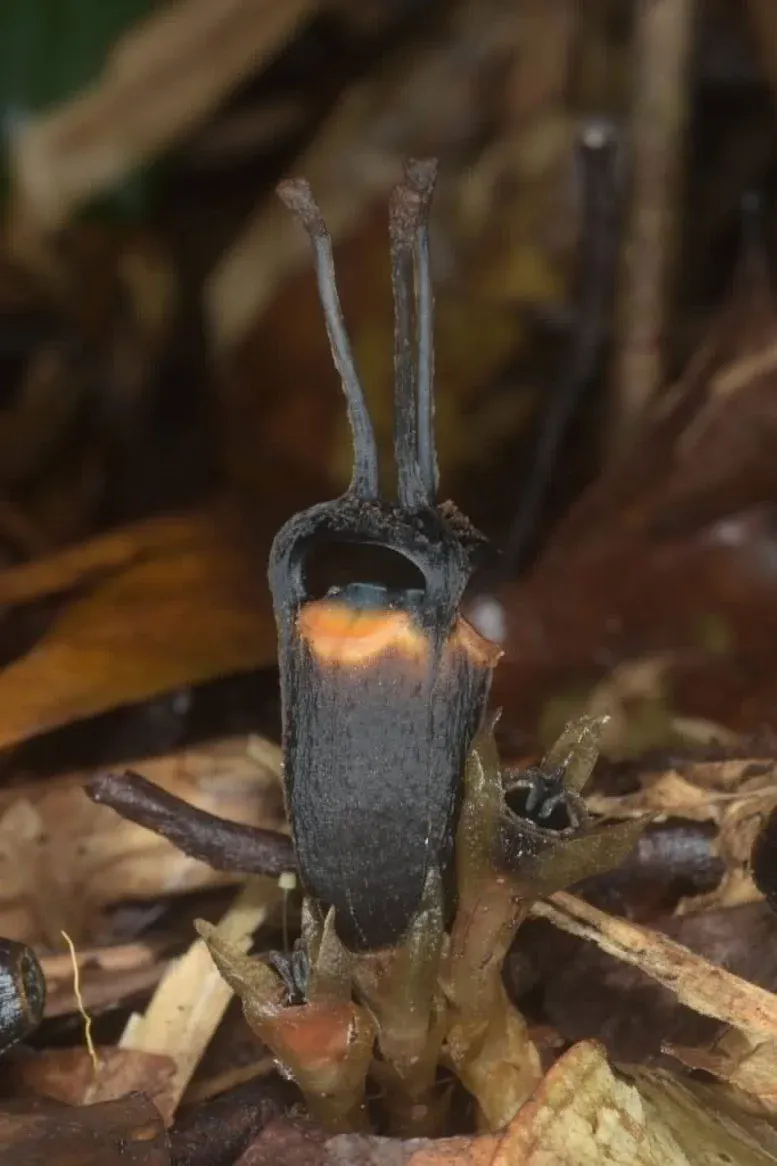
The location of the discovery was a surprise. The plants were growing about 1,000 meters (3,280 feet) above sea level. This was in a seasonal mountain evergreen forest. Most Thismia species live in constantly wet lowland rainforests.
Dr. Sahut Chantanaorrapint from Prince of Songkla University noted this surprise. He said Thismia species usually grow in humid lowland rainforests. Finding this group in a mountain forest was unexpected.
This discovery also expands the known range of a whole group within the genus. T. daemona belongs to Thismia section Geomitra. This group was only known from Peninsular Malaysia, Borneo, and Sumatra before. Finding it in Thailand extends its known range further north.
The Flower's Devilish Name
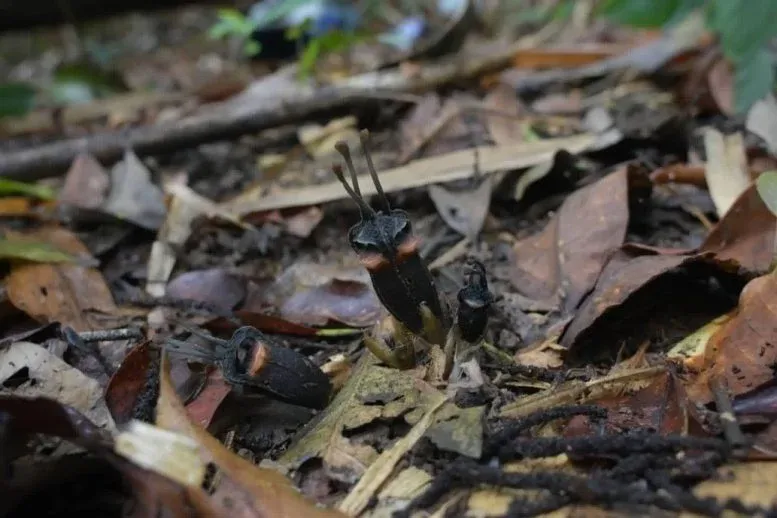
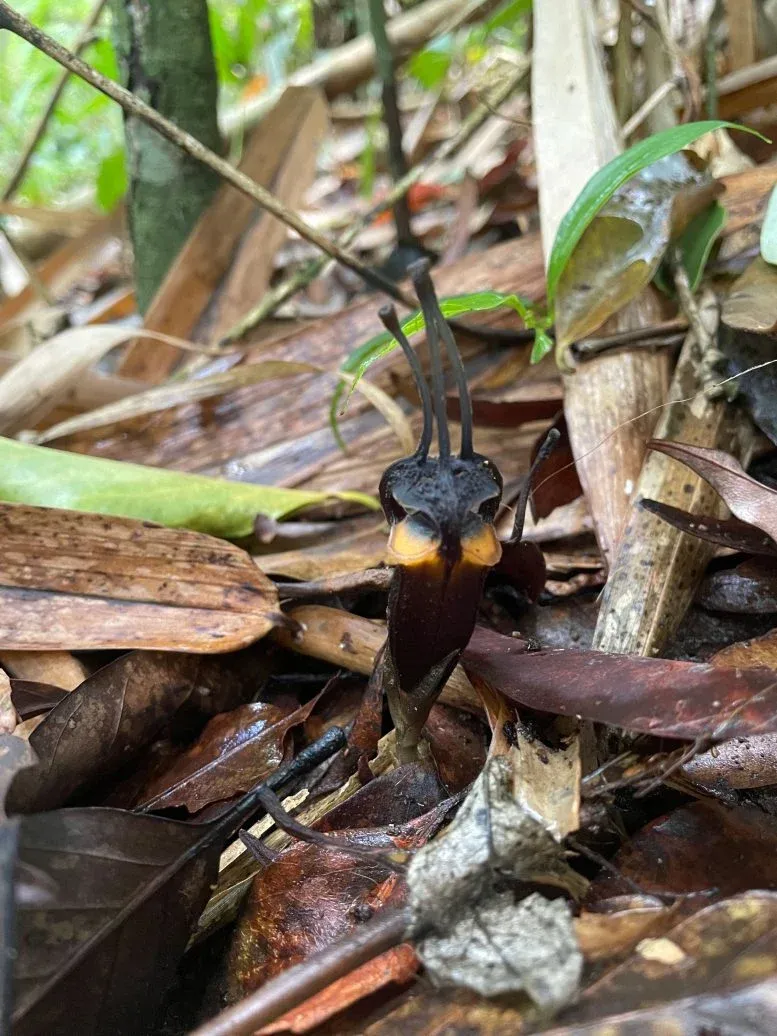
The flower itself is as unique as its home. It is mostly black with horn-like parts on a dome-shaped top. Bright reddish-orange spots near the base reminded researchers of glowing eyes.
These features, along with its hidden life, inspired its dramatic name. Dr. Chantanaorrapint said the name Thismia daemona perfectly captures its mysterious, devil-like nature.
Protecting a Rare Species
The plant's rarity makes its discovery urgent. Only one group of fewer than 50 plants is known. They live in an area smaller than a football field.
Even though it's in a national park, the area is popular with tourists. Because of this, researchers have called the species Critically Endangered.
Dr. Chantanaorrapint believes local involvement is key to protecting it. He suggests a conservation approach that includes local people. This would protect the plant's small habitat and support community-led ecotourism.
This study, published in PhytoKeys, brings the total Thismia species in Thailand to 16. T. daemona has revealed many surprises. Its unique look gave it a memorable name. Its unexpected mountain home, expanded range, and extreme rarity are important for understanding and protecting these unusual plants.
Deep Dive & References
Thismia daemona (Thismiaceae), a new species from Thailand supported by morphological and molecular evidence - PhytoKeys, 2026